Epoch 48V 100Ah Self-Heating Server Rack Battery SR48100H, 5.12kWh LiFePO4, 3U Rack Mount, CAN and RS485 Closed Loop, UL 1973
SKU: SR48100H

Log in to check member price and detailed stock information.
| Need more than what's available? Tell us what you need and we can source it for you. |
Product Summary
Epoch's 48V server rack battery fits 5.12kWh into a 3U shelf and talks to your inverter over closed-loop CAN or RS485, so the BMS (Battery Management System) sets charge and discharge limits instead of a fixed profile. A built-in heater warms the cells from charger current, which lets the bank take a charge in an unheated garage, shop or cabin.
Specifications:
- 51.2V nominal, 100Ah, 5.12kWh LiFePO4 rated for 6,000+ cycles at 0.2C and 90% DoD (Depth of Discharge), to 60% capacity
- 100A continuous discharge, 119A for up to 5 minutes and 200A for up to 15 seconds; 70A maximum charge (50A or less recommended)
- Self-heats from charger current, with charging rated from -13°F to 122°F (-25°C to 50°C)
- Closed-loop CAN or RS485 through RJ45 Link In and Link Out ports, protocol set by DIP switch
- Up to 32 in parallel (3,200Ah, 163.84kWh) with automatic addressing; no series connections
- 3U, 19 in rack format, 5.2 x 17.4 x 18.1 in H x W x D (133.5 x 442 x 460 mm), 101 lb (46 kg)
- Plug-in power connectors (two positive, two negative), IP20 for indoor installation, front-panel LEDs with no Bluetooth
- UL 1973 (ETL, pack level) and UN 38.3; 11-year limited warranty with free replacement in years 1 to 3


Current Connected is YOUR Epoch Battery product specialist
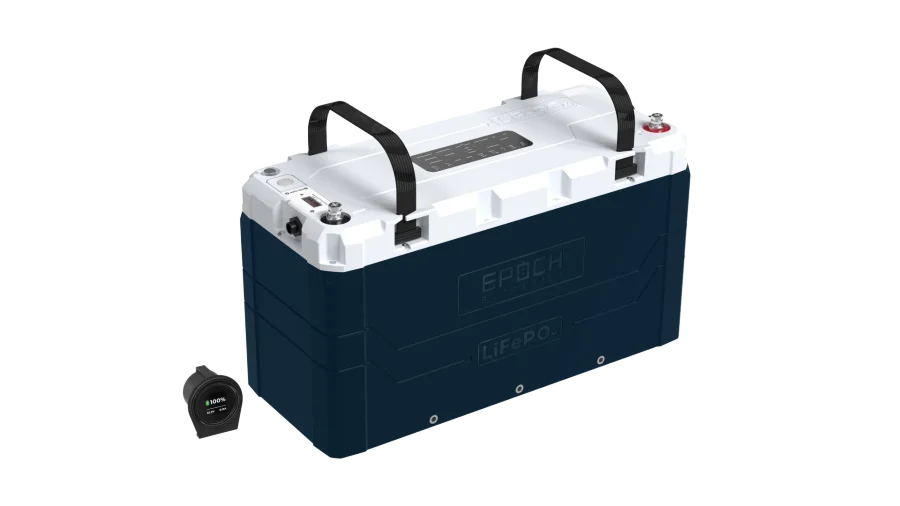
About the Epoch 48V 100Ah Self-Heating Server Rack Battery
This 48V server rack battery is built for home backup and off-grid solar banks of almost any size. Each module adds 5.12kWh in three rack units, and a bank scales to 32 batteries with automatic addressing: chain the communication ports, plug in the power leads, and the batteries sort out their own IDs. Bank limits scale with it, at 100A of discharge and 70A of charge per battery.
The ratings suit daily cycling. Epoch rates the battery for 6,000+ cycles at 90% depth of discharge, and its 100A continuous rating comes with a 119A window for up to 5 minutes and a 200A peak for up to 15 seconds to cover start-up surges from well pumps, compressors and welders. Epoch's 100A continuous figure applies from a starting temperature of 86°F (30°C) or lower.
How many batteries your loads need depends on daily energy use, inverter size and the days of autonomy you want. Our team is happy to help with sizing.
Closed-Loop CAN and RS485 Inverter Communication
Closed loop lets the battery run the charging. With CAN or RS485 connected, the BMS sets the inverter's charge and discharge limits, which is how Epoch recommends running the bank whenever possible. Two DIP switches on the primary battery pick the protocol, and Epoch's manual lists settings for 18 CAN and 5 RS485 inverter brands, along with communication cable pinouts for most of them. The battery whose Link In port connects to the inverter becomes the primary, and every other battery chains from Link Out to the next Link In.
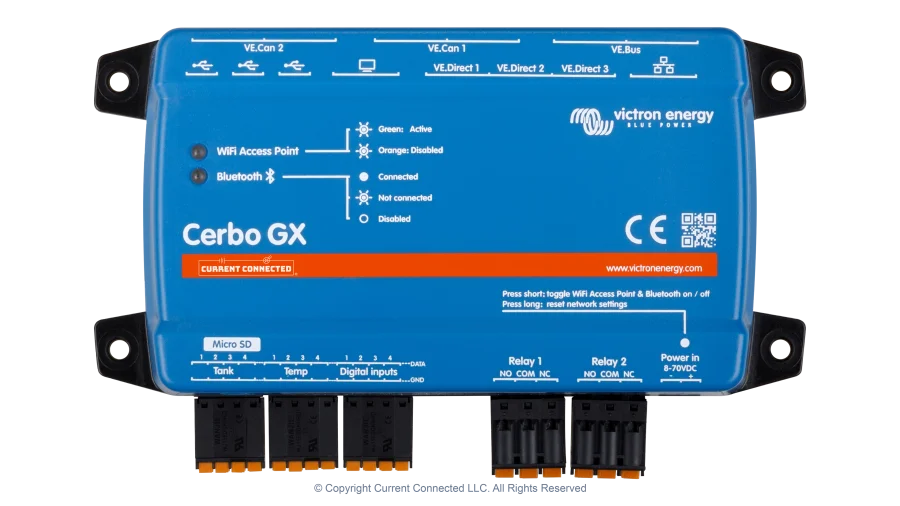
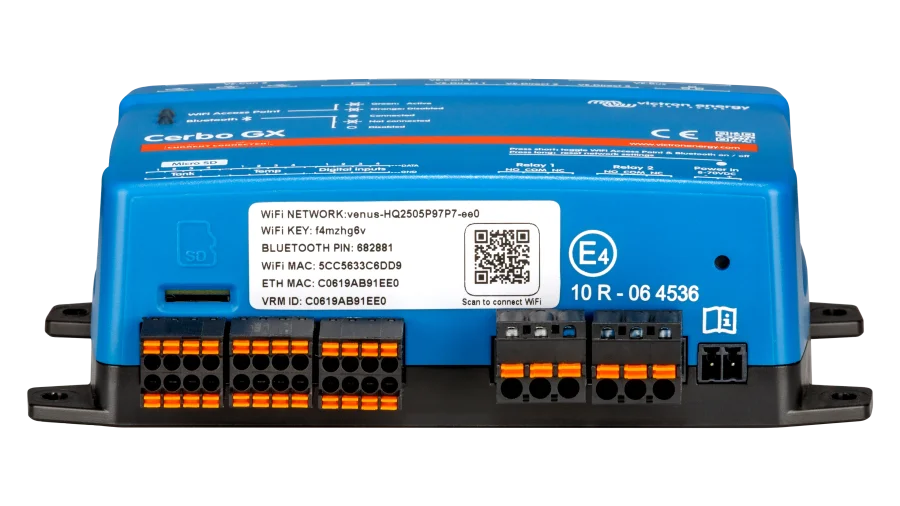
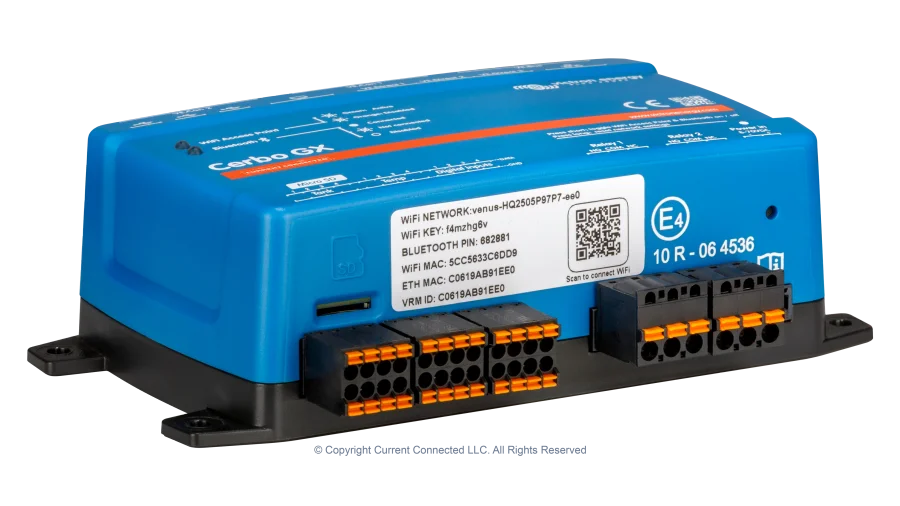
Victron is on Epoch's CAN list, and on a Victron system that link lands on a GX device such as the Victron Cerbo GX MK2. For inverter brands that aren't in the manual, Epoch asks you to contact its support team before you commission the bank.
Self-Heating Server Rack Battery for Cold Garages and Cabins
When the battery sits between -13°F and 41°F (-25°C to 5°C) and the charger supplies at least 8A, the heater switches on using that incoming current, then shuts off once the cells reach 54°F (12°C). In a parallel bank every battery heats together and stops when all of them reach temperature, so keep the charger able to deliver at least 8A during cold-weather warm-up.
Capacity holds up well in the cold: Epoch rates at least 80% of capacity at 32°F (0°C) and at least 60% at -4°F (-20°C), at a 0.2C rate. The case is IP20, so give it a dry, protected indoor space away from rain, washdown and moisture.
Rack, Stack or Wall Mounting and DC Wiring
The metal 3U chassis has front handles and rack ears for a standard 19-inch rack or cabinet, fastened with M6 cage nuts and screws. Epoch also offers stack, wall and floor mounting, with stacks limited to four batteries. Mounting kits, hardware and every cable are sold separately; the box holds the battery and its manual.
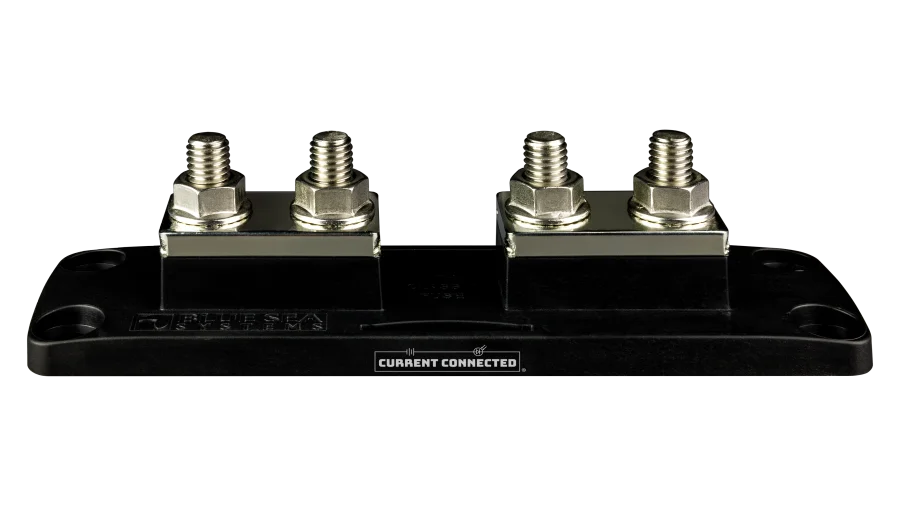
Each battery connects through plug-in power connectors, two positive and two negative, and Epoch rates each power cable and terminal for 125A at most, with 100A continuous suggested. Keep power cables under 33 ft (10 m) and communication cables under 49 ft (15 m). Epoch calls for properly rated positive and negative busbars on larger banks, such as the Blue Sea Systems PowerBar 1000A.
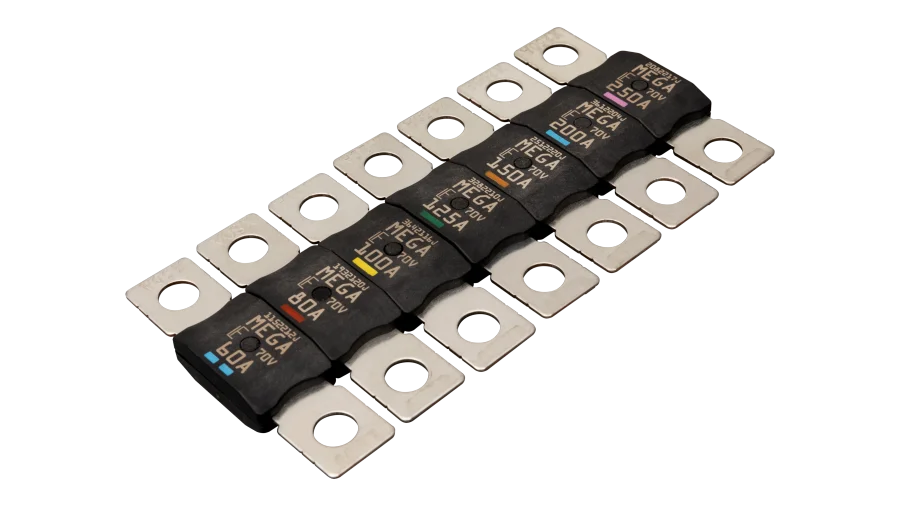
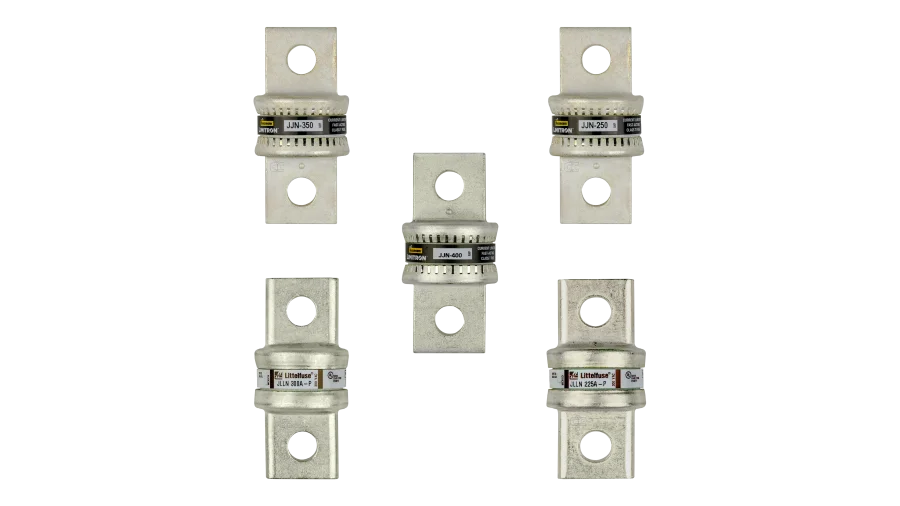
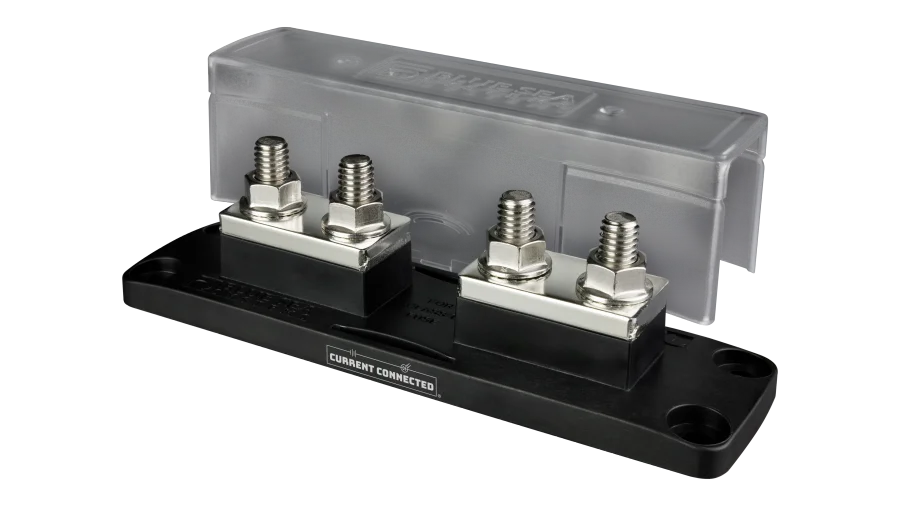
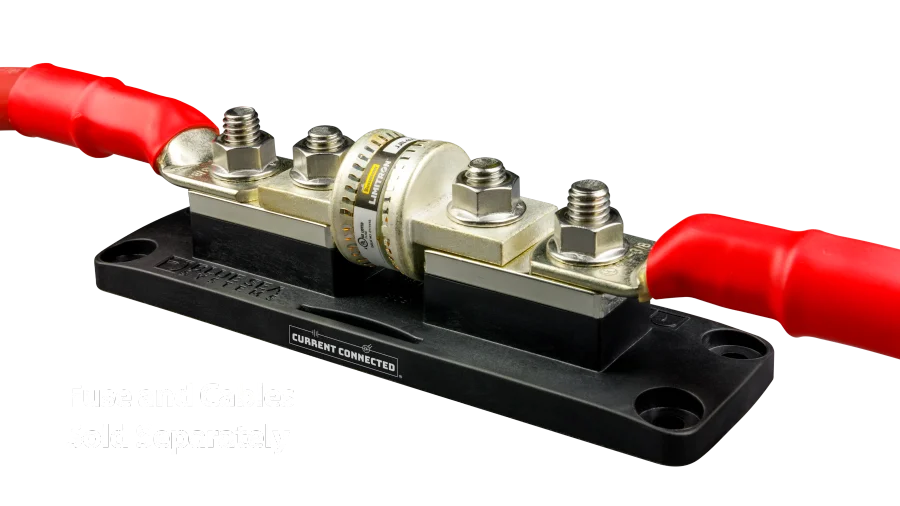
Epoch calls for a fuse or DC-rated breaker as close as practical to the battery positive, rated for the maximum system voltage and sized to protect the smallest conductor, and notes that each battery or string may need its own fuse depending on the design. Epoch recommends having a qualified professional confirm fuse and breaker sizing. On the bank's main positive, a Class-T fuse in its block gives you the interrupt rating a 48V lithium bank calls for.
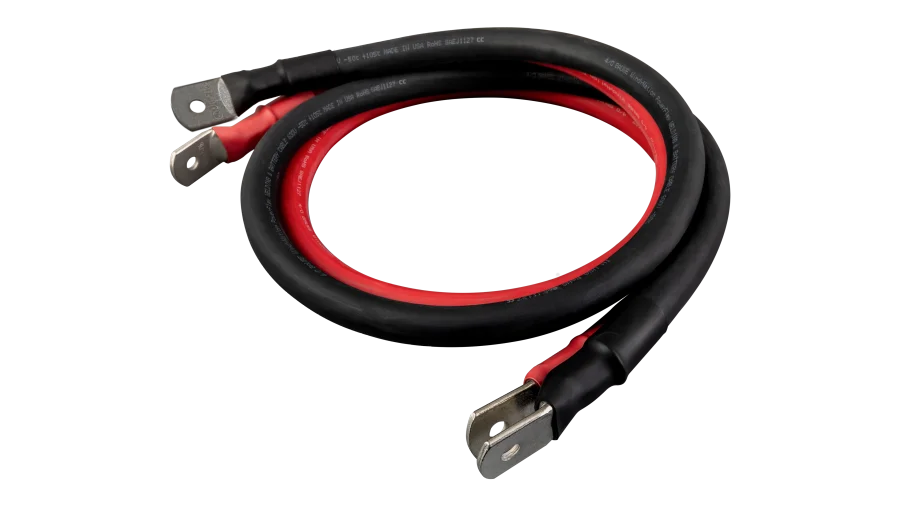
From the busbar to the inverter, our custom battery cable builder makes heavy leads to length from 6 AWG to 4/0 AWG.
Recommended Accessories
Frequently Asked Questions
Use a LiFePO4 profile: absorption at 56.0V until current falls to 2A, float at 54.6V, re-bulk at 50.0V, equalization off and force charge enabled. Keep charge current at or below 70A per battery, with 50A or less recommended.
Set the inverter's low-voltage cut-off to 48.0V with restart at 52.0V. Epoch sets a 4% low state-of-charge cut-off, with a 10% to 20% floor on grid-tied systems depending on the inverter brand. Epoch still recommends closed-loop CAN or RS485 whenever possible.
Not yet. Epoch lists UL 1973 at the pack level (ETL) and UN 38.3 for transport, with UL 9540 pending. UL 1973 covers the battery itself, while UL 9540 covers a complete energy storage system, which some AHJs (Authority Having Jurisdiction) require for permitted grid-connected installs. Confirm current certification documents with Epoch and your AHJ before you apply for a permit.
None come in the box. A bank needs power leads with plug-in connectors (battery to battery or battery to busbar), grounding cables chained battery to battery and on to the protective earth, RJ45 communication cables daisy-chained from Link Out to Link In, and one inverter communication cable.
Epoch's manual gives three inverter cable pinouts (Version I for Victron CAN, Version II for several other CAN brands, Version III for RS485) plus custom pinouts for a few brands, so match the cable to your inverter before ordering.
A dry, protected garage works, heated or not. The battery is IP20 and Epoch rates it for indoor use only, so keep it out of spaces that see rain, washdown or condensation. Epoch's optimum operating range is 59°F to 95°F (15°C to 35°C) at 5% to 90% non-condensing humidity, below about 9,800 ft (3,000 m).
Epoch's bank rules call for SR48100H batteries that are fully charged before they join, wired with matching cable lengths and gauges while everything is switched off. Its warranty terms also exclude mixing batteries of different models, ages or charge states. If you plan to expand over time, confirm with Epoch support how it treats added modules before you buy them.
Epoch plans runtime on about 4,096Wh per battery, 80% of nominal. Divide that by your average load for an estimate: a steady 1,000W works out to about 4 hours per battery, and each added battery adds about the same again.
Customer Reviews
No reviews yet. Be the first to review this product!