Class-T Fuse 225A-400A, Up to 125Vdc, 20kAIC for Residential or Mobile Energy Systems
SKU: Please select an option...
Product Summary
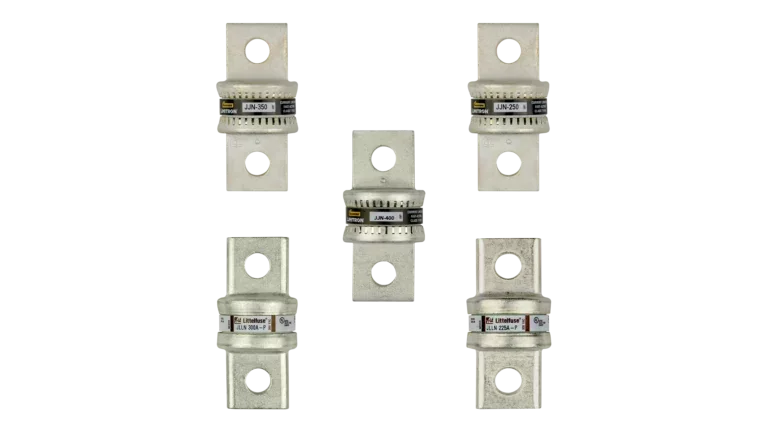
Class-T fuse with a 20,000A interrupt capacity (AIC) at 125V DC and extremely fast short-circuit response. UL 248-15 listed. The standard choice for protecting LiFePO4 battery banks where MRBF & MEGA fuses can't meet the AIC requirements.
Specifications:
- Available ratings: 225A, 250A, 300A, 350A, 400A
- Max voltage: 125V DC
- Interrupt capacity: 20,000 AIC at 125V DC
- Stud size: 3/8" (M10)
- Listing: UL 248-15
- Construction: Fully metal-encased
- Weight: 0.3 lbs
- Fuse block required (sold separately)
Log in to check member price and detailed stock information.
Please select all options above to add to cart.


Current Connected is YOUR Blue Sea Systems product specialist
About the Blue Sea Systems Class-T Fuse
The Class-T is the highest-AIC fuse commonly used in marine, RV, and residential battery systems. At 20,000A interrupt capacity, it can safely open under fault currents that would weld an MRBF (10,000AIC) or ANL (6,000AIC) fuse shut. Its fully metal-encased construction and extremely fast response time make it the fuse most inverter manufacturers specify for the DC input circuit, and the fuse ABYC E-13 specifically calls out for lithium battery installations.
Why Class-T for Lithium
LiFePO4 batteries have very low internal resistance compared to lead-acid, which means they can deliver enormous short-circuit currents. The fuse needs to be able to safely interrupt that current without welding shut or failing dangerously, and that's what AIC (Ampere Interrupt Capacity) measures.
AIC ratings are voltage-dependent. A fuse that can interrupt 10,000A at 14V may only handle a fraction of that at higher voltages because the arc is harder to extinguish. The MRBF fuse illustrates this clearly: it's rated at 10,000AIC at 14V, but only 5,000A at 32V and 2,000A at 58V. The Class-T is rated at 20,000AIC at 125V DC, meaning it maintains its full interrupt capacity across 12V, 24V, and 48V systems.
At 12V, MRBFs can handle most individual lithium batteries because the combination of low voltage and 10,000AIC provides adequate margin. At 24V and 48V, the MRBF's effective AIC drops to the point where even modest lithium banks can exceed it. A 48V battery with low internal resistance can easily produce short-circuit currents well above the MRBF's 2,000A rating at that voltage. This is why ABYC E-13 specifically calls out Class-T for lithium installations, and why most inverter manufacturers spec Class-T on the DC input.
For 12V systems with smaller individual batteries, per-battery fusing with MRBF terminal fuses can still be a viable and more economical approach, since each fuse only sees the short-circuit current of one cell at a voltage where the MRBF's AIC is strongest. But for 24V systems, 48V systems, or any bank-level fusing on lithium, Class-T is the correct choice.
Compatible Fuse Blocks
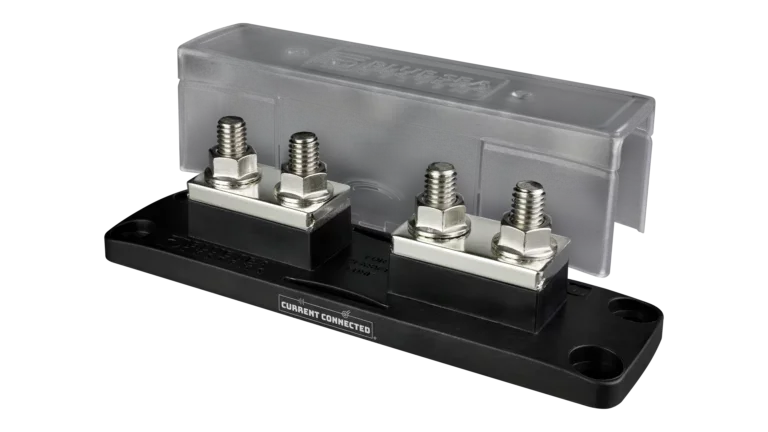
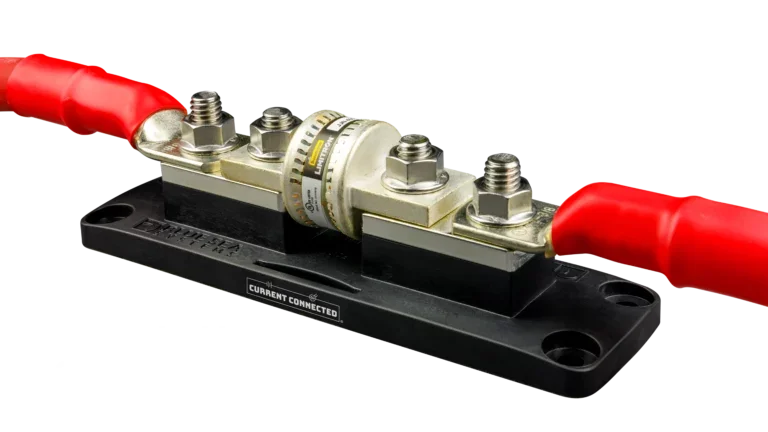
Class-T fuses require a dedicated fuse block. Current Connected carries two options:
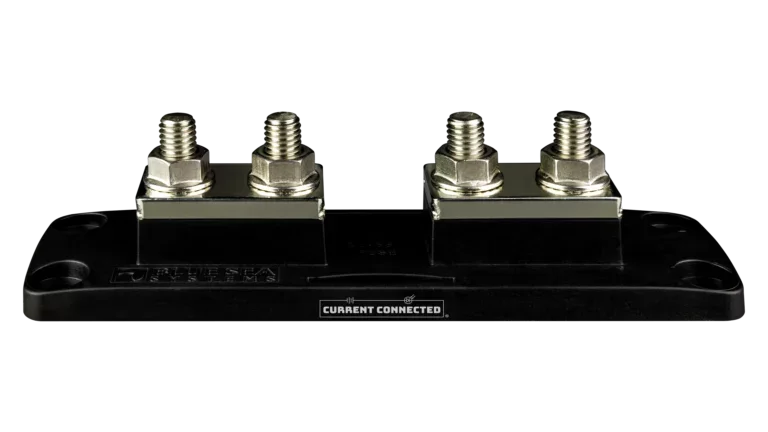
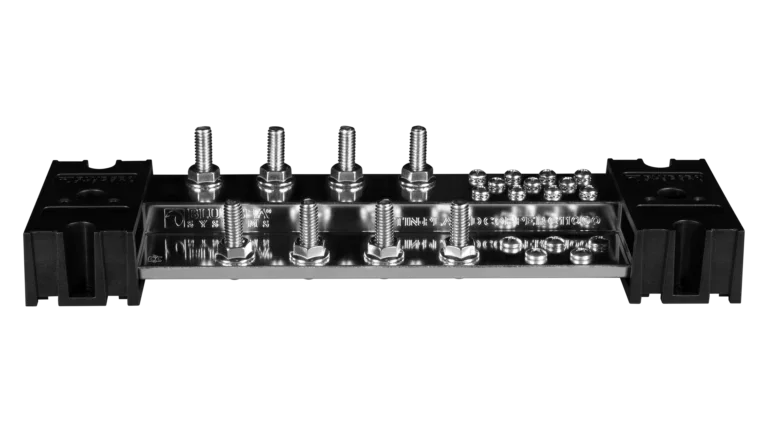
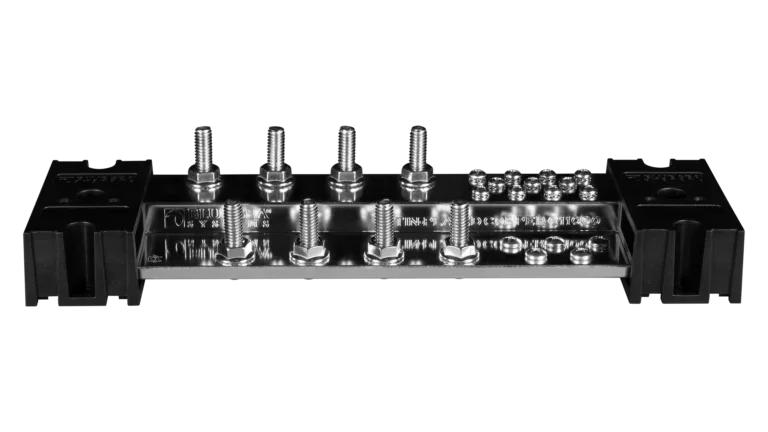
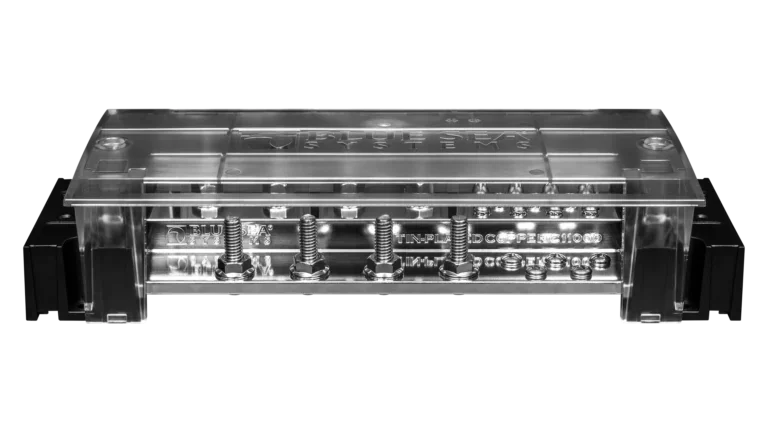
- Blue Sea Systems Class-T Fuse Block (available in standard and ignition-protected variants). Accepts one fuse, rated to 160V DC with M10 terminal studs. Fits up to 4/0 AWG cable.
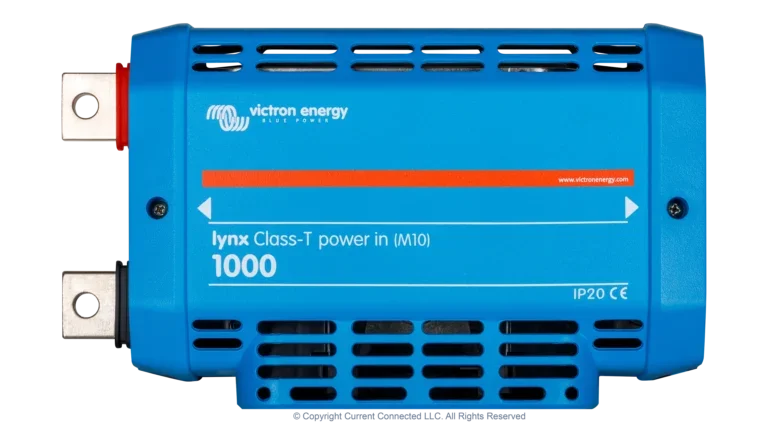
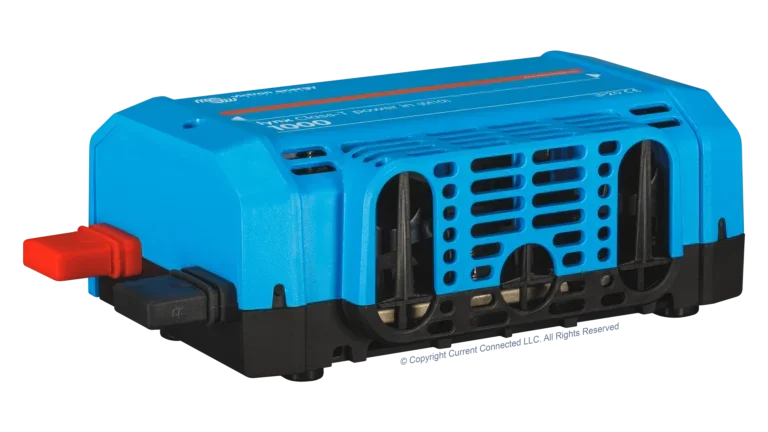
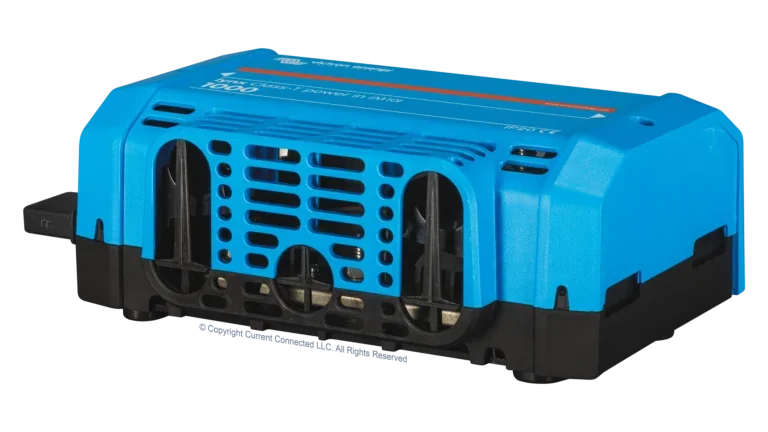
- Victron Lynx Class-T Power In provides two Class-T fuse positions inside a 1000A busbar module. Integrates with the Victron Lynx modular distribution system and reports fuse status through a Cerbo GX.
Fuse Sizing
Size the fuse to the wire you're protecting, not just to the expected load. Continuous load should not exceed 80% of the fuse rating. Like MRBF and ANL fuses, Class-T fuses have a time-delay curve that allows brief inrush spikes (motor starting, inverter surge) to pass without nuisance blowing. A 300A Class-T can handle well over its face value for short durations. Check the manufacturer's trip-delay curve when sizing for circuits with significant inrush.
Recommended Accessories
Frequently Asked Questions
It depends on your battery chemistry, system voltage, and bank size. AIC ratings are voltage-dependent, so a fuse rated 10,000A AIC at 14V performs much worse at higher voltages. MRBF fuses drop to 5,000A AIC at 32V and just 2,000A at 58V. That makes them marginal at 24V and inadequate for most 48V lithium systems. Class T maintains 20,000A AIC at 125V DC, covering all common system voltages with margin. ABYC E-13 specifically recommends Class T for lithium installations.
MEGA fuses are fine for downstream load protection (charger circuits, alternators, distribution feeds) where a higher-AIC battery fuse upstream catches the worst-case fault first.
Technically you can get current through it, but it's a bad idea. The fuse block provides a clear insulating cover that meets ABYC/USCG requirements, breakouts that manage cable routing, and a secure mounting surface that prevents the fuse from flexing under cable weight or vibration. A bare Class T bolted between two studs leaves live terminals fully exposed, has no strain relief on the connections, and can work loose over time as thermal cycling and vibration take their toll. When a Class T trips under high fault current, it contains the arc internally (that's the advantage of fully metal-encased construction), but the fuse block cover provides additional containment and keeps the terminals insulated from anything nearby. The fuse block costs a fraction of what the fuse itself costs. Don't skip it.
Yes. Blue Sea Class T fuses are compatible with the Victron Lynx Class-T Power In module. The Lynx accepts two Class T fuses and integrates with the Lynx modular distribution system.
The fuse itself is rated and UL listed to 125V DC. The Blue Sea fuse block is rated to 160V DC. The fuse is the limiting factor, so the system voltage limit is 125V DC. This is well within spec for 12V, 24V, and 48V battery systems.
Customer Reviews
No reviews yet. Be the first to review this product!