Custom Battery & Inverter Hookup Cables - Designed And Made To Order - 6AWG to 4/0AWG Options Available


SKU: E-200001

End 1End 25/16" Tinned Cu Lug5/16" Tinned Cu Lug4/0 AWG4/0 AWG4/0 AWG3 ft
  • 4/0 AWG (2,047 strands - 0.25mm each)
  • Maximum Ampacity: 440A*
  • Resistance: 0.061 Ω/1000 ft
  • Conductor diameter: 0.56″
  • Insulation (thickness): EDPM Rubber (0.08″)
  • Overall cable diameter: 0.75″
  • Conductor weight: 0.72 lbs/ft
  • Total cable weight: 2.16 lbs
  • End 1: 5/16" Tinned Cu Lug
  • End 2: 5/16" Tinned Cu Lug
  • Length: 3 feet
  • Assembled in the USA with USA made cable

*Based on free air. Maximum ampacity does not factor in performance factors such as voltage drop

Select multiple colors to order a matching set.

feet(1–100)

4/0 AWG Black 3ft | End 1: 5/16" Tinned Cu Lug | End 2: 5/16" Tinned Cu Lug

About Our Custom Battery Cables

Every cable we sell is built to order in our facility using super-flexible fine strand pure copper conductor with tin-coated copper lugs and glue-lined adhesive heat shrink on every termination. We've crimped tens of thousands of battery cables, inverter cables, and power distribution cables, and we stock lug sizes that are difficult to find elsewhere. Whether you need short jumper cables for a battery bank, long runs from an inverter to a disconnect, or heavy gauge welding-style cable for high-current applications, the builder on this page lets you spec exactly what you need.

How the Cable Builder Works

Start by selecting your wire gauge, then choose one or more jacket colors, set your length, and pick a terminal lug for each end independently. Pricing calculates in real time as you adjust your configuration. If you select multiple colors (for example, red and black), the builder creates a matched set with identical specs, and each cable is added to your cart as a separate line item at the same price.

Every configuration generates a shareable link. If you need to send your cable spec to a colleague, an electrician, or our support team for review, just copy the URL from your browser.

Choosing the Right Gauge

Wire gauge determines how much current a cable can safely carry and how much voltage is lost over the length of the run. Undersized cable creates excess resistance, which wastes energy as heat and can damage terminals and insulation. Oversized cable works fine electrically but costs more and is harder to route and terminate.

If you're not sure what gauge to use, the built-in "Help Me Decide" tool will recommend one. Enter your system voltage, current draw (in amps or watts), and total cable run length. The tool runs a voltage drop analysis and flags each gauge option as recommended, a budget alternative, too thin, or too thick for your application.

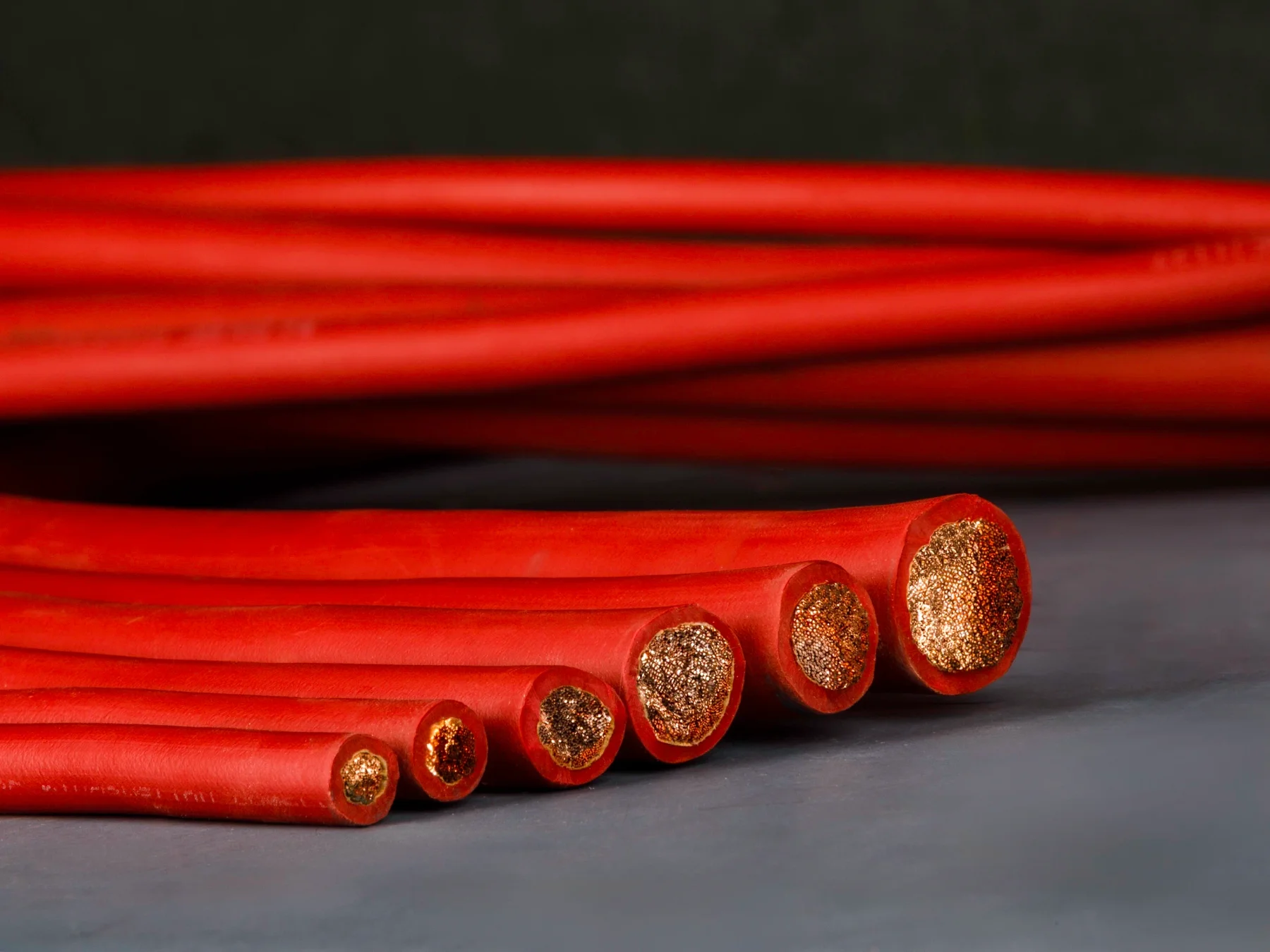
Spools of wire in various different gauges
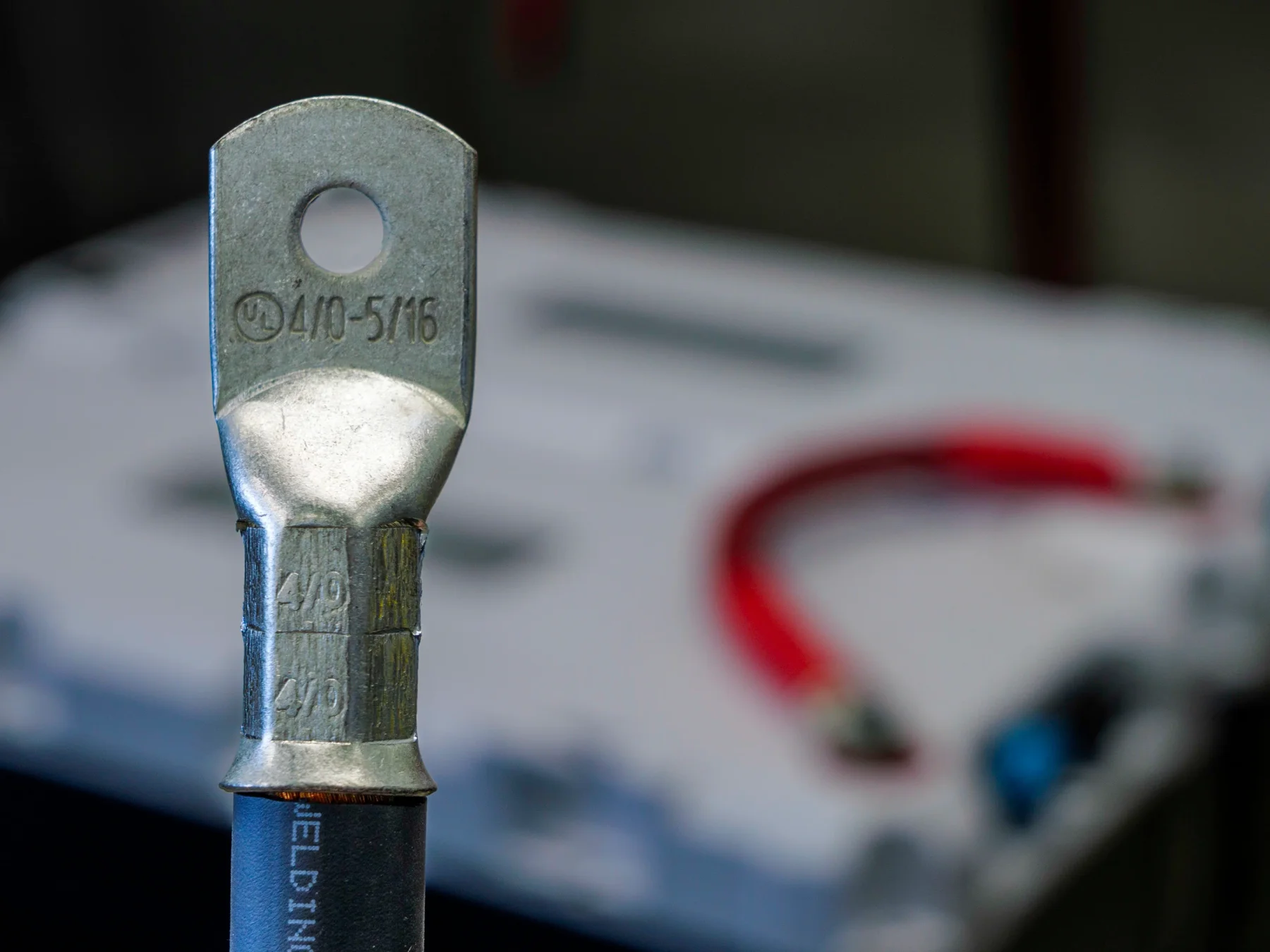
Close up photo of 4/0 lug in front of LFP batteries

End Fittings

Each end of the cable gets its own terminal lug, selected independently. The stud hole size is the hole in the tongue of the lug that slides over a bolt on your equipment, and that's what you're choosing here.

The right size depends on what you're connecting to. Battery posts and bus bars typically use 5/16" studs. Larger equipment like inverter terminals and disconnects often use 3/8". Smaller components like fuse holders and some charge controllers use 1/4". If you're unsure, measure the stud on your equipment or check the manufacturer's spec sheet.

If you don't need a lug on one or both ends, select the raw end option. A raw end leaves the cable unterminated so you can crimp your own lug, feed the cable through a gland, or connect to equipment that uses set screw or compression terminals.

Cable Construction

We build every cable in-house rather than outsourcing, because we couldn't find a supplier that met our standards. The conductor is Windynation Power-Flex Cable, a very fine stranded 100% pure copper cable that's easier to route in tight battery compartments and equipment enclosures than standard welding cable or building wire. Every termination uses tin-coated copper lugs for corrosion resistance and reliable conductivity.

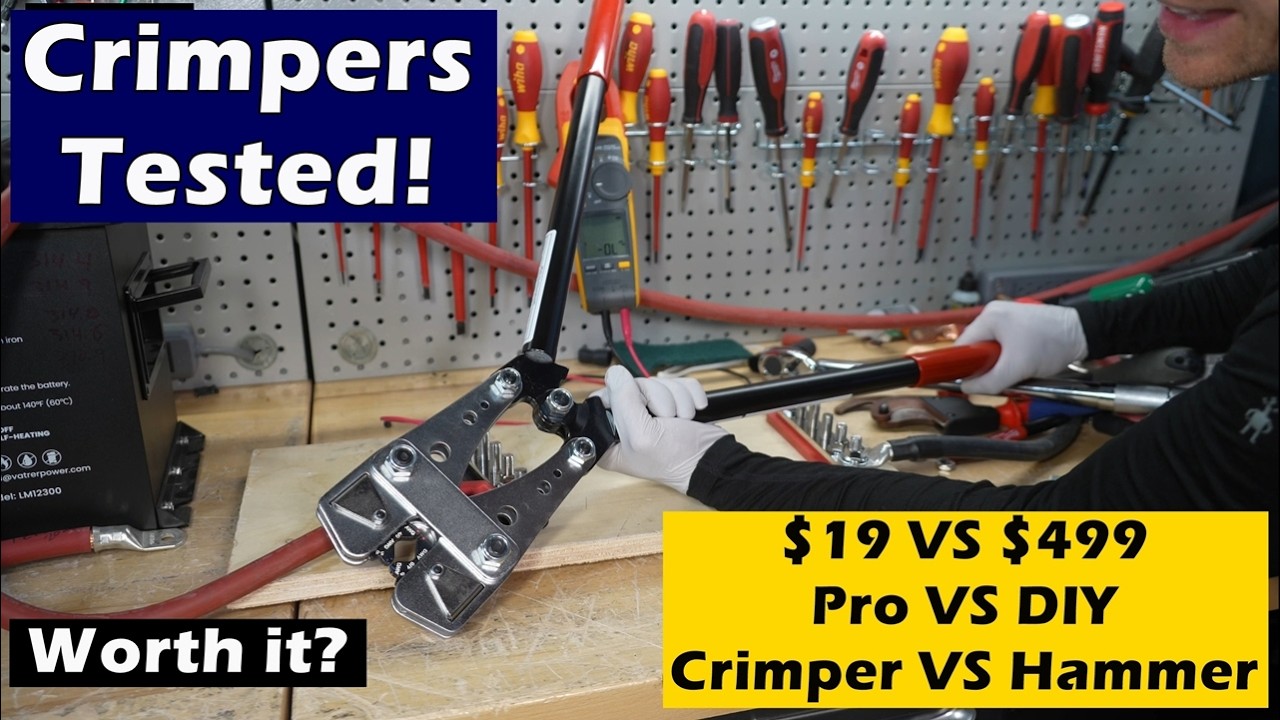
Each crimp is made with a 6-point, 10-ton hydraulic press that creates a cold weld between the cable and lug. After crimping, we apply glue-lined adhesive heat shrink over the lug barrel. The adhesive lining melts during shrinking to form a watertight seal, preventing moisture from wicking into the conductor strands and causing corrosion over time. This matters in marine, outdoor, and engine bay installations where exposed copper will degrade quickly.

Every cable goes through three quality assurance checks before it ships.

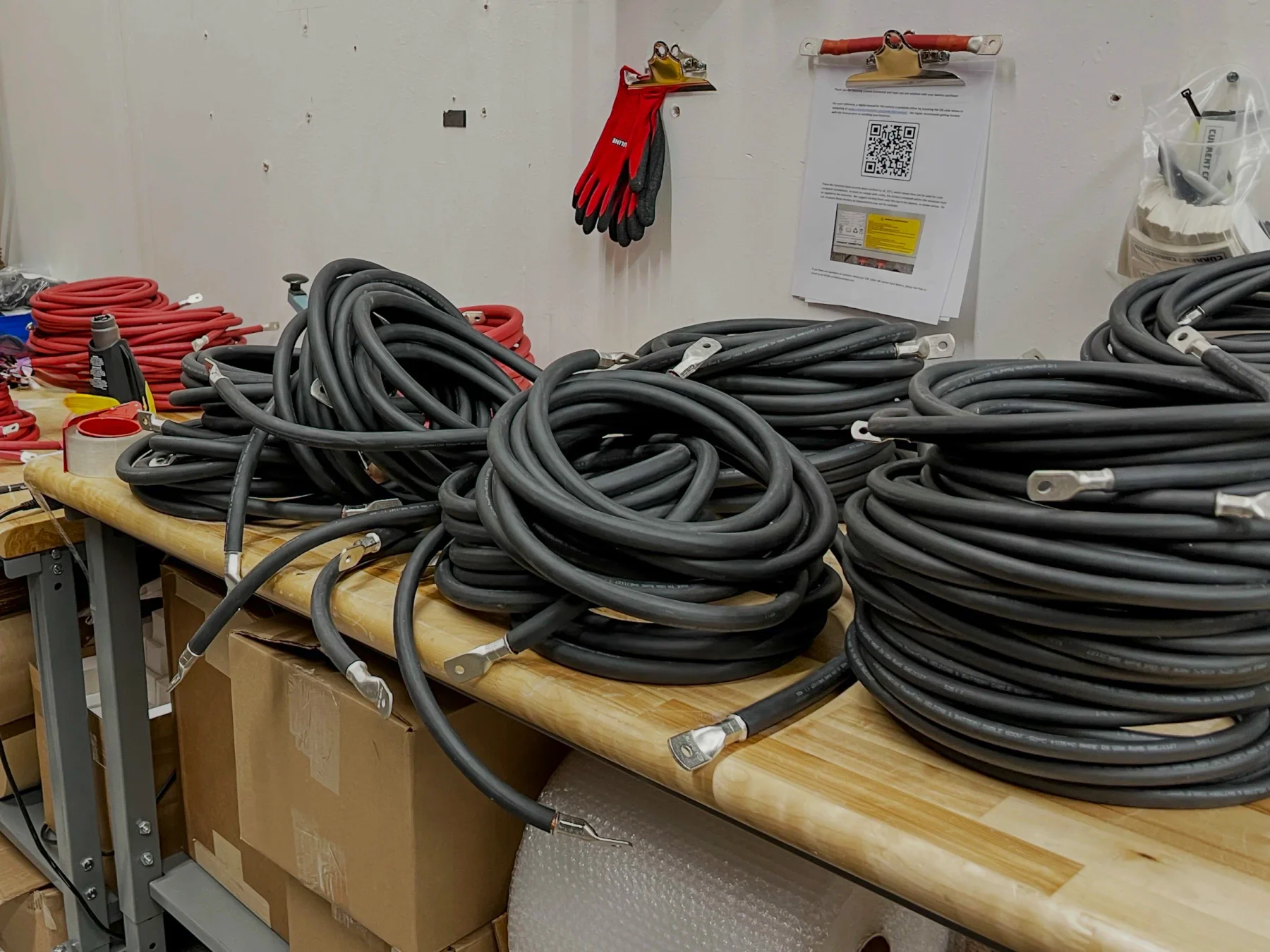
Large order of cables awaiting heat shrink
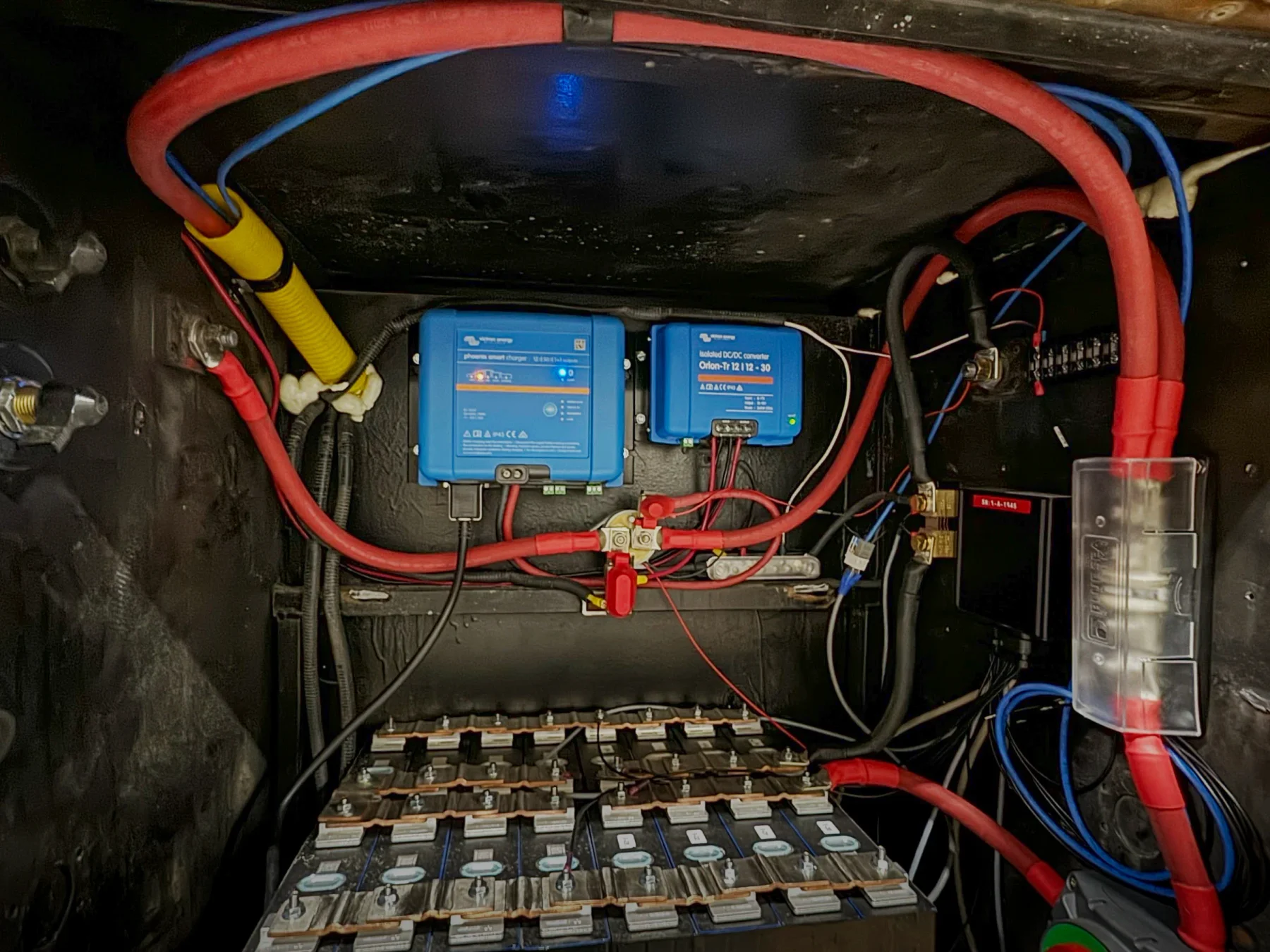
Thick cables installed in a system with a large battery bank

Common Applications

Our custom cables are used across a wide range of DC power and high-current applications. Off-grid and solar battery banks use them to connect batteries in series and parallel, and for the main runs between battery banks, inverters, charge controllers, and distribution panels. RV and marine builders use them for house battery wiring, shore power connections, and engine compartment upgrades. They're also used as automotive and welding cable replacements where a flexible, properly terminated cable with sealed connections is needed. If your application requires a reliable, low-resistance copper cable built to spec, this builder will get you there.

Frequently Asked Questions

100% pure copper, fine stranded Windynation Power-Flex Cable. The fine strand count makes it significantly more flexible than standard welding cable or building wire, which matters when routing through tight spaces in battery compartments, inverter enclosures, and engine bays.

Every lug is crimped with a 6-point, 10-ton hydraulic press that creates a cold weld between the conductor and the lug barrel. This is not a hammer crimp or a handheld ratchet crimp. After crimping, we seal every termination with glue-lined adhesive heat shrink to prevent moisture intrusion.

Yes. Select multiple colors in the builder (for example, red and black) and both cables are added to your cart with identical gauge, length, and end fitting specs. Each cable is priced individually.

Use the built-in "Help Me Decide" tool. Enter your system voltage, current draw, and cable run length, and it will recommend a gauge based on voltage drop analysis. If you're still unsure, contact us and we can help you size it.

Yes. End 1 and End 2 are configured independently. This is common when one end connects to a battery terminal with one stud size and the other connects to an inverter or bus bar with a different stud size.

Yes. The Windynation Power-Flex conductor is rated and marked as welding cable. The difference is that our cables come with properly crimped and sealed terminations rather than bare ends, so they're ready to install out of the box for both welding and DC power applications.

Our pre-made cables use the same conductor, lugs, crimping process, and heat shrink. The builder gives you full control over gauge, length, and end fitting combinations that aren't available as pre-made options. If you see a pre-made cable that matches your specs, it's the same quality at the same price.

Custom cables are built to order and typically ship within one to two business days.

Yes. The builder syncs your selections to the page URL. Copy the link from your browser and send it to anyone. They'll see your exact configuration when they open it.

Because every cable is built to your exact specifications, custom cables are not eligible for return unless there is a defect in materials or workmanship. Double check your gauge, length, and lug selections before ordering. If you're unsure about your configuration, contact us before placing the order and we'll help you verify it. If you need a cable shortened or want different lugs after receiving it, we can re-crimp it for a reasonable fee. Just contact us to arrange it.

Customer Reviews

No reviews yet. Be the first to review this product!