About the Victron Cerbo GX MK2
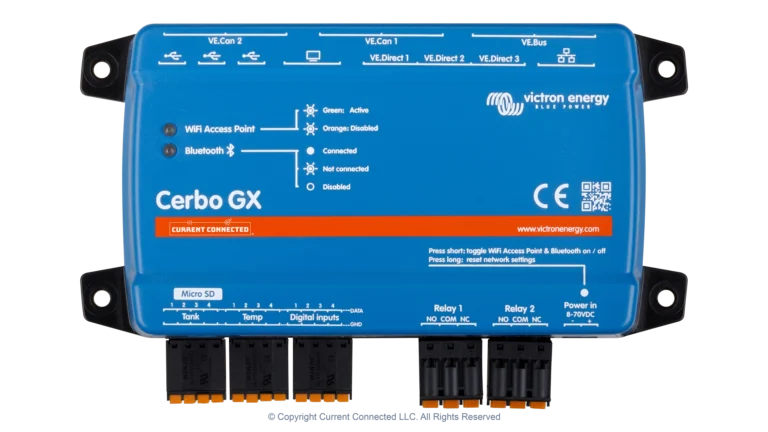
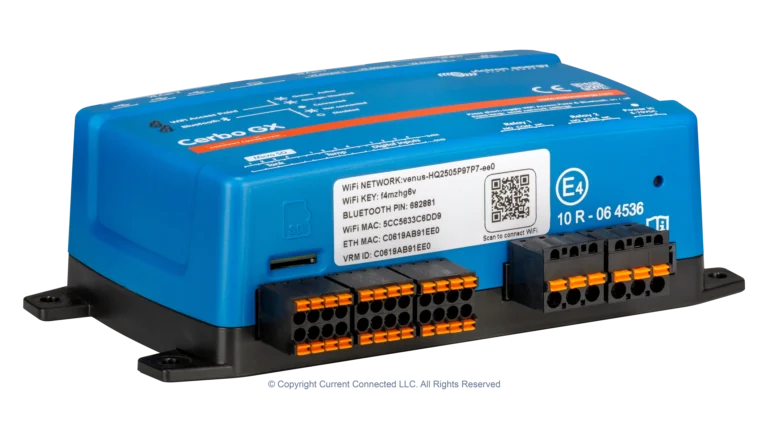
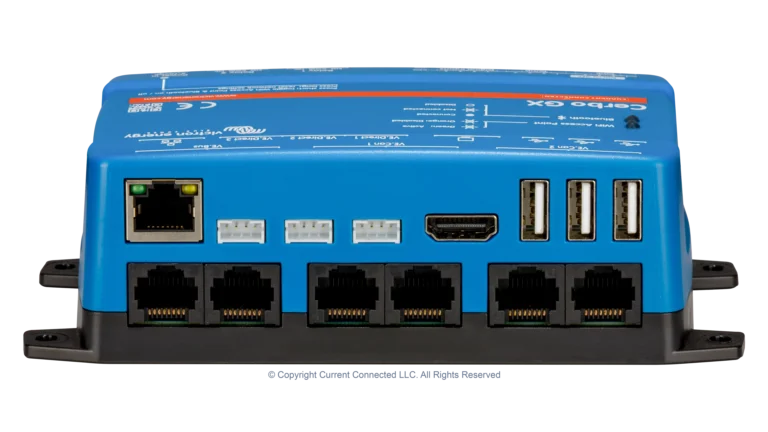
Victron's Cerbo GX MK2 System Controller is designed for monitoring and controlling all aspects of a 12V, 24V, or 48V energy system. It's ideal for off-grid, hybrid, and energy storage installations. The Cerbo's many ports enable connection to a variety of Victron and non-Victron products, and the internal software enables detailed customization and automation.
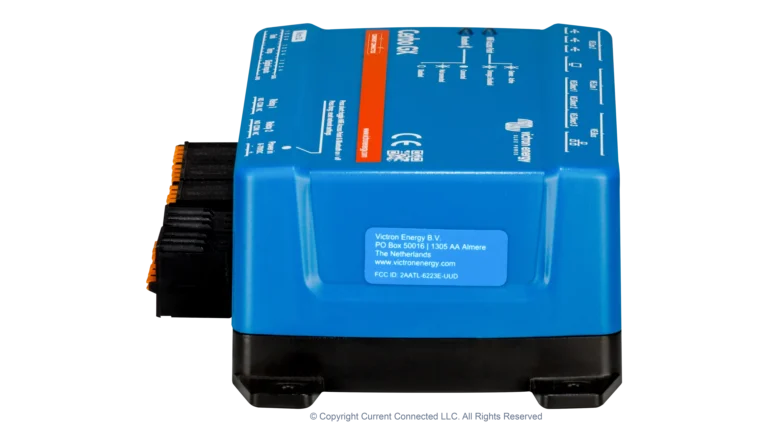
The Cerbo is compact. At only 3.07×6.06×1.89in, it's easy to install in any energy system. This size is especially convenient for small spaces like an RV compartment.
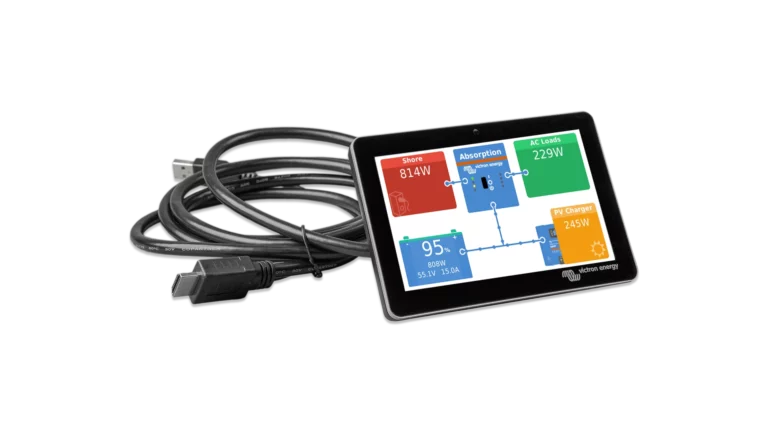
Optional GX Touch Display
The optional GX Touch provides an easy way to monitor and control the Cerbo. This touch screen device displays real-time information such as battery SOC (State of Charge %), power out to connected loads, and power in from solar panels. The included 6.5ft cable makes it possible to view the Cerbo's information from a convenient location.
BMS Communication and Battery Integration
For lithium battery systems, the Cerbo is the bridge between the battery's BMS and every other device in the system. It communicates with the BMS over CAN bus (via the BMS-CAN or VE.CAN port, depending on battery brand) and relays real-time charge and discharge limits to the inverter and solar charge controllers. This closed-loop communication means the system responds to actual battery conditions, not just fixed voltage setpoints. If the BMS reduces its charge current limit due to temperature or cell imbalance, the Cerbo passes that instruction to every connected charger within seconds. Victron maintains a compatibility list covering dozens of battery brands including EG4, Pylontech, BYD, Freedomwon, and SimpliPhi.
System Coordination with DVCC
DVCC (Distributed Voltage and Current Control) is the Cerbo's active management layer. When DVCC is enabled, the Cerbo coordinates charge current across every connected solar controller, inverter/charger, and DC-DC converter as a single system. It distributes the BMS current limit across all charging sources, manages shared voltage and temperature sensing, and compensates for DC loads so that the battery sees the charge current the BMS actually requested. Without a GX device running DVCC, each charger operates independently based on its own programmed settings.
Remote Monitoring and Configuration Through VRM
Since the Cerbo can connect to WiFi and Ethernet, it uploads all system information to VRM, Victron's secure remote monitoring portal. VRM is free with no subscription, no monthly fee, and no tiered feature limits. That access is permanent for the life of the system.
VRM shows real-time battery state of charge, temperature, tank levels, and AC input from grid, generator, or other power sources. Historical data is logged and graphable, so you can review system performance over days, weeks, or months. It's also possible to check system alarms and run diagnostics remotely, all critical information for making sound decisions about the energy system. System data is private by default but can be shared with specific people or made public.
Remote Console gives you full GUI access to the Cerbo from any browser, exactly as if you were standing in front of a GX Touch. You can change settings, switch operating modes, adjust input current limits, and monitor live data flows. Remote VEConfigure goes a step further, allowing full inverter configuration file downloads and uploads through VRM. Firmware updates for connected Victron products can also be pushed remotely through VRM without physically touching the equipment.
Generator Auto-Start and Stop
The Cerbo can automatically start and stop an external generator based on battery state of charge, system load, time of day, or other configurable conditions. For off-grid systems that rely on a backup generator for extended cloudy periods or heavy loads, this turns the Cerbo into an automatic transfer and fuel management tool. The generator control logic runs locally on the Cerbo, so it works even if internet connectivity is temporarily unavailable.
Connectivity and Sensor Inputs
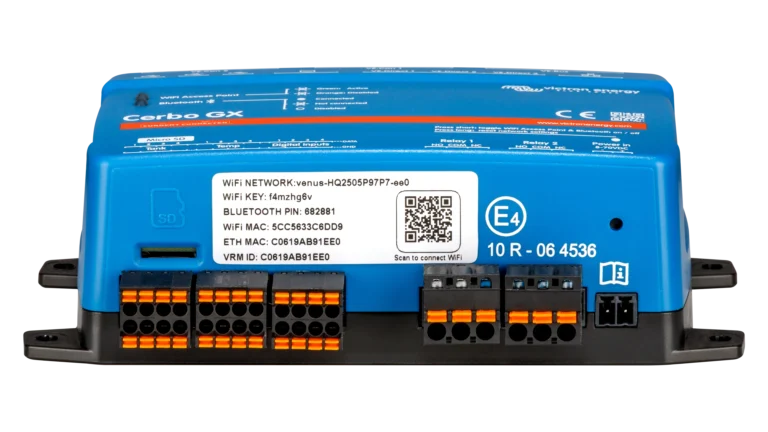
Some of the Cerbo's ports include connections for tank level monitors, temperature sensors, VE.Direct, VE.Can, battery connections, and relays. These connections allow the Cerbo to monitor and control much of the energy system.
Programmable Relays
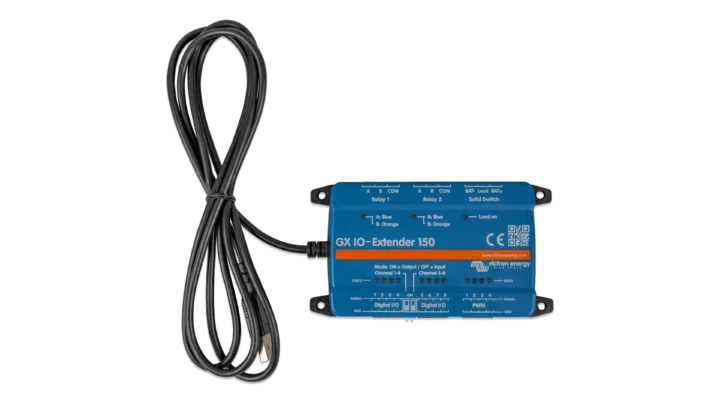
Two programmable relays allow for advanced automation and customization. It's possible to program these relays to activate alarms or generators, or for use with pumps, temperature sensors, and more.