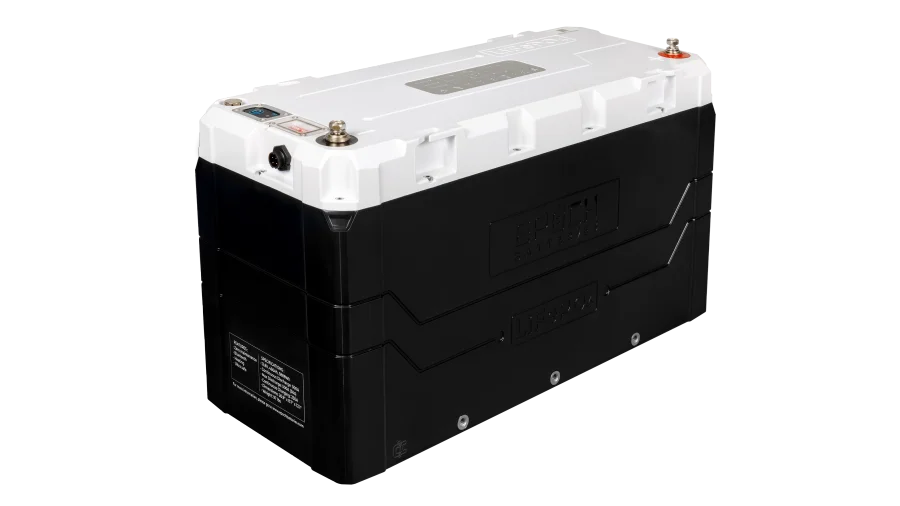
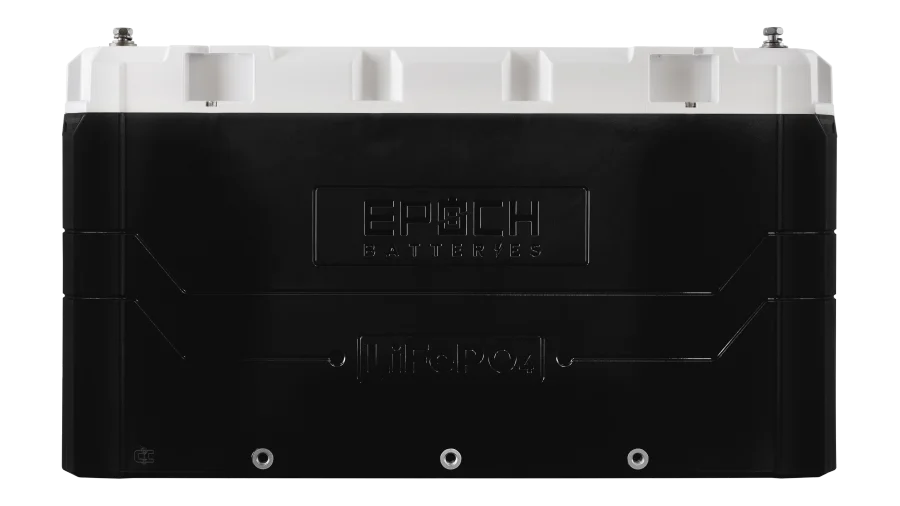
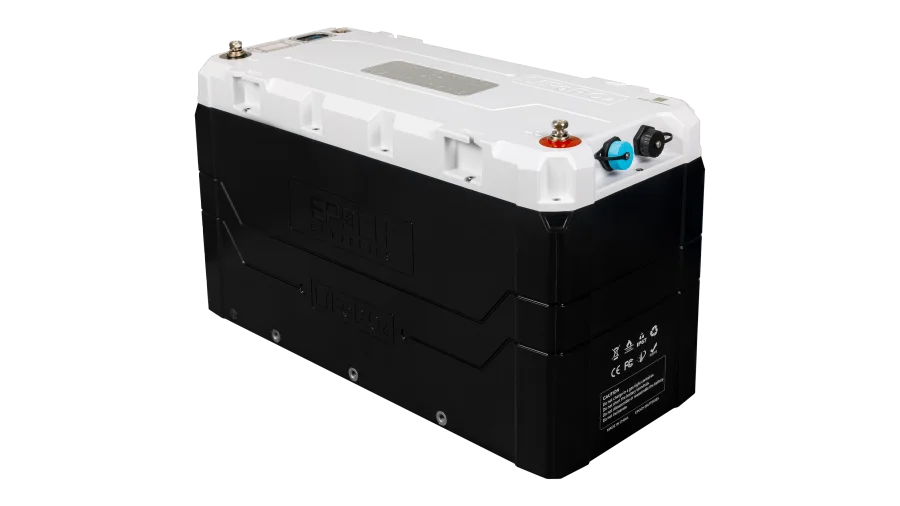
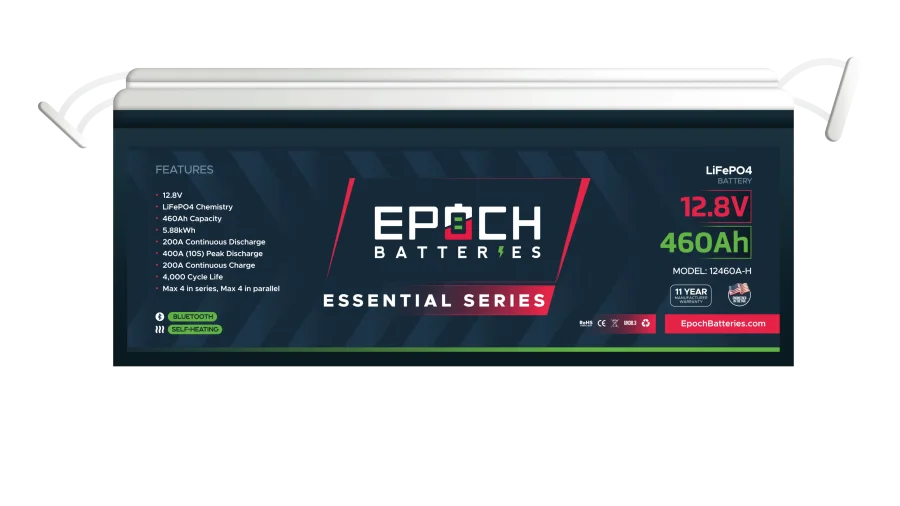
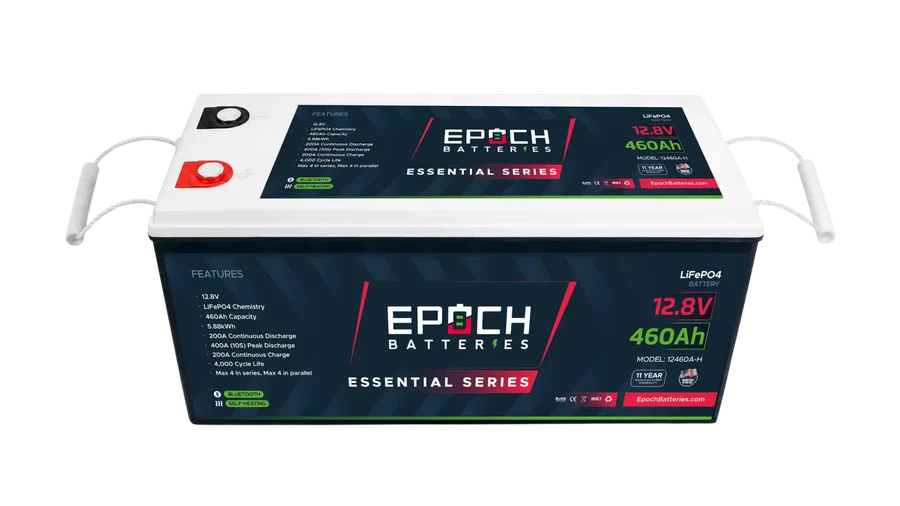
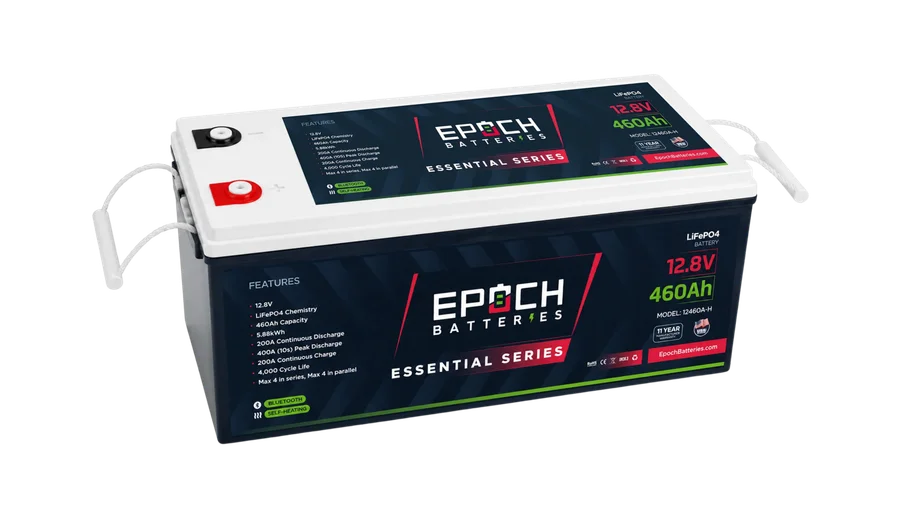
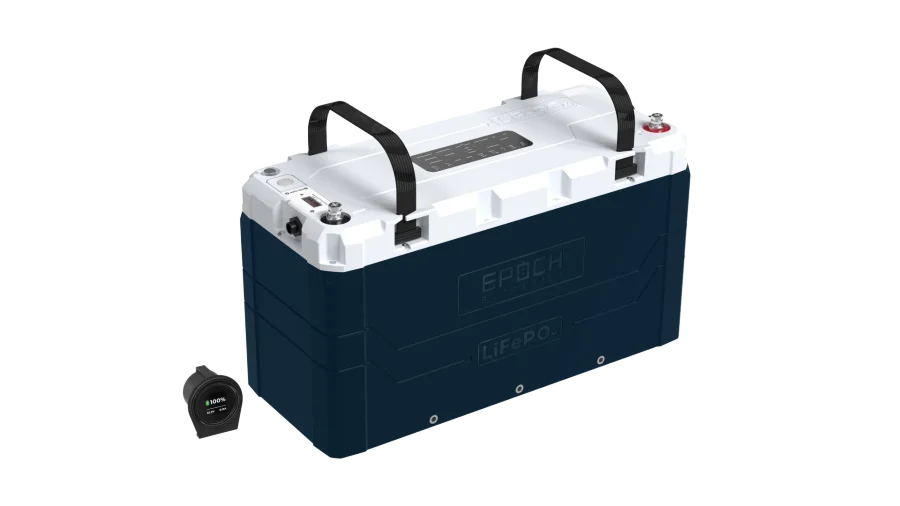
Epoch 12V 460Ah V2 Elite LiFePO4 Lithium Battery, C12460A, 5.89kWh, Heated, Bluetooth, Victron CAN, IP67
SKU: C12460A
Log in to check member price and detailed stock information.
| Need more than what's available? Tell us what you need and we can source it for you. |
Product Summary
The Epoch 12V 460Ah V2 Elite lithium battery puts 5.89kWh of LiFePO4 storage in one case, so there's no stack of 100Ah batteries to wire together. It talks to your Victron GX over CAN, warms its cells before charging in the cold, and gives an RV, boat or off-grid cabin a house bank you can grow one battery at a time.
Specifications:
- 12.8V nominal and 460Ah, for 5.89kWh of stored energy
- 230A continuous charge and discharge, with 500A available for 30 seconds
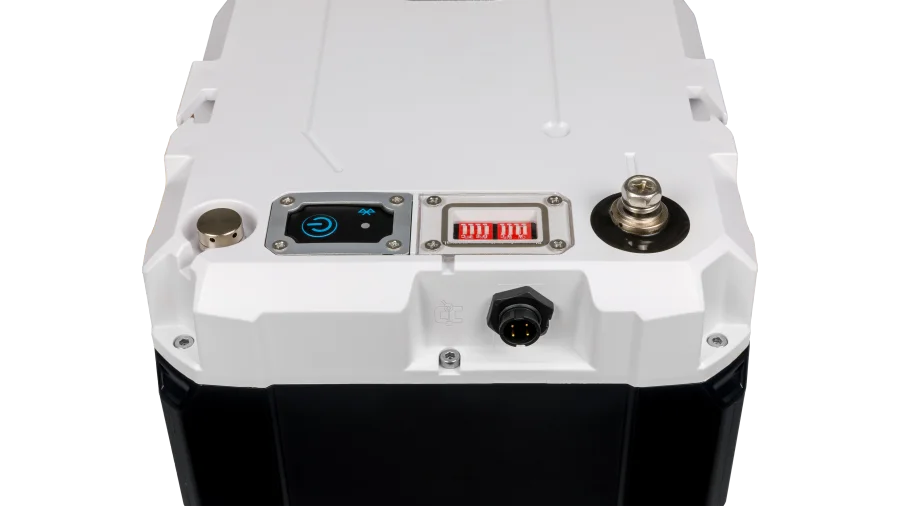
- Native Victron CAN at 500 kbit/s, plus Bluetooth monitoring in the Epoch Li-Ion app
- Self-heating supports charging from -22°F (-30°C) ambient; discharges from -4°F to 131°F (-20°C to 55°C)
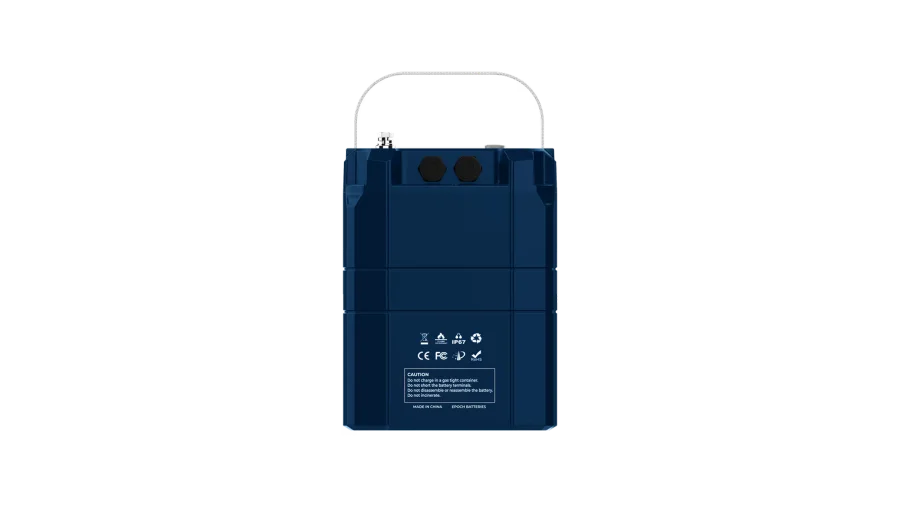
- IP67, UL94 V-0 case, dust-tight and rated for temporary immersion to 3.3 ft (1 m) for 30 minutes
- Up to 16 in parallel (7,360Ah, 94.2kWh) or 4 in series (51.2V nominal)
- 3,500+ cycles to 70% capacity, UL 1973 battery pack and an 11-year limited warranty
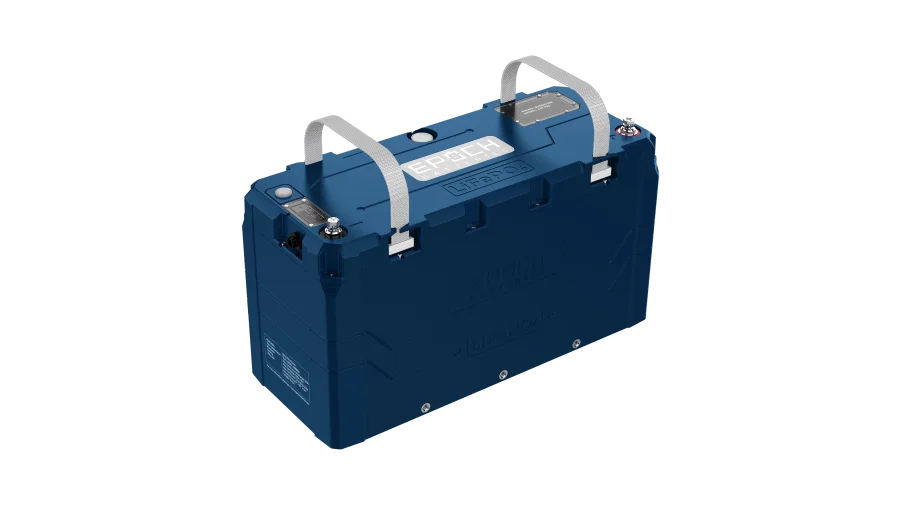
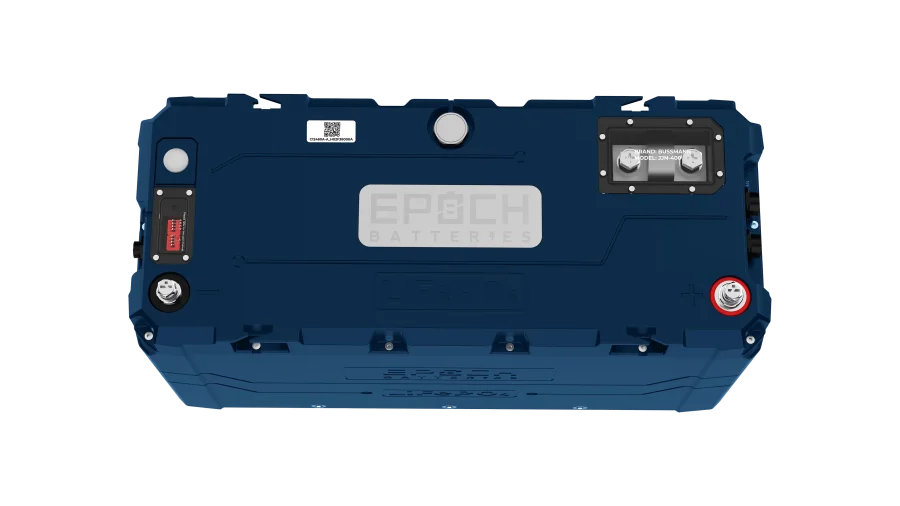
- 12.06 × 20.86 × 8.65 in (306 × 530 × 220 mm, H×W×D), about 97 lb (44 kg); includes the Bluetooth gauge, communication harness and power button


Current Connected is YOUR Epoch Battery product specialist
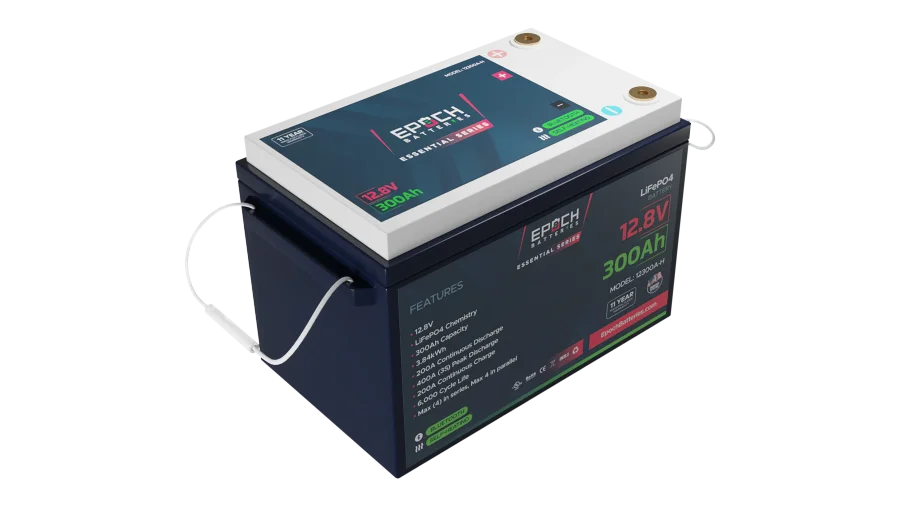
About the Epoch 12V 460Ah V2 Elite Lithium Battery
One battery, one BMS, one pair of terminals. That's the appeal of the Epoch 460Ah lithium battery. You get 5.89kWh of LiFePO4 storage in a single case, with no parallel jumpers to balance and no extra lug stacks to inspect. In an RV, it runs the house, from the fridge and fans to the inverter loads. On a boat, it carries electronics, refrigeration and pumps. In a cabin, it anchors a 12V solar system.
At 230A continuous, the battery supplies about 2,944W DC before inverter losses. By Epoch's own math, a 2,000W load through a 90% efficient inverter pulls about 174A. Epoch's guidance is to add batteries in parallel whenever the inverter's DC input can top 230A, so check that against your inverter's full-load draw. The 500A rating for 30 seconds covers start-up surges from compressors, pumps and microwaves.
Victron CAN Communication With Your Cerbo GX
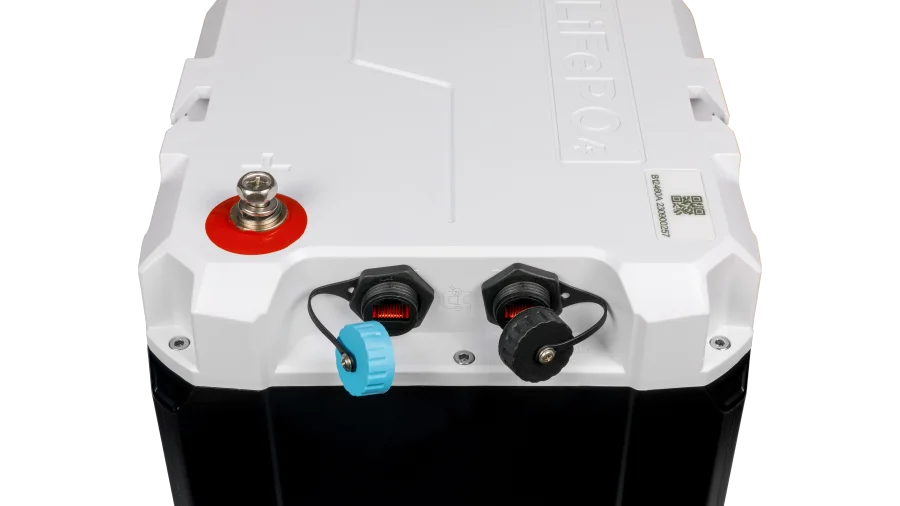
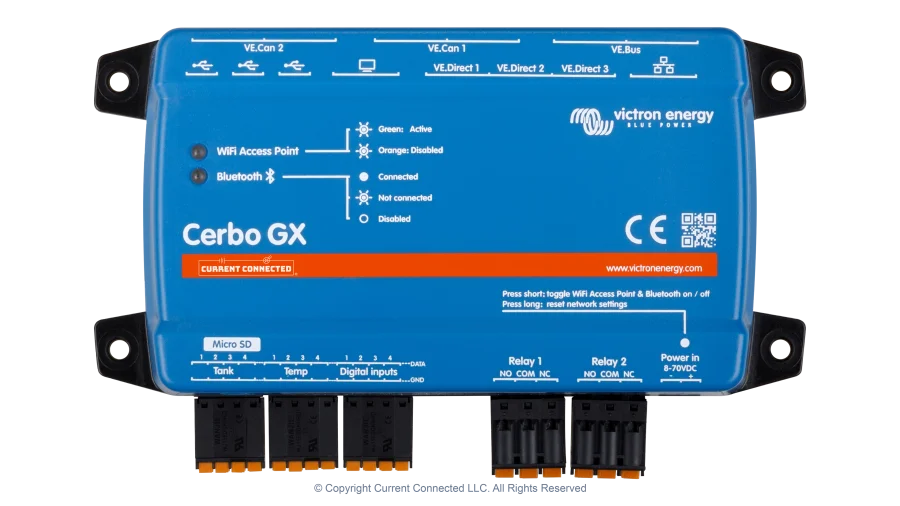
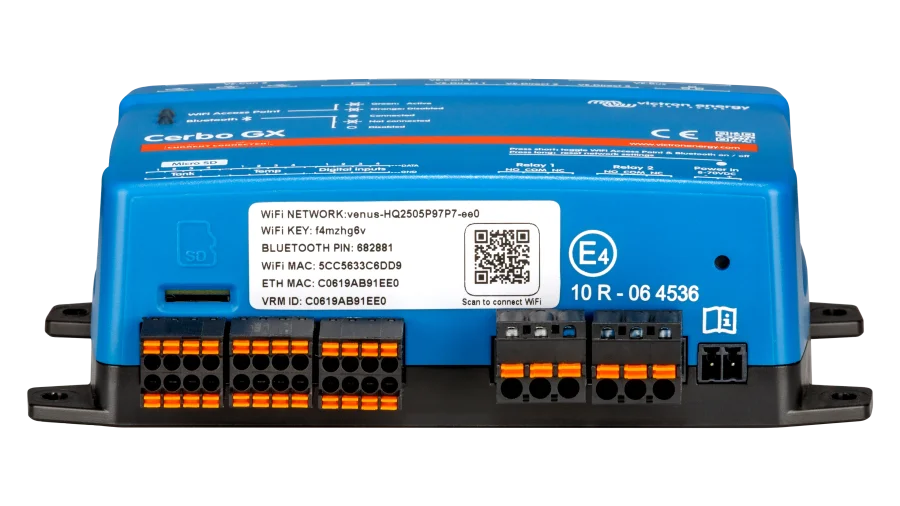
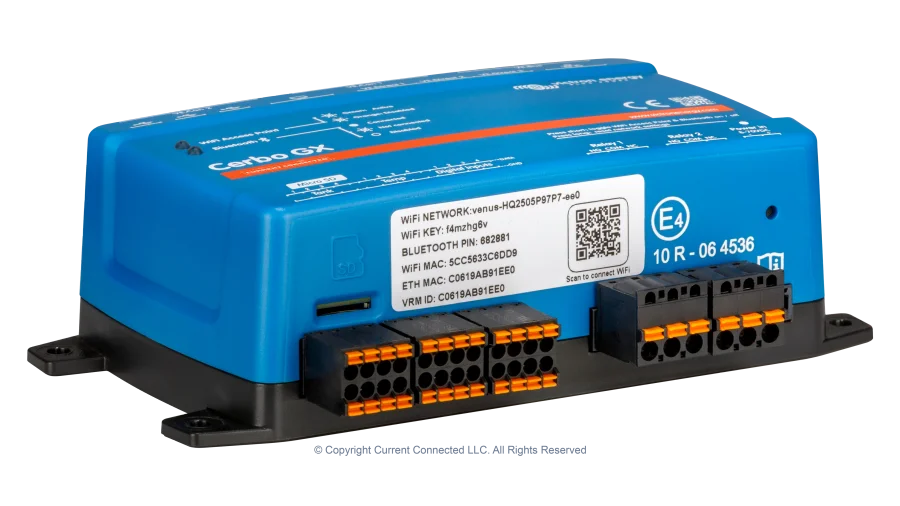
The included harness plugs into VE.Can 1 or 2 on a Victron Cerbo GX MK2, with the port set to 500 kbit/s. On other GX devices, it goes into the BMS-CAN port. Turn on DVCC and choose Epoch as the controlling BMS and battery monitor. Your inverter-charger and solar chargers then follow the battery's own charge limits. In a bank, the batteries daisy-chain over RJ45 from one to the next, and the GX shows the full bank capacity.
Away from the GX screen, the included Bluetooth gauge connects to the Epoch Li-Ion app on iOS and Android. You'll see state of charge, cell voltages, temperatures and alerts for each battery, and you get firmware updates over the air.
Charging Below Freezing With Built-In Self-Heating
LiFePO4 cells can't take a charge below 32°F (0°C), so the V2 Elite warms itself first. When the cells are cold, the BMS holds off charging and sends incoming charge power to the internal heater. Once the cells reach 41°F (5°C), charging picks back up. That lets it charge from -22°F (-30°C) ambient without drawing down the energy you've stored. It discharges down to -4°F (-20°C) with no heat needed, so a winter camper or shoulder-season boat keeps its house power.
IP67 Case for Marine and RV Battery Compartments
The UL94 V-0 case is dust-tight and rated IP67 for temporary immersion to 3.3 ft (1 m) for 30 minutes. That makes lockers, compartments and exterior bays fair game. IP67 covers temporary immersion, not pressure washing or continuous submersion.
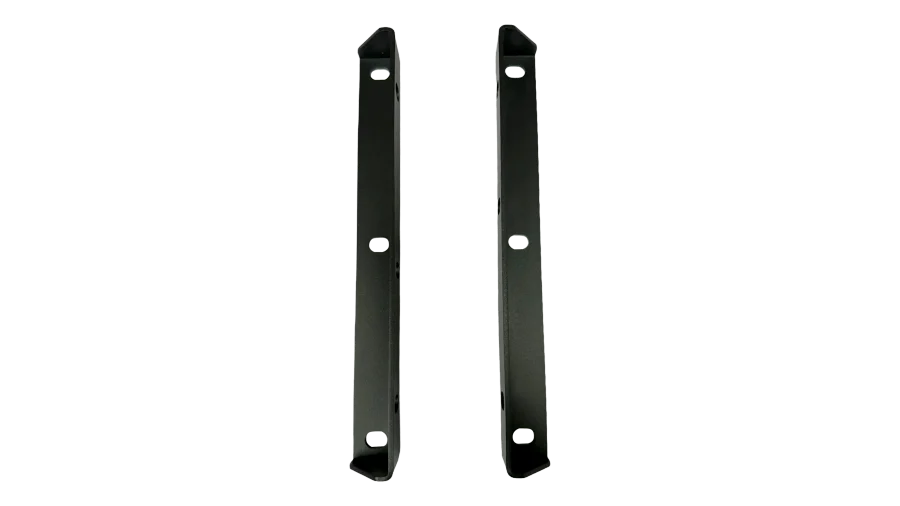
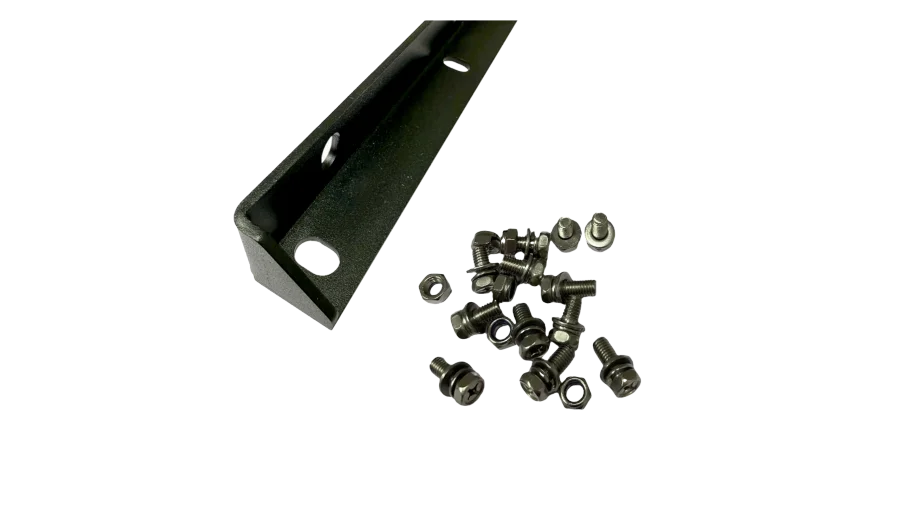
Replacing a Group 8D lead-acid battery? Epoch advises checking tray fit, hold-down and lid clearance first, since this case stands 12.06 in tall at the terminals. The Epoch V2 Elite mounting hardware bolts to the six M8 nuts on the case and anchors the battery to your floor or shelf.
Building a Bigger 12V, 24V or 48V Epoch Battery Bank
Up to 16 V2 Elite batteries connect in parallel for 7,360Ah (94.2kWh) at 12V. For a 24V, 36V or 48V-class bank, wire two, three or four in series instead (51.2V nominal at four). Epoch's published DIP switch settings cover series or parallel, not a mix of both. Check with Epoch before you design a series-parallel array. Our team is happy to help with sizing a bank around your loads.
Epoch 460Ah Battery Specs for Fusing, Cables and Charging
Epoch's manual asks that installation be done by someone who understands DC electrical systems: lithium charge settings, overcurrent protection, conductor sizing and terminal torque. Here are the numbers for each.
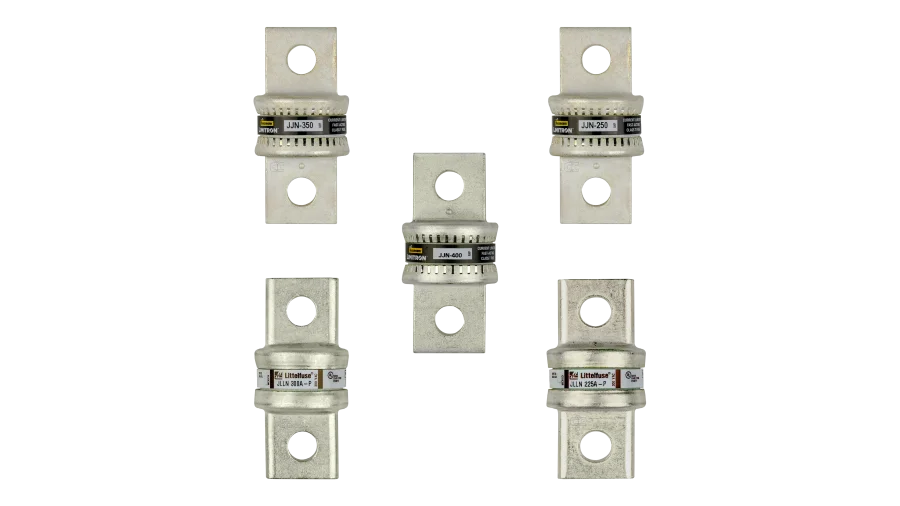
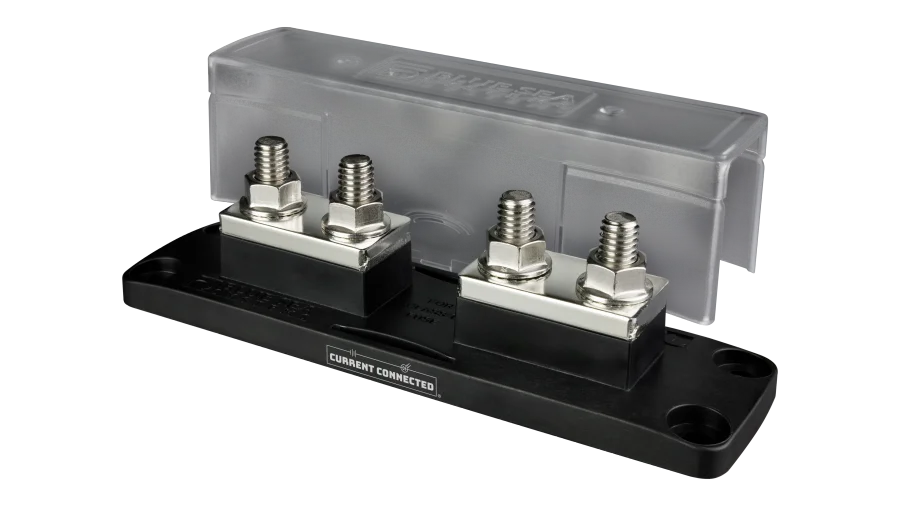
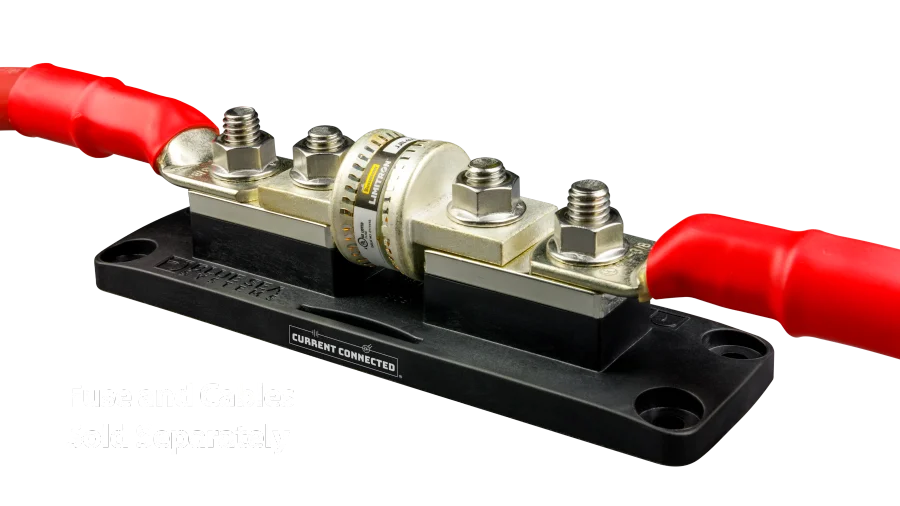
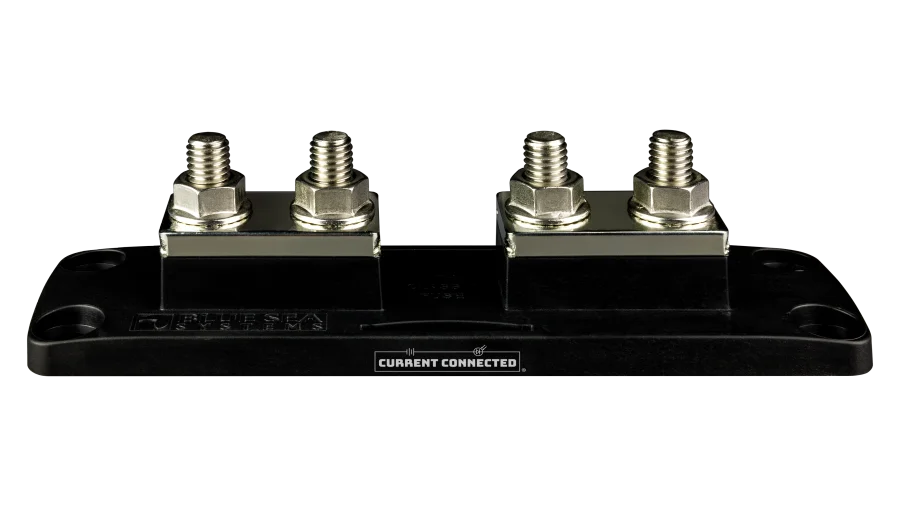
The internal 400A fuse protects the battery, not your cables. Epoch calls for a DC-rated fuse or breaker in the positive cable, as close to the battery as practical. Epoch's sizing is 125 to 150% of the system's maximum operating current, without going over the cable's ampacity. If your loads can pull the full 230A, that works out to roughly 290A to 345A. A Class-T fuse in that range, in its own fuse block or a Victron Lynx Class-T Power In, gives the bank its main protection.
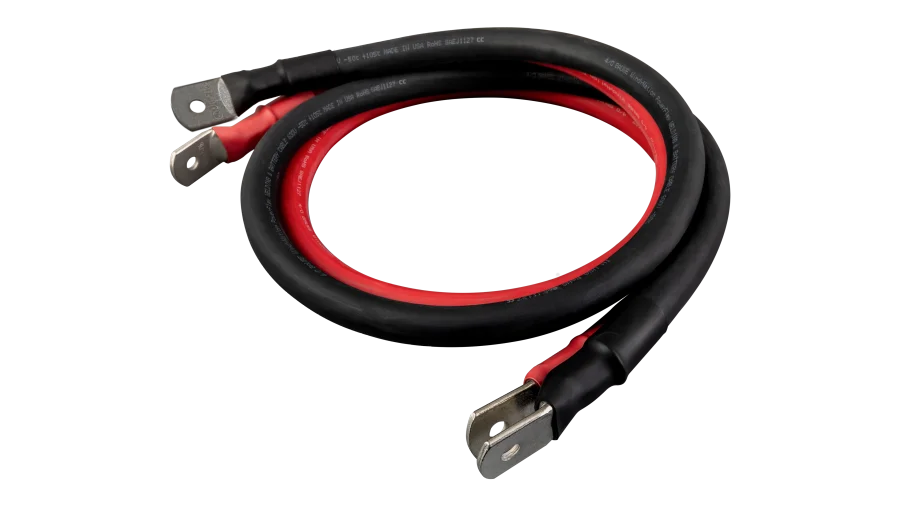
Size every cable for the 230A continuous rating and an acceptable voltage drop, not the 30-second peak. Our custom battery and inverter cables are made to order from 6 AWG to 4/0 AWG at the lengths you measure. Torque the M8 terminals to 71 to 106 in-lb (8 to 12 N·m).
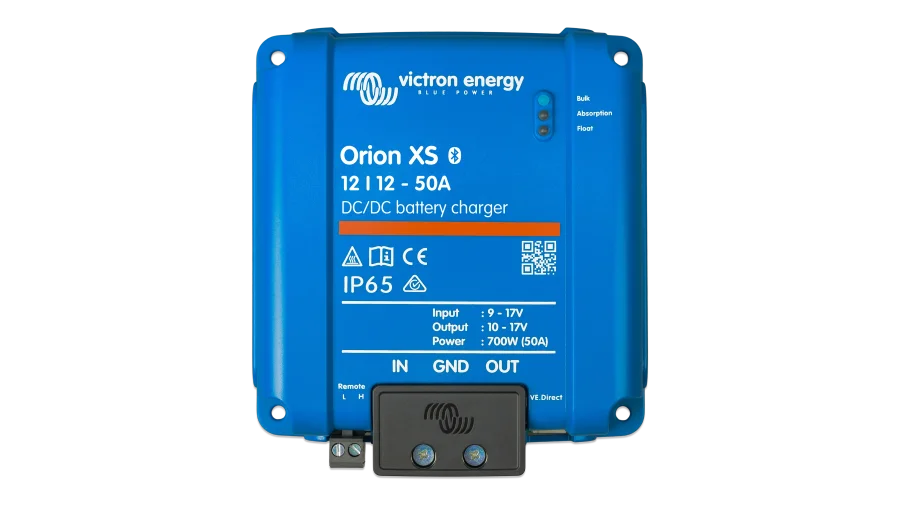
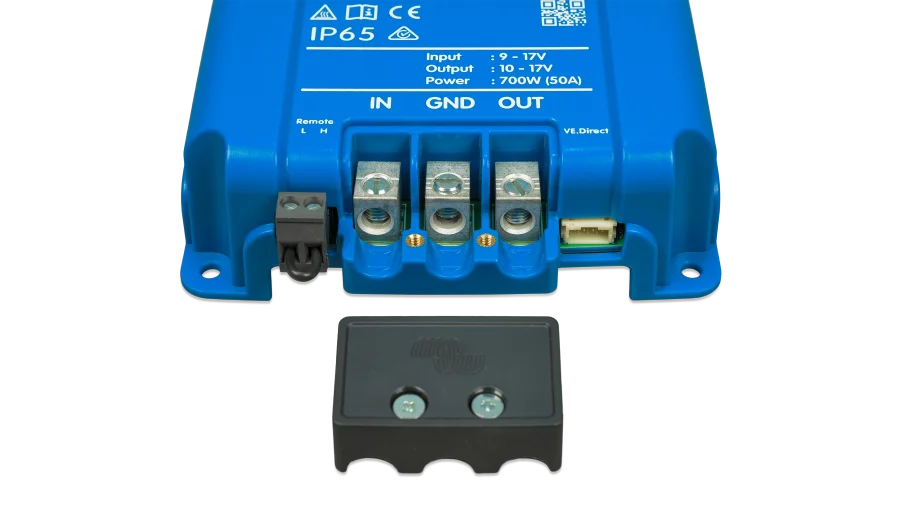
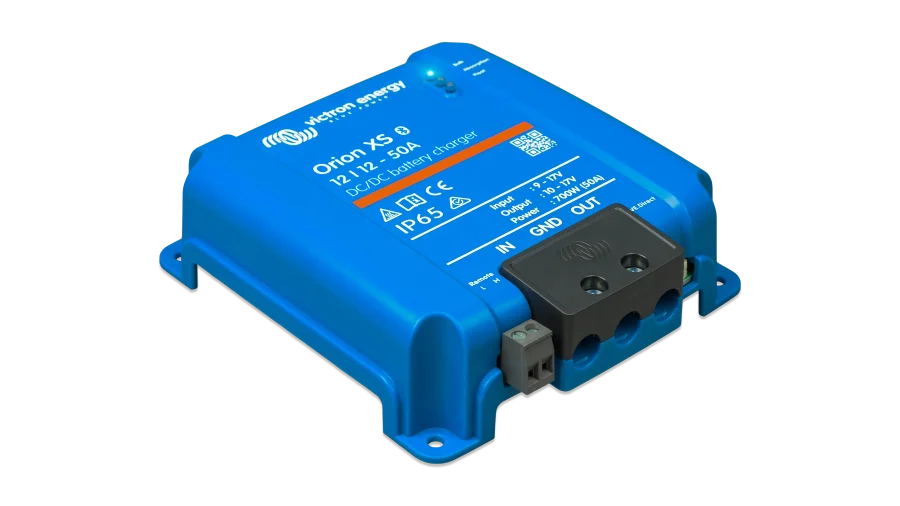
Chargers outside DVCC control need 14.2V absorption (15 minutes per battery in the bank) and 13.5V float, with equalization and temperature compensation off. For alternator charging, Epoch recommends a DC-DC charger or a lithium-set regulator. That's because a large lithium bank can draw more than an alternator is designed to deliver continuously. A Victron Orion XS DC-DC charger fits that job. The battery ships at about 30% charge, so give it a full charge before first use.
Recommended Accessories
Frequently Asked Questions
Both store 5.89kWh in the same size case, with self-heating, Bluetooth monitoring and Victron CAN. The V2-T adds a user-serviceable 400A Class T fuse (Eaton Bussmann JJN-400) inside the case. It takes up to 210A of continuous charge and holds its 500A discharge peak for up to 10 seconds. The V2 Elite uses a 400A internal fuse, takes up to 230A of continuous charge, and holds its 500A discharge peak for 30 seconds.
With either battery, Epoch still calls for an external main fuse or breaker near the positive terminal to protect the wiring.
No. Epoch rates this model as a deep-cycle battery for house power and energy storage, not engine starting. Keep a cranking-rated battery on the engine or generator, and let the V2 Elite run the house loads.
Epoch's manual for this model calls for upright installation, with the battery secured so it can't shift under vibration, braking or wave impact. If your space needs a different position, check with Epoch before you install it.
Epoch lists UL 1973 for the battery pack and UL 60691 for the internal fuse. For the cells, it lists UL 1642, UL 9540A and IEC 62619:2022. It ships as UN 3480, Class 9.
UL 9540 is a separate listing for a complete energy storage system, not a battery on its own. If your AHJ (Authority Having Jurisdiction) asks about UL 9540 for a stationary install, the answer depends on the whole system.
Only to other C12460A batteries of similar age and use. Epoch requires matched batteries of the same model, capacity and state of charge in a bank. That rules out mixing with lead-acid, other Epoch models (including the V2-T) or other brands. Charge each battery to full on its own before you connect the bank.
Epoch repairs or replaces the battery free for the first five years. From year six through year eleven, Epoch offers 40% off MSRP on a replacement. Register within 90 days of purchase or keep your proof of purchase.
Coverage excludes running it outside the published limits, opening the case, and leaving the battery uncharged for more than three months. If the rig or boat sits for the season, store the battery at 50% charge or more and check it at least every three months.
Customer Reviews
No reviews yet. Be the first to review this product!