Epoch Battery 12V 460Ah 5.89kWh V2-T Elite Series, Heated and Bluetooth with Victron Comms, Mobile and Outdoor LiFePO4 Battery
SKU: C12460A-A
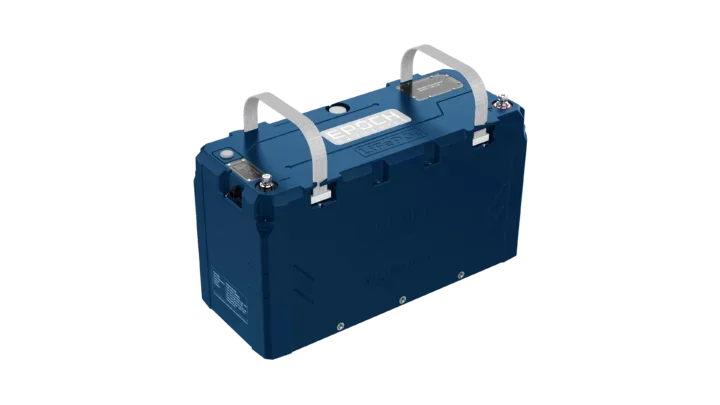
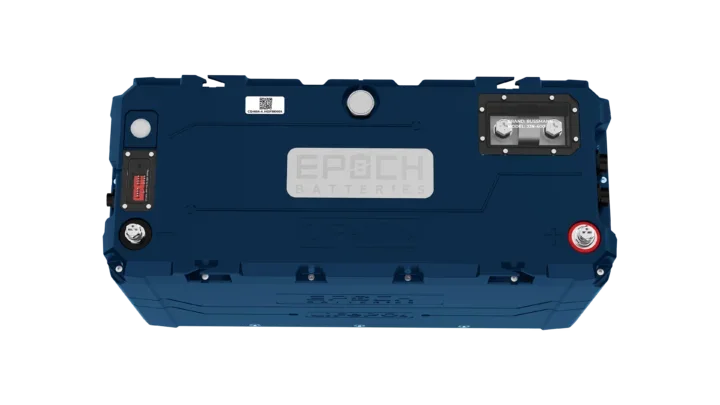
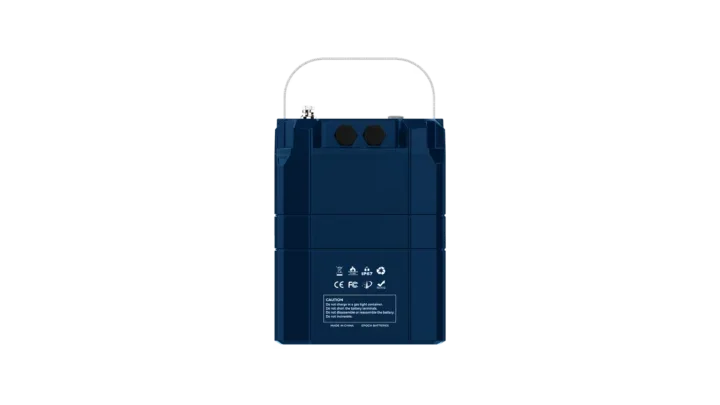
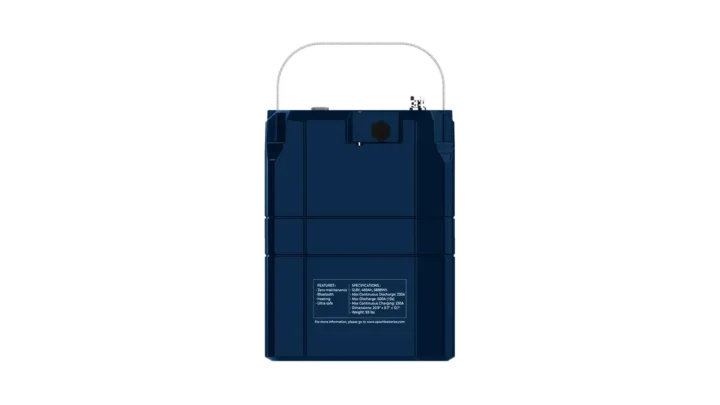
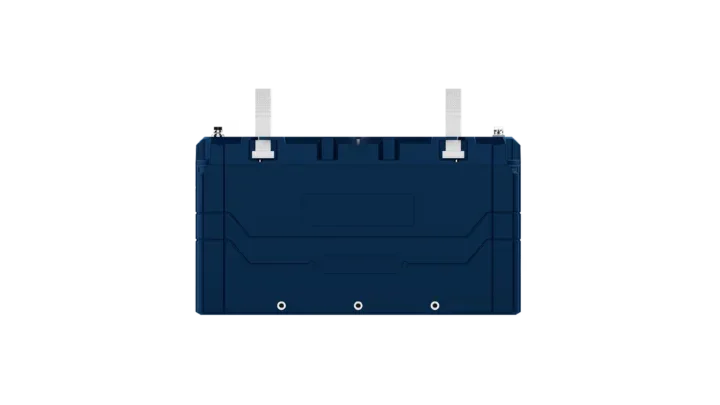
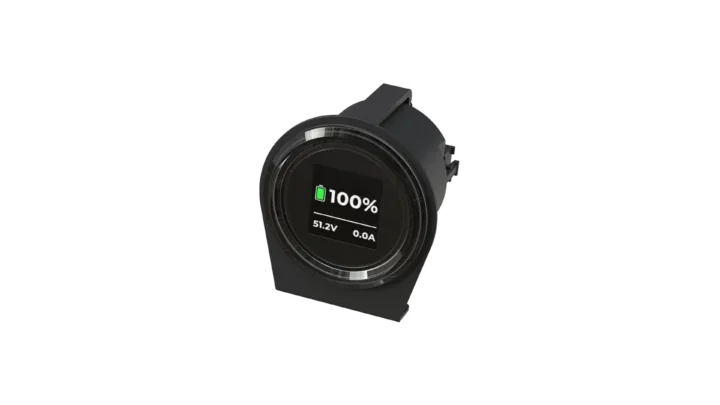
Product Summary
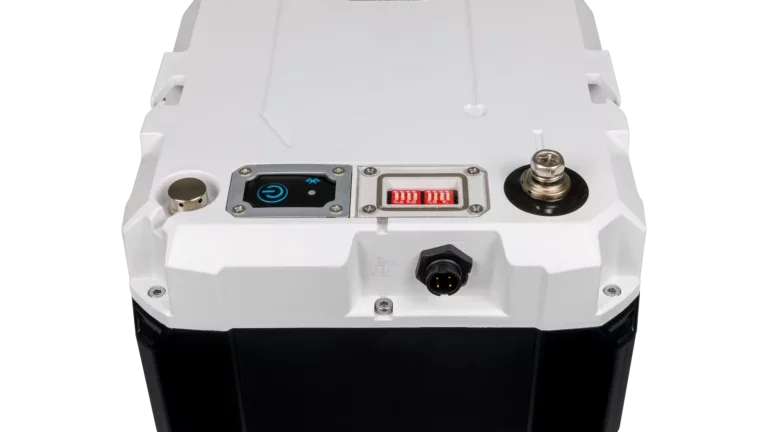
Epoch’s 12V 460Ah V2-T Elite Series battery provides enough power to start and power large loads like a generator or hydraulic leveler in a package small enough for mobile alternative energy systems. The Group 8D size delivers up to 5.89kWh and it’s possible to parallel up to 16 units for a maximum power storage of 94.24kWh. The internal heater and IP67 rating make it able to power your mobile adventures across cold winter landscapes or through stormy seas.
Specifications:
- Nominal voltage: 12.8V
- Capacity: 5.89kWh/460Ah
- Max. charging voltage: 14.6V
- Max. continuous charge/discharge current: 230A
- Peak discharge current: 500A for 30s
- Communication options: CAN-bus and Bluetooth 4.0
- Parallel up to 16 units (94.24kWh)
- Rated for 4,000 cycles or 11 years
- IP67 dustproof and waterproof
- Self-heating
- Self extinguishing case
- UL 1973 and UL 9540A certified
- Weight: 97lbs
- Dimensions (H×W×D): 12×20.75×8.5in
Log in to check member price and detailed stock information.
| Need more than what's available? Tell us what you need and we can source it for you. |


Current Connected is YOUR Epoch Battery product specialist
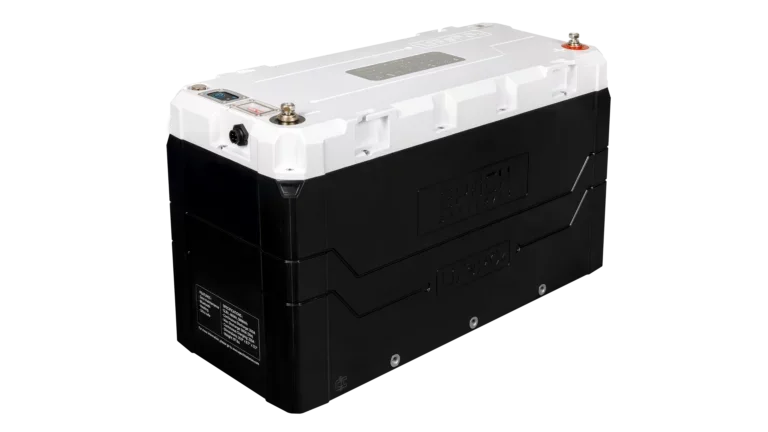
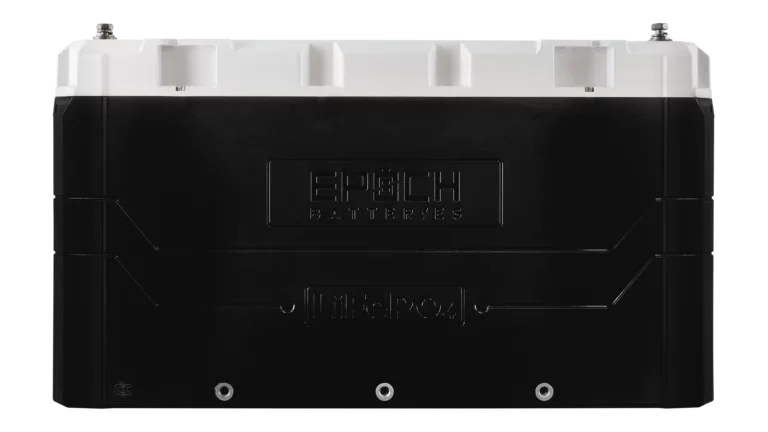
Group 8D Lithium Battery for Marine, RV, and Stationary Systems
Epoch designed the 12V 460Ah V2-T Elite Series battery for marine installations, mobile energy systems, and off-grid or grid-connected energy backup systems.
At 460Ah and 12.8V, the V2-T Elite delivers 5.89kWh of usable energy. This is enough to replace a multi-battery AGM bank while saving significant weight and space. It handles high-draw loads like air conditioning, power tools, and well pumps. With a continuous discharge rating of 230A and peak discharge of 500A for 30 seconds, it can support items with a high motor inrush current.
Factory-Integrated Class T Fuse
Class T fuses are widely recognized as the gold standard for lithium battery protection in marine and high-energy DC systems. They're fast-acting, capable of safely interrupting extremely high fault currents, and ABYC recommends them for battery source protection.
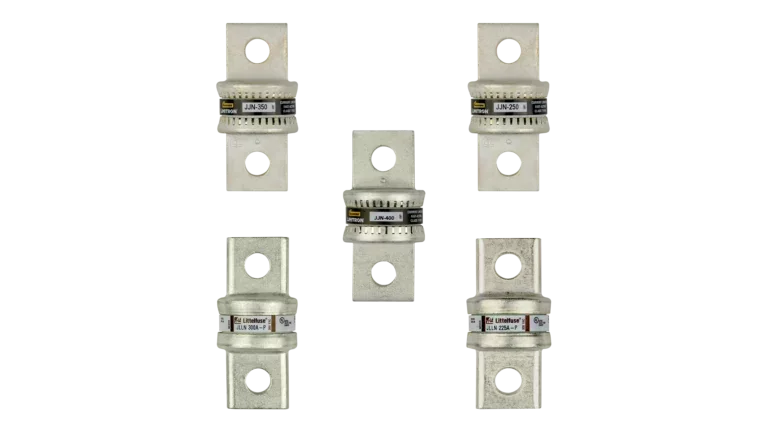
The V2-T Elite battery integrates an Eaton Class T fuse rated at 500A with a 20kAIC interrupt rating at 160Vdc. This fuse provides comprehensive battery protection and eliminates the need to source an external fuse for your energy system. This simplifies installation for both professional installers and qualified homeowners.
Fully Waterproof and Dustproof
With an ingress protection rating of IP67, the V2-T Elite is both waterproof and dustproof. While it should be installed in a dry location, this IP rating provides flexible use options. You can use it for your adventures in an off-grid marine vessel or a rain-soaked RV.
Designed for Cold Climates
Charging a LiFePO4 battery in cold weather can permanently damage the cells. To address this issue, the V2-T Elite includes an internal heater and a low temperature shutoff in the BMS (Battery Management System).
The internal heater activates if the battery reaches 41°F to keep the battery warm enough to charge and discharge. This is ideal for boating in the Pacific Northwest, RVing in the winter, or powering an off-grid system in cold climates.
In extremely cold temperatures, the battery may continue cooling. If this happens, the BMS shuts down the battery at 32°F or -4°F for charging and discharging respectively. This ensures your battery remains undamaged for use in your energy storage system.
Victron CAN-Bus Integration
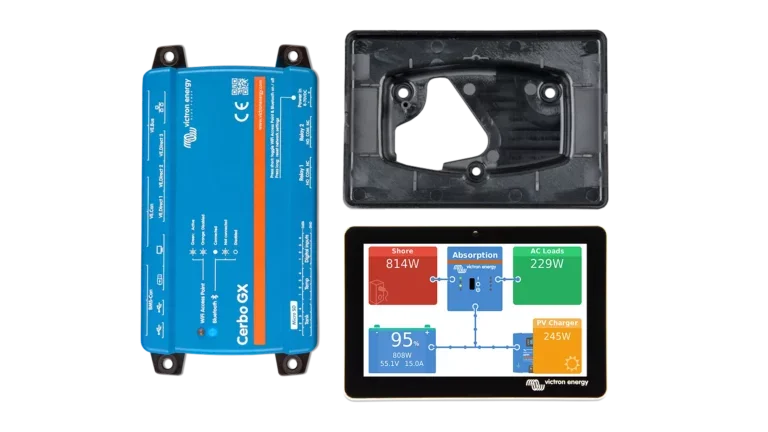
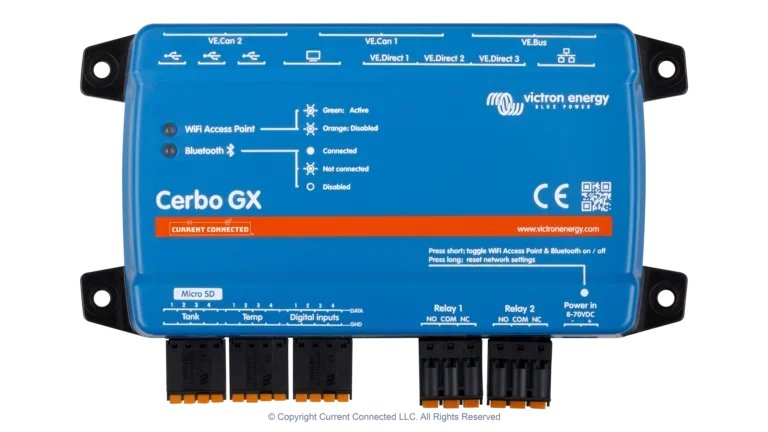
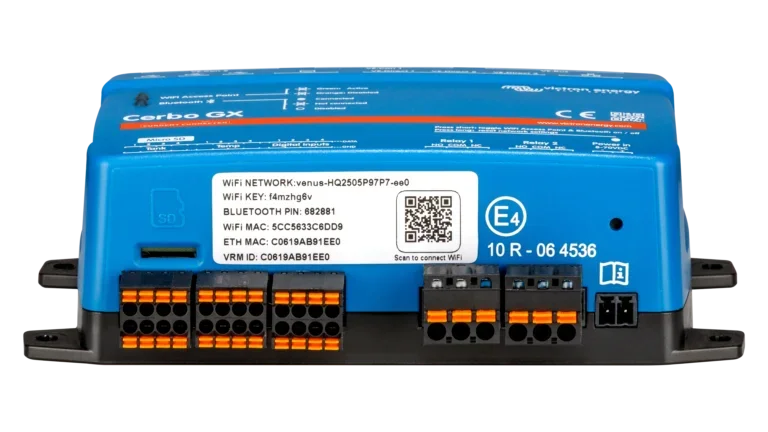
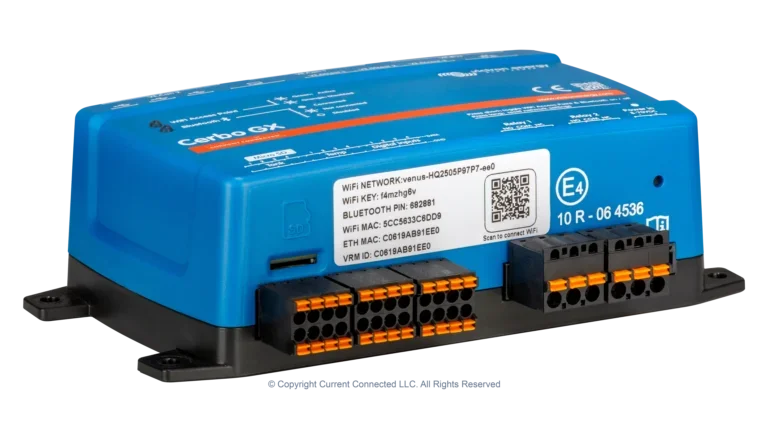
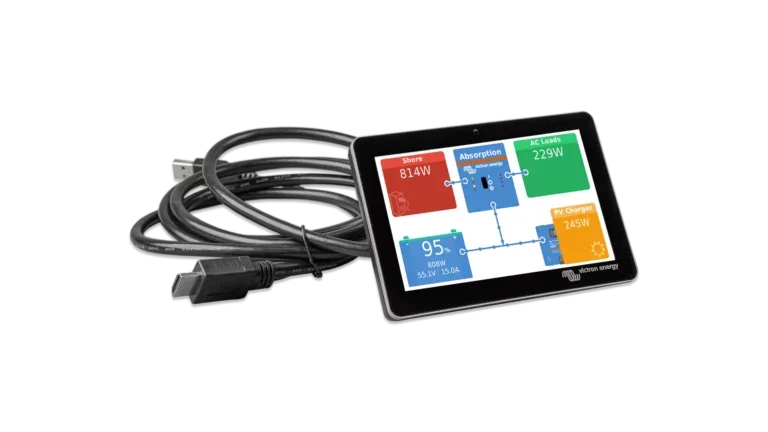
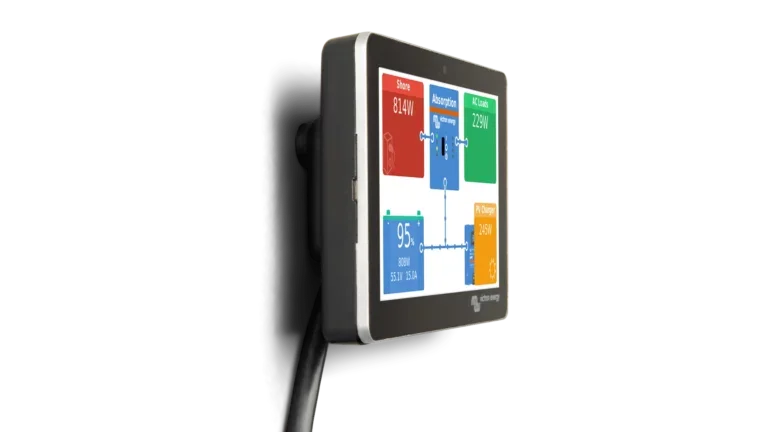
For installers and homeowners building Victron Energy systems, the V2-T Elite Series uses CAN-bus communication. This makes it compatible with the Cerbo GX, the Ekrano GX, and other Victron devices and allows real-time data transfer to the connected components. Available information includes SOC (State of Charge %), voltage, current, temperature, and more.
Bluetooth Monitoring with the Epoch Cloud App
The built-in Bluetooth 4.0 module connects to the Epoch Cloud app on iOS and Android. This provides real-time monitoring of battery voltage, cell voltages, current, temperature, and SOC. In a battery bank, the app shows both whole-bank data and individual battery detail for simplified troubleshooting and maintenance.
Advanced BMS with Comprehensive Protection
The V2-T Elite’s integrated BMS continuously monitors the battery for unsafe conditions. Protections include overcharge, overdischarge, overcurrent, short circuit, and high and low temperature limits. If the battery reaches a dangerous level, the BMS automatically shuts down the battery until it can once more safely charge or discharge.
Designed for a Scalable System
An individual V2-T Elite battery provides 5.89kWh of renewable energy storage, and it’s possible to connect up to 16 units in parallel for up to 94.2kWh. This makes it an ideal battery for small mobile systems, a residential home, or small commercial installations. It’s also an excellent starter option as you can purchase just one battery and then add more batteries over time.
Choose the Epoch 12V 460Ah V2-T Elite Series battery for a compact and waterproof battery able to power a small mobile energy system or a larger residential installation.
Recommended Accessories
Frequently Asked Questions
The V2-T includes an Eaton Class T fuse (model JJN-500), rated at 500A with a 20kAIC interrupt rating at 160VDC. Previous Epoch Elite models required the installer to source and mount an external fuse for battery source protection. The V2-T includes that fuse in the enclosure, which simplifies installation, shortens unfused conductor runs, and aligns with ABYC source-protection requirements. If you're a professional installer, this means a shorter bill of materials and a cleaner panel layout. If you're building your own system, it removes one of the trickier decisions around fuse selection and placement.
Yes. The V2-T Elite communicates natively over CAN-bus at 500 kbit/s with Victron GX devices. It appears as a recognized battery and publishes real-time SOC, voltage, current, temperature, and charge/discharge limits. With DVCC enabled and the controlling BMS set to Epoch, the battery actively manages charge behavior across your connected Victron inverter/chargers, solar charge controllers, and DC-DC converters. Connect the included gray RJ45 plug to the GX device's BMS-CAN port (or VE-CAN on the Cerbo Mk2 with port speed set to 500 kbps), confirm the battery shows up in the device list, and verify the module count and total amp-hours match your installation.
The battery works with any 12V charger, inverter, or charge controller configured to a LiFePO4 charge profile (CC/CV, 14.52V max charge voltage, no equalization). The Victron CAN-bus integration is an advanced feature for managed battery communication, but it's not required for the battery to function. If you're using a non-Victron system, the battery still provides full BMS protection, Bluetooth monitoring, and heating — you'll just configure your charge sources manually to match the published charge profile rather than relying on CAN-bus communication for automatic control.
When charging, the heater automatically activates when the cell temperature drops to 41°F, and it draws 180.67W at 14.6Vdc to warm the cells. Once the cells reach 50°F, the heater shuts off and charging proceeds normally. When discharging, the heater deactivates at 41°F, and the battery can continue discharging down to -4°F without heating.
The heater is powered by the battery itself, so it does draw from stored energy. In practice, the draw is modest relative to the battery's 5.89kWh capacity, and it only runs during the brief warm-up period before charging begins. The alternative — a low-temperature cutoff that simply refuses to charge until the environment warms up on its own — can leave you without power for hours or days in cold conditions.
IP67 means the enclosure is completely dust-tight (no ingress of dust) and can be immersed in water up to 1 meter deep for up to 30 minutes. This makes it suitable for marine engine rooms, RV compartments, and outdoor stationary setups where spray, condensation, and occasional flooding may occur. That said, IP67 assumes all service points are sealed correctly after installation. If you leave terminal covers off or cable glands unsealed, the rating doesn't apply.
The PC+ABS case material is also rated UL94 V-0, meaning it's self-extinguishing.
The V2-T Elite battery supports up to 16 units in parallel (for a maximum of 94.2kWh). Every unit in a bank or string must be the same model.
Configure all charge sources like solar charge controllers, alternator regulators, and inverter/chargers to a CC/CV (Constant Current/Constant Voltage) LiFePO4 profile with a constant voltage target of 14.52V (3.63V per cell) and a cutoff current of 0.02C (approximately 9.2A for this battery). Do not enable equalization, desulfation, recondition, forced absorption extension, or chemistry auto-detect modes. If your charger has a "lithium" or "LiFePO4" preset, that's typically the correct starting point, but you will need to verify that the voltage and cutoff values match the published specs.
The V2-T is rated for over 3,500 cycles at 25°C with 0.5C charge, 1C discharge, and 70% depth of discharge, retaining at least 70% of the original capacity after this. At one cycle per day, that is 9-10 years of heavy use before reaching 70% capacity. Even then, the battery continues to function with gradually reduced capacity. Cycle life varies with depth of discharge, temperature, and charge/discharge rates. Shallower cycles and moderate temperatures significantly extend life. Epoch includes an 11-year manufacturer warranty.
The internal Class T fuse (Eaton JJN-500) is designed to blow only under catastrophic fault conditions, like a dead short or an extremely high overcurrent event that exceeds the BMS's ability to disconnect. If it blows, that's the fuse doing its job to prevent a much worse outcome. Treat a blown fuse as a diagnostic event. While it's possible to replace, first identify and correct the root cause (wiring fault, short circuit, or failed component) before replacing the fuse and using the battery. Do not simply replace the fuse and re-energize without investigation.
The V2-T fits a Group 8D footprint at 20.86×8.65×12.06 inches and is designed as a direct physical replacement for Group 8D battery trays and compartments. At 97lbs, it's roughly half the weight of a comparable AGM Group 8D, and it delivers substantially more usable energy. Lead-acid batteries typically provide only 50% usable capacity before voltage drops below useful levels, meaning a 460Ah AGM realistically delivers around 230Ah. The Epoch delivers up to 460Ah. One V2-T can realistically replace two or more AGM Group 8D batteries while taking up less space and lasting significantly longer.
Customer Reviews
No reviews yet. Be the first to review this product!