
How We Built a 20kVA Off-Grid Power System in North Idaho
Learn how we engineered a 20kVA off-grid system for a North Idaho pole barn. Bifacial solar, 60kWh battery bank, dual Victron Quattro inverters, and room to grow.
How We Built a 20kVA Off-Grid Power System in North Idaho
A real build for a real shop. Bifacial solar, 60kWh of storage, and enough power to run a CNC plasma table without flinching.
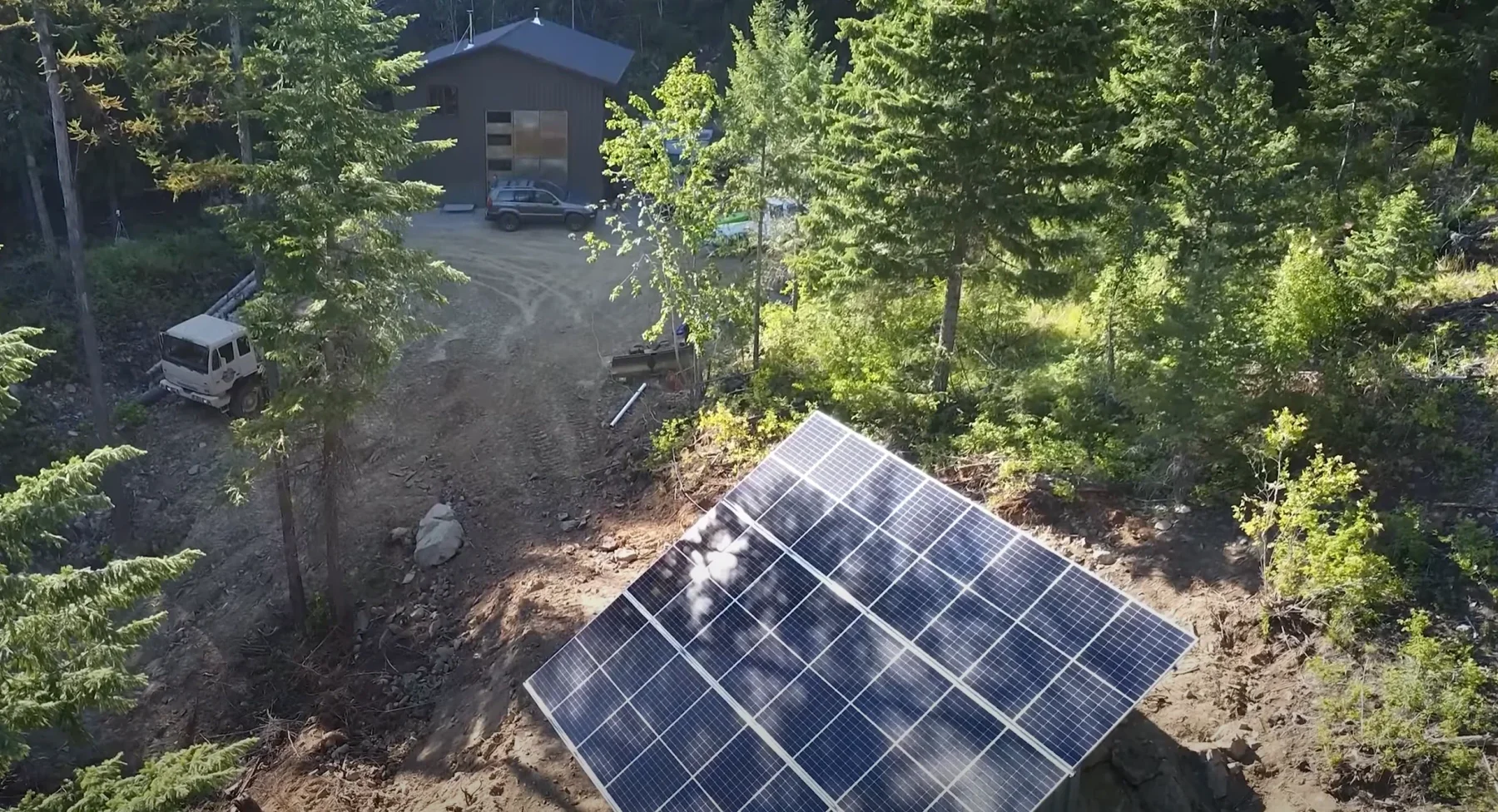
Riley and Courtney from the YouTube channel Ambition Strikes had a problem. They'd built a 30x40 foot pole barn on 20 acres in North Idaho, completely off the grid. Their woodworking, welding, and fabricating tools needed reliable power, and the generator they'd been running for over a year wasn't cutting it anymore. It was loud, expensive to fuel, and couldn't keep up with their most demanding equipment.
They came to Current Connected and we engineered a residential-style power system capable of running their entire property, from the shop to the house, without a generator. This is a walkthrough of every component in that system, why it was chosen, and how it all works together. If you're planning an off-grid build of your own, this should give you a clear picture of what a serious system looks like in practice.
The Solar Array
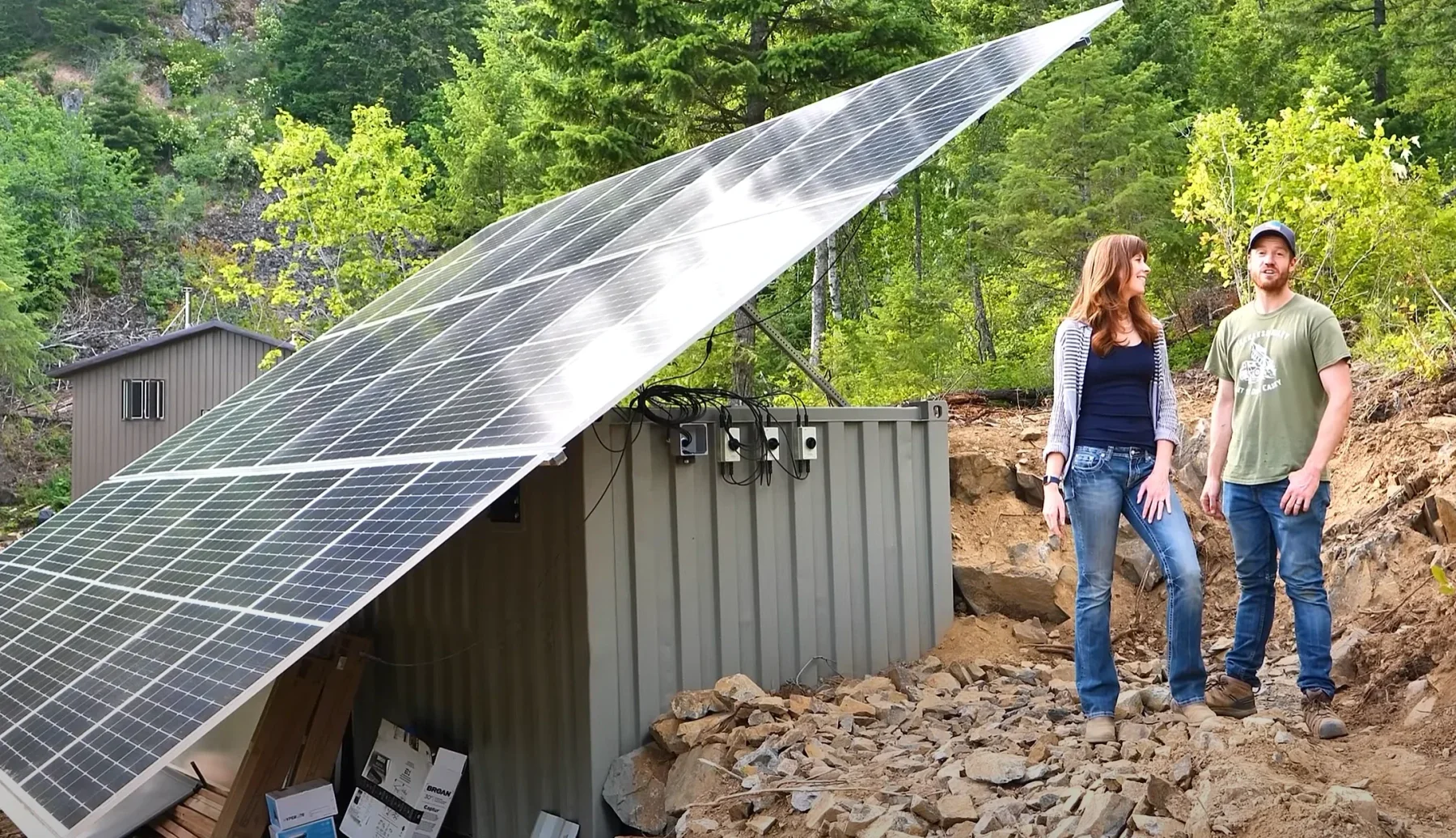
The foundation of any off-grid system is solar production, and this one starts with 24 Canadian Solar 445W bifacial panels mounted to a 20-foot shipping container.
Bifacial panels were a deliberate choice for North Idaho's climate. When snow covers the front of the panel, the rear side still absorbs sunlight reflected off the ground. That reflected light generates electricity and heat, which helps melt accumulated snow off the face of the panel. It's a built-in recovery mechanism that keeps the system producing through winter conditions that would shut down single-sided panels.
The mounting structure adjusts between 35 and 60 degrees to maximize production across seasons. In winter, the panels sit at 60 degrees to shed snow and face the low sun angle. The rest of the year, they drop to 35 degrees to capture the higher sun. These angles were calculated specifically for Riley and Courtney's latitude and site conditions.
The array is wired as three strings of eight panels. Each string produces just under 450Vdc open circuit voltage in winter, which feeds into high-voltage charge controllers designed to handle that input.
Charge Controllers and Power Management
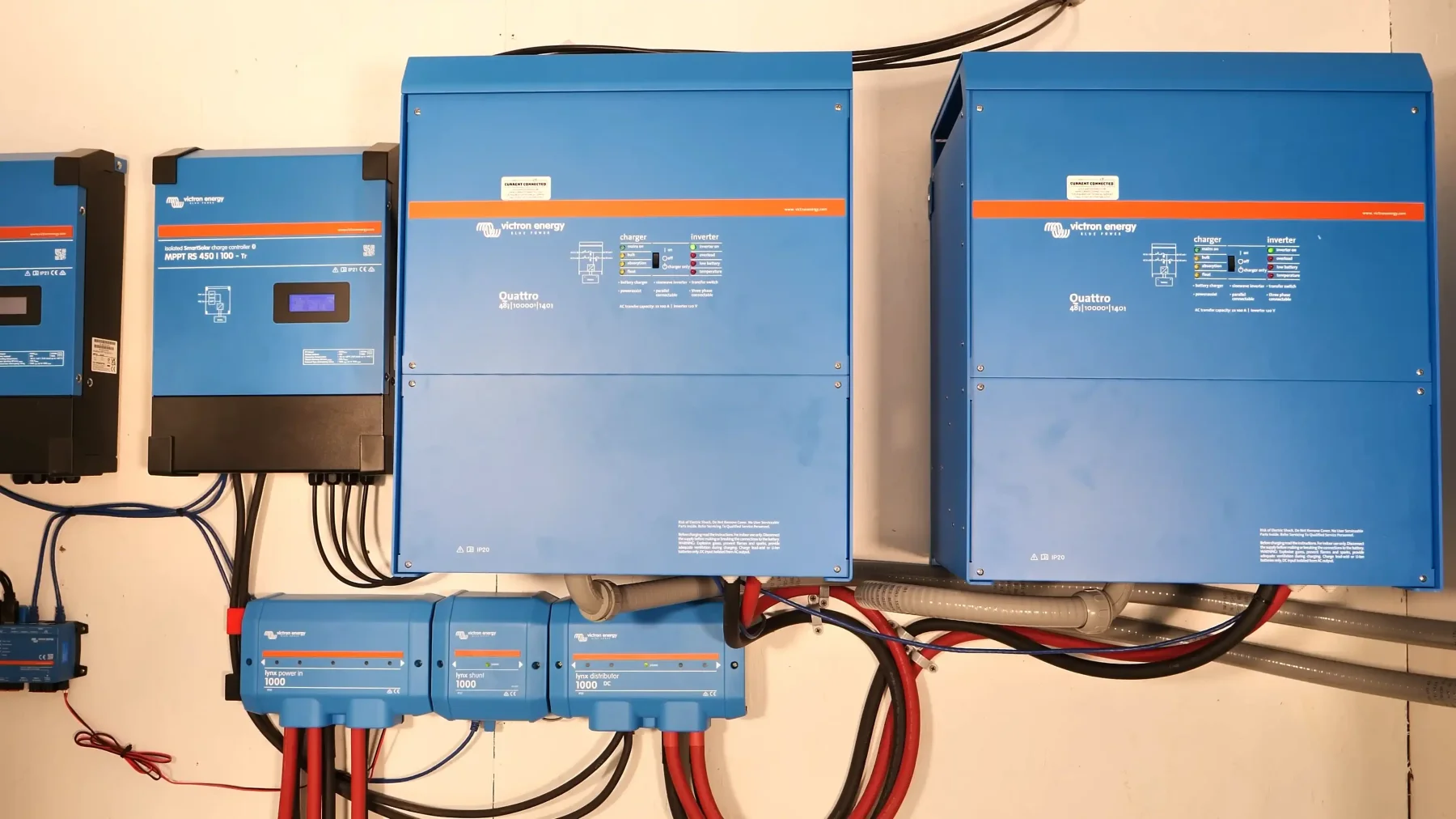
All 24 panels feed into Victron SmartSolar MPPT RS charge controllers. Each MPPT RS handles up to 450Vdc input and delivers 100A of output, which translates to roughly 5.5kW of solar per controller.
Each controller has two tracker inputs, and the current configuration uses only three of the four available inputs. That means there's room to add a fourth string of panels down the road without adding another controller.
Riley and Courtney installed the charge controllers inside the shipping container, which they framed with 2x3 studs and insulated with R-Tech rigid foam. They added plastic sheeting and moisture-resistant paint to protect the electronics. It's a smart, cost-effective way to create a climate-controlled equipment room out of a structure that was already on-site.
Battery Storage: 60kWh of Capacity
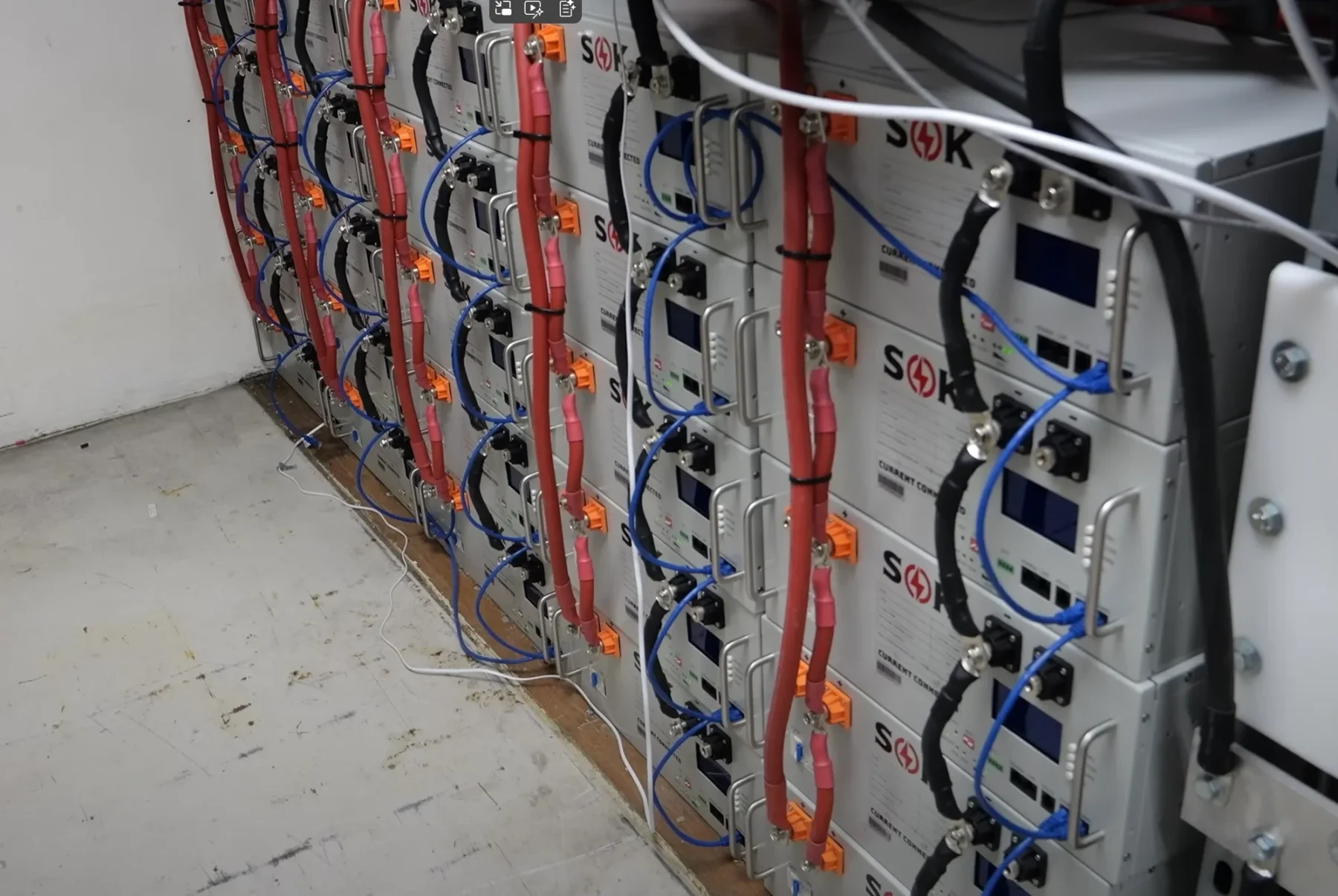
Energy storage is the backbone of any off-grid system, and this one doesn't cut corners. The installation uses twelve 48V 100Ah server rack battery packs, totaling just over 60kWh of storage with a maximum discharge rate of 60kW. That's more than enough to run multiple high-powered tools simultaneously and carry the property through cloudy stretches.
At the time of this build, the system used SOK server rack batteries. For anyone planning a similar build today, we'd point you toward the Eneramp Endurance 5, which is a 48V 100Ah server rack battery with 5.12kWh per unit, UL 1973 certification, a fully replaceable BMS, and an internal heater for cold climate operation. It's a strong fit for North Idaho conditions specifically.
The Victron Lynx Distribution System ties everything together on the DC side. It's a three-component system:
The Lynx Power In combines all battery packs into a single bus. The Lynx Distributor houses all the fuses for the solar controllers and inverters. And the Lynx Shunt monitors every amp going into or out of the battery bank and houses the main 500A DC fuse.
The Shunt is especially important in a system this size. Individual batteries may not notice small current draws over time, especially when the load is split across a dozen packs. The Shunt sees all current flowing through the system, calculates remaining capacity, and regularly recalibrates as the batteries charge fully. This gives you accurate state-of-charge readings instead of estimates that drift over time.
Inverter Selection: Built for Heavy Loads
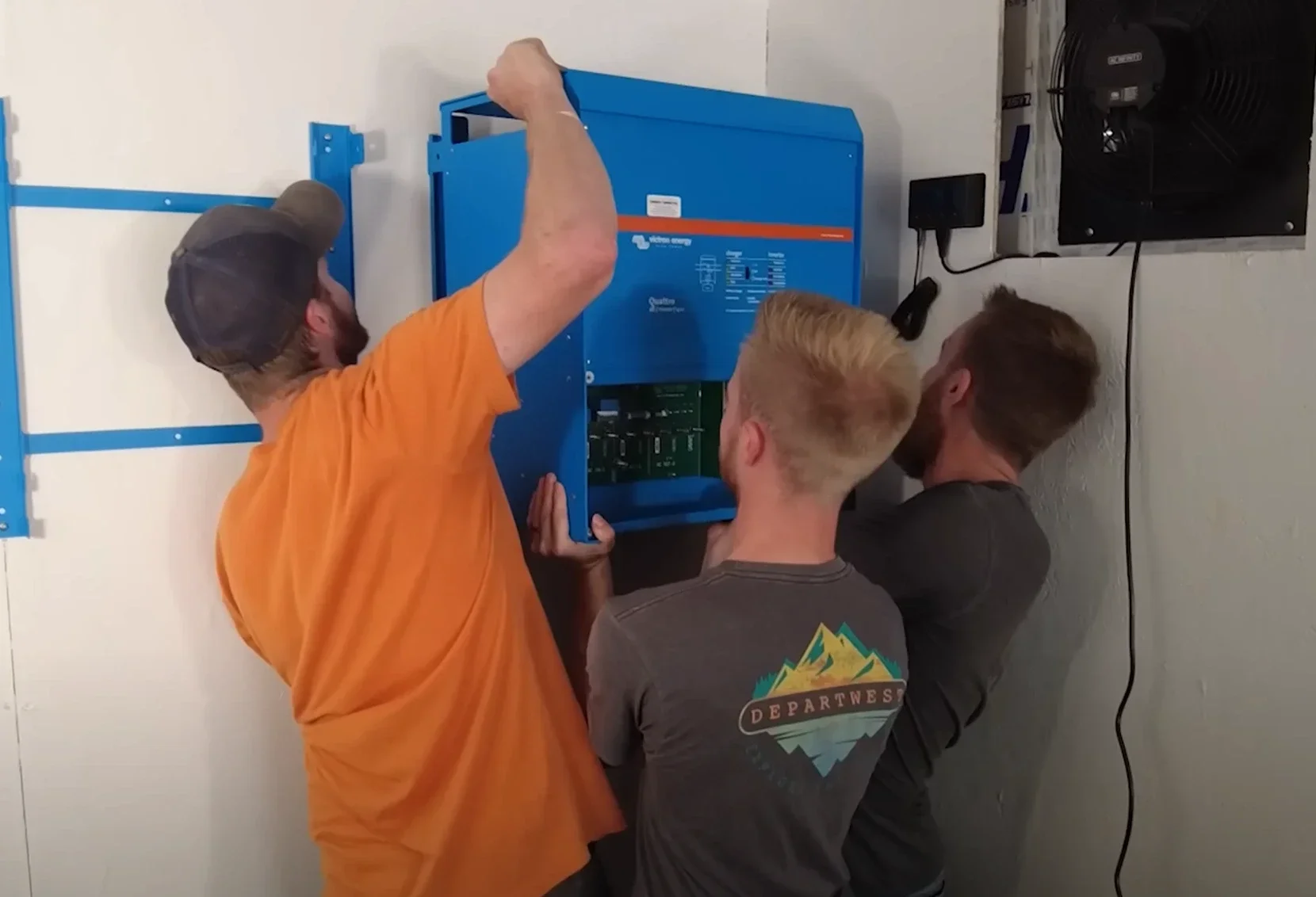
Two Victron Quattro 10kVA inverters handle the DC-to-AC conversion. Together, they deliver 20kW of continuous output and up to 40kW of surge capacity for loads with high startup demands.
The Quattro was chosen specifically because it uses a low-frequency, transformer-based design. This matters for Riley and Courtney's use case. Their CNC plasma table, plasma cutter, large air compressor, and other shop tools create substantial inrush current when they start. Low-frequency transformers store enough energy in their magnetic core to absorb those startup spikes without the system stumbling or shutting down. A high-frequency inverter in this application would likely trip on overcurrent during motor startups.
The inverters connect with premade 4-foot, 4 AWG cables that were hydraulically crimped at 10,000 PSI to ensure reliable, low-resistance connections. If Riley and Courtney ever need to add a third inverter, they'll use cables of equal length to maintain proper load sharing across all units.
Distribution and Output
Once the DC power passes through the inverters and becomes AC, it travels through 1-inch conduit to an electrical distribution panel. This is Riley and Courtney's main breaker panel, and from there it powers everything: the shop, the house, and anything else on the property.
The system is designed so that the distribution side looks and functions like a standard residential electrical setup. Breakers, circuits, and loads are all conventional. The only difference is that the power feeding the panel comes from solar and batteries instead of a utility transformer.
The System: At A Glance
10.7kW Solar Array
24 Canadian Solar 445W bifacial panels in 3 strings of 8. Adjustable mounting from 35 to 60 degrees for year-round production.
Victron MPPT RS Charge Controllers
High-voltage charge controllers handling up to 450Vdc input and 100A output each. Room for a fourth string without adding hardware.
60kWh Battery Bank
Twelve 48V 100Ah server rack LiFePO4 batteries with a 60kW maximum discharge rate. Managed through the Victron Lynx distribution system.
20kW Continuous / 40kW Surge
Dual Victron Quattro 10kVA inverters with low-frequency transformers. Built to handle high inrush loads from shop equipment.
Expandable Design
Fourth solar string input available, more controllers can be added. Battery bank can grow. Two more inverters can be added. The system was designed to scale with Riley and Courtney's needs.
No Generator Required
Though a generator would be optional, this system replaced a generator that had been running daily for over a year. Solar and battery storage now handle the full load independently.
Why These Components Work Together
Every component in this system was selected to address a specific need. The bifacial panels maximize production in a snowy climate where single-sided panels would spend weeks buried. The high-voltage charge controllers accept the long string voltages that come with cold-weather panel operation. The oversized battery bank provides multiple days of autonomy for stretches when solar production drops. And the low-frequency inverters handle the brutal inrush currents that come with running serious shop equipment.
Most importantly, the system was designed for expansion from day one. Additional solar strings, more battery capacity, and extra inverters can all be added as needed without reworking what's already installed. That kind of forward thinking is the difference between a system that lasts a few years and one that grows with you for decades.
This wasn't a theoretical exercise or a product demo. Riley and Courtney needed to run a real shop with real tools, completely off the grid, in a climate that tests equipment hard. The system had to work on the coldest days and the cloudiest weeks, not just on a sunny afternoon in June.
You can see the full build and follow Riley and Courtney's off-grid journey on their YouTube channel, Ambition Strikes. They documented the entire process, from the initial planning through the installation and the day they finally shut off the generator for good.
Planning a Build Like This?
Every off-grid system is different. Your climate, your loads, your property, and your goals all shape what the right design looks like. Our team can help you spec the components, design the layout, and make sure everything works together before you buy a single piece of equipment.
When Riley and Courtney's system was originally installed, component prices were higher across the board. Since then, battery costs in particular have dropped significantly, and solar panel pricing has continued to trend downward. A comparable 20kVA system built today would cost meaningfully less than it did at the time of this install. The exact number depends on your specific component choices and system size, but as a rough reference point, the major components (inverters, batteries, panels, charge controllers, and distribution) for a system in this range typically fall between $16,000 and $30,000 in equipment. Contact our team for a quote based on your actual requirements.
In Riley and Courtney's case, yes. The combination of 10.7kW of solar production and 60kWh of battery storage handles their shop and house without a generator. That said, many off-grid homeowners keep a generator as a backup for extended severe weather. It's good insurance even if you rarely need it.
Riley and Courtney fabricated a custom mount on their shipping container, which made sense for their specific setup. For most ground-mount installations, a purpose-built racking system is simpler and faster to install. The IntegraRack IR-45ASA is an adjustable ground mount that covers 15 to 45 degrees, works with any full-size panel, and doesn't require earth augers, concrete piles, or heavy equipment. It's laser-cut aluminum with stainless steel hardware, rated for winds up to 200 mph, and each frame takes about two minutes to assemble. For seasonal angle changes like the ones in this build, the IR-45ASA lets you adjust each panel independently with just two bolts.
It depends on your energy consumption and how many days of autonomy you want. Riley and Courtney run power-hungry shop tools, which pushes their storage needs well above a typical household. A home without a workshop might get by with 20 to 30kWh. The right approach is to measure your actual energy usage first and size from there. It's also a viable approach to undersize the battery bank for winter loads when sunlight is rare and utilize a generator for supplemental power, depending on noise and fuel consumption conerns.
The Victron Quattro was chosen for its low-frequency transformer design, which handles high inrush currents from motors and compressors far better than high-frequency alternatives. For a shop running a CNC plasma table and a large air compressor, this isn't optional. Victron also offers deep system integration through the Cerbo GX for complete remote monitoring and configuration.
Absolutely. The same design principles scale down cleanly. Two 3kVA or 5kVA Victron Multiplus-2's instead of the 10kVA Quattros, fewer battery packs, and a smaller solar array would work for a home or cabin without heavy shop loads. The key is matching each component to your actual needs. Our team can help you find the right balance.
For 48V server rack setups, we recommend the Eneramp Endurance 5. It's a 48V 100Ah LiFePO4 battery with UL 1973 certification, a replaceable BMS, internal heating for cold climates, and RS485/CANBus communication for compatibility with Victron and EG4 inverters. The cold-climate heater is especially relevant for builds in northern states like Idaho, where temperatures regularly drop below the normal charging threshold for lithium batteries.