Victron Energy Quattro 48V 15kVA 277V Inverter 200A Charger, Commercial & Industrial Battery Inverter Charger
SKU: QUA483150100
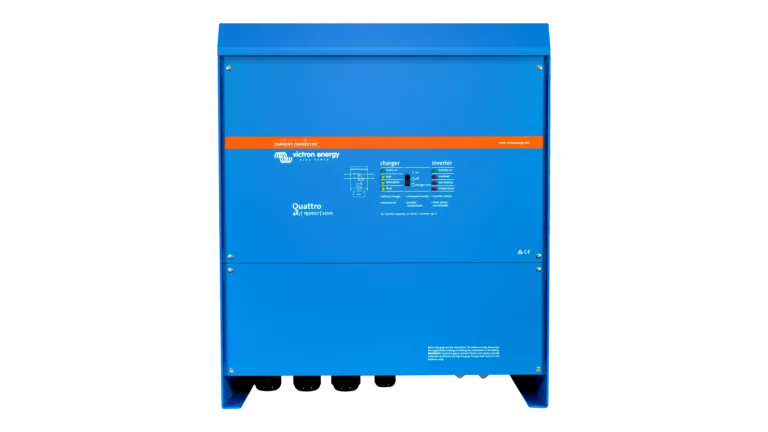
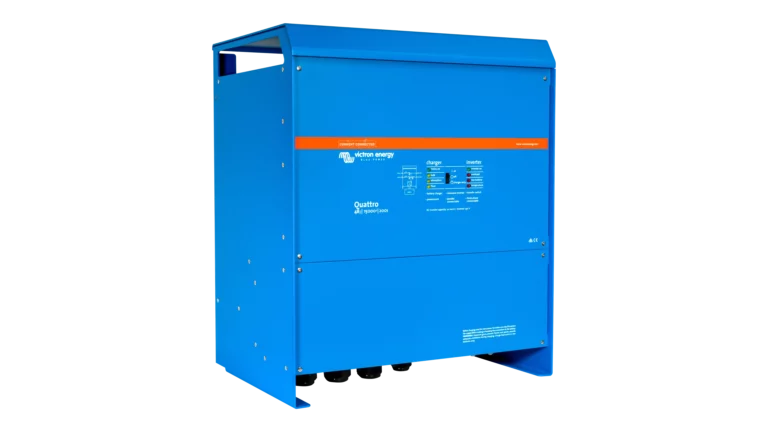
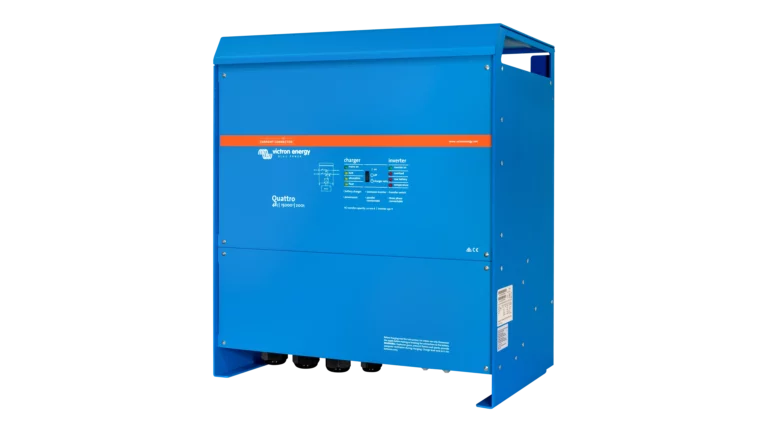
Product Summary
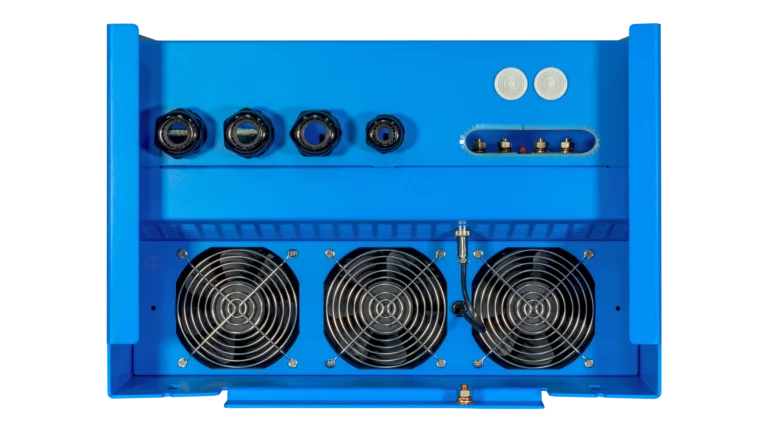
The Victron Quattro 15kVA 277V is a 48V battery inverter/charger that outputs 277/480V three-phase power when configured in sets of three. With dual AC inputs, an integrated transfer switch, 200A battery charging per unit, and the ability to parallel up to four sets of three for 144kW total output, this is Victron's solution for commercial, industrial, and agricultural installations that need battery-backed 480V power.
Specifications:
- Output: 277VAC per unit, 277/480V in three-phase configuration
- Continuous output: 12kW per unit (36kW per three-phase set)
- Surge: 25kW per unit (75kW per three-phase set)
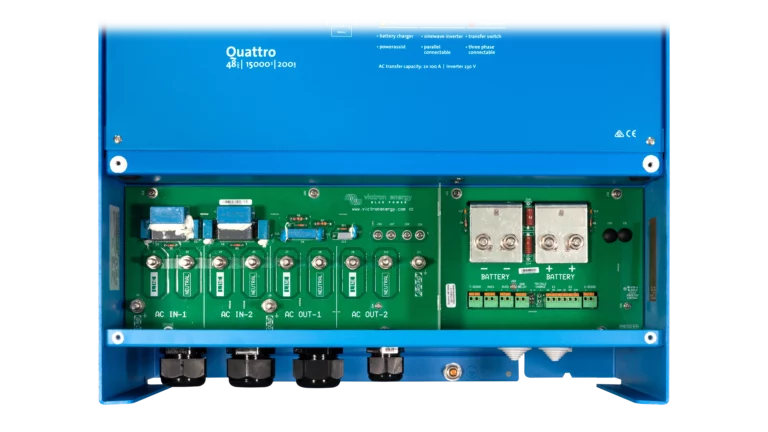
- Dual AC inputs: 2x 100A feed-through, integrated transfer switch
- Battery charger: 200A adaptive, 48VDC (38-66V range)
- Parallel: up to 4 sets of 3 for 144kW / 2,400A charging
- Weight: 160lbs
- Dimensions: 22.6×19.2×13.6in
Log in to check member price and detailed stock information.
Place your order now and we will ship when inventory arrives
Log in to see additional stock details


Current Connected is YOUR Victron product specialist
About the Victron Quattro 15kVA 277/480V Inverter/Charger
The Victron Quattro 15kVA 277V produces 277/480V three-phase power from a 48V battery bank. Three units form one three-phase set at 36kW continuous (75kW surge), and up to four sets can be paralleled for 144kW continuous with 2,400A of combined battery charging. This is the inverter for commercial buildings, warehouses, agricultural operations, pump stations, and industrial sites that run 480V three-phase equipment and need battery backup or off-grid capability on that bus.
There are very few 480V battery inverter options on the market. Most residential hybrid inverters top out at 120/240V split-phase. The Quattro 277V fills the gap for facilities where the existing electrical infrastructure is 277/480V and retrofitting to a lower voltage isn't practical or desirable.
Dual AC Inputs and Automatic Transfer
The Quattro has two independent AC inputs with an integrated transfer switch, so no external ATS is needed. A typical commercial setup uses grid power on AC Input 1 and a generator on AC Input 2. If grid power drops, the Quattro transfers to the generator automatically. If neither source is available, it inverts from battery. The transfer to battery happens in under 20ms on the primary output, fast enough to keep IT equipment, controls, and lighting online.
Each input has an independently configurable current limit. This prevents the Quattro from overloading a standby generator that's smaller than the grid connection.
Two AC Outputs
Output 1 stays powered from any available source (grid, generator, or battery) with seamless transfer. Output 2 is only active when an AC input is live. Use Output 2 for non-critical loads that should not draw from the battery bank during an outage.
PowerAssist for Undersized Generators
PowerAssist monitors real-time load demand and supplements the AC source with battery power when demand exceeds what the generator or grid connection can deliver. This means a facility can run loads that temporarily exceed generator capacity without tripping breakers, because the Quattro covers the difference from battery. When demand drops, excess generator capacity goes back to charging.
Battery Charging
200A per unit, 600A per three-phase set. The adaptive charger adjusts its profile based on battery state and supports LiFePO4, lead-acid, gel, AGM, and custom profiles. At 600A from a single three-phase set, large commercial battery banks can be recharged quickly from generator or grid power during off-peak hours.
Scaling
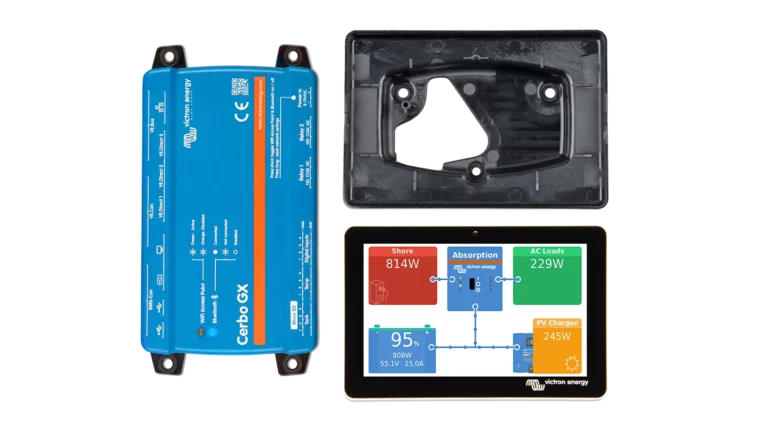
The minimum configuration is three units (one three-phase set) at 36kW / 75kW surge. The maximum is four sets of three (twelve units total) at 144kW continuous with 2,400A charging. Each additional set is added through VE.Bus and configured with Victron's System Configurator software. A Cerbo GX manages and monitors the entire multi-unit system through the VRM portal.
Why Victron for Commercial 480V
Victron has built three-phase inverter systems for decades in the marine, telecom, and off-grid commercial sectors. The Quattro platform is field-proven in environments where downtime costs real money. The VE.Bus architecture handles parallel and three-phase coordination natively without third-party integration. Remote monitoring through VRM means facility managers and integrators can see system status, battery SOC, and load data from anywhere. Firmware is configurable for off-grid, grid-interactive, and ESS (Energy Storage System) modes depending on the application.
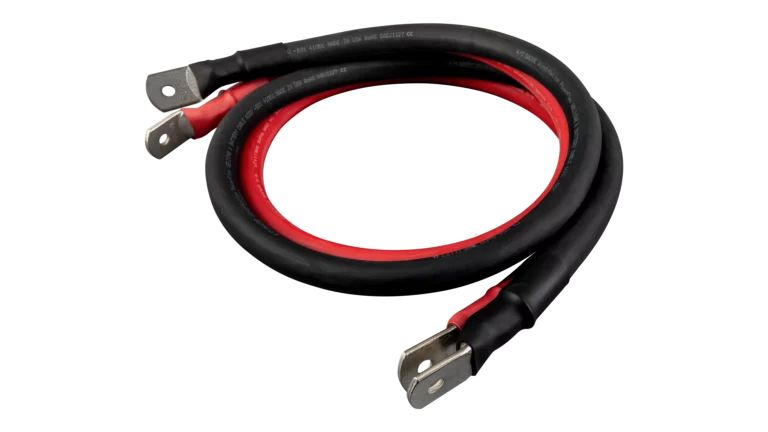
Recommended Accessories
Frequently Asked Questions
No. This unit outputs 277VAC and must be configured in three-phase (minimum three units). Lower voltages are possible by pairing a step-down transformer. For residential split-phase 120/240V, use the Victron MultiPlus-II or the 120V Quattro models.
This outputs 277/480V three-phase, which is standard commercial/industrial power in North America. Most hybrid inverters on the market are residential 120/240V split-phase products. If your facility runs 480V motors, HVAC, or industrial equipment, those inverters can't serve your loads. This one can.
Minimum three (one three-phase set, 36kW continuous). For larger facilities, add sets of three up to a maximum of twelve units (144kW continuous, 2,400A charging).
No. Solar is added through external charge controllers like the Victron SmartSolar MPPT VE.Can series that charge the 48V battery bank. The Quattro inverts stored battery energy to 277/480V AC. For grid-connected facilities, Victron's ESS mode manages solar, battery, and grid interaction.
Size to your load profile and backup duration requirements. A single three-phase set can charge at 600A combined, so the battery bank needs to handle that charge rate. For a commercial facility needing 4 hours of backup at 36kW, you're looking at roughly 144kWh of usable battery capacity before accounting for depth of discharge.
Yes. That's one of the primary use cases. Grid power on AC Input 1, generator on AC Input 2, with automatic transfer between them. PowerAssist lets the battery supplement the generator during peak loads, effectively making a smaller generator cover larger transient demands.
Yes. The under-20ms transfer time on the primary output keeps IT equipment and telecom hardware running through source transitions. The dual AC input with automatic transfer and battery backup provides the redundancy these applications require.
Customer Reviews
No reviews yet. Be the first to review this product!