Victron Energy Lynx Class-T Power In M10, Dual 225A-400A Class-T Fuse Holder, 1000A Busbar for Two Lithium Battery Strings
SKU: LYN060404010
Log in to check member price and detailed stock information.
| Need more than what's available? Tell us what you need and we can source it for you. |
Product Summary
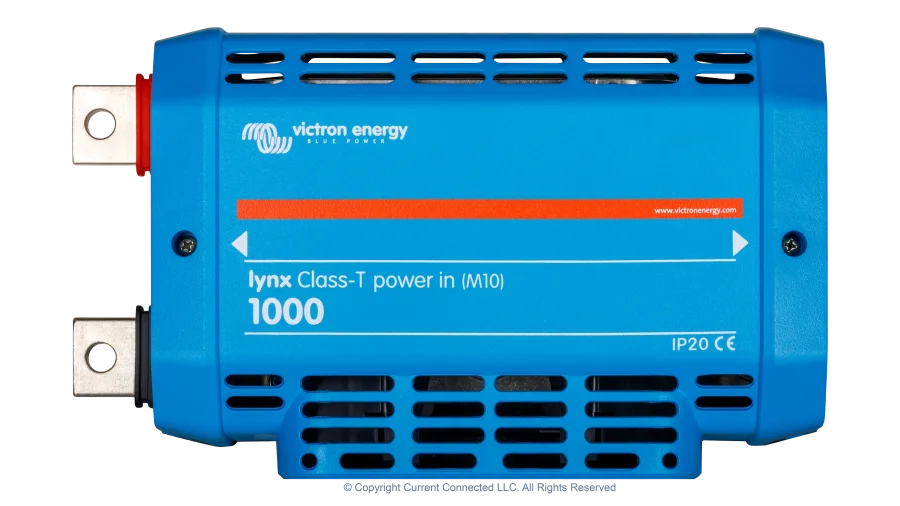
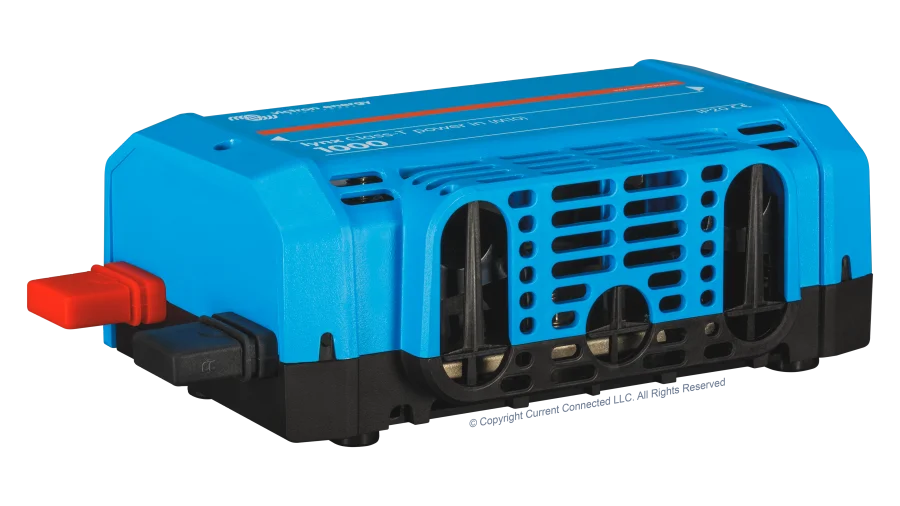
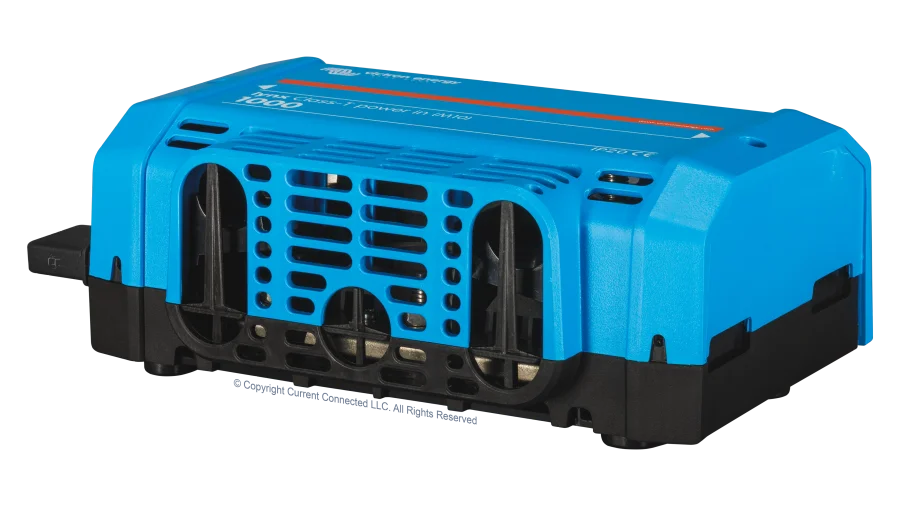
The Lynx Class-T Power In takes two lithium battery strings and two Class-T fuses in one module that bolts straight into your Victron Lynx stack. Your main battery fuses live inside the system on a 1000A tinned copper busbar, not in separate blocks on the wall, and Class-T gives them the interrupt rating a large lithium bank calls for.
Specifications:
-
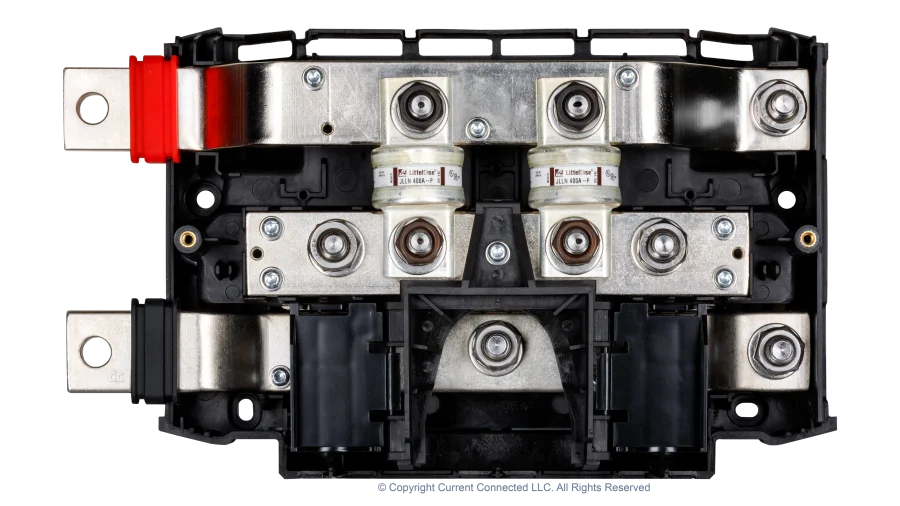
Two Class-T fuse positions for 225A to 400A fuses (fuses sold separately)
-
Connects and fuses up to two lithium battery strings
-
Rated 1000A continuous on 12V, 24V and 48V systems (9 to 60Vdc)
-
Tinned copper positive and negative busbars, plus a DC system ground connection
-
Bolts to M10 Lynx modules, including the Shunt VE.Can, Smart BMS, Distributor and Power In
-
Takes M10 (3/8") cable lugs for cable up to 4/0 AWG or 120 mm², torqued to 24 ft-lb (33 Nm)
-
IP20 ABS enclosure, 11.0 × 6.65 × 3.82 in (279 × 169 × 97 mm) H×W×D, 4.6 lb (2.1 kg)
-
Operates from -40°F to 140°F (-40°C to 60°C)


Current Connected is YOUR Victron product specialist
About the Victron Lynx Class-T Power In
Fusing a lithium bank with Class-T fuses usually means a separate fuse block for each battery, a cable to each block, and another run on to the busbar. The Lynx Class-T Power In builds the Class-T fuse holder into the busbar itself. Each battery string lands on its own fuse, and the fused output is already on the 1000A bus feeding the rest of your Lynx stack, so you end up with fewer cables, fewer lug connections and one tidy assembly.
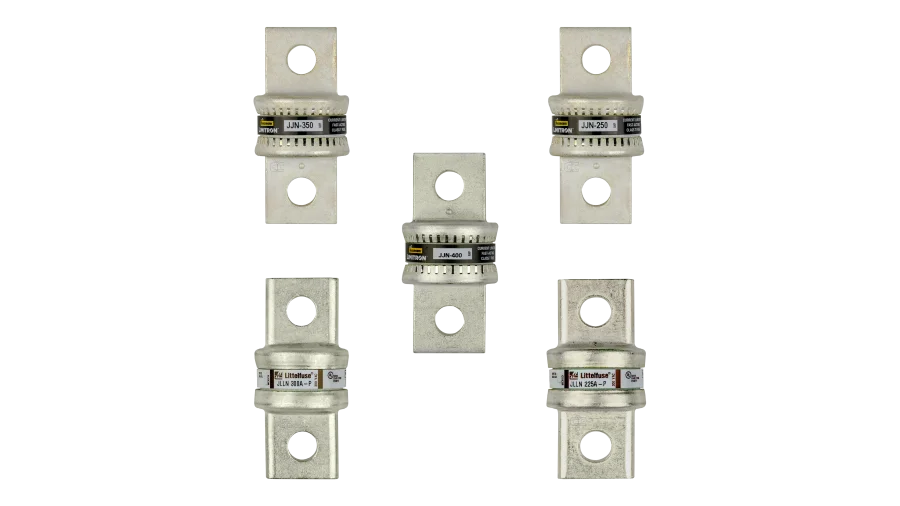
Both positions take 225A to 400A Class-T fuses, sold separately, so pick up Class-T fuses sized for each string.
Lynx Power In vs. Class-T Power In
Choosing between the two Power In modules comes down to where your battery fuses go. The Lynx Power In gives you four unfused connections, so every battery needs its own fuse somewhere between the battery and the busbar. The Class-T Power In gives you two connections with the Class-T fuses built in. Both carry the same 1000A rating for 12V, 24V and 48V systems and bolt into the same M10 stack.
Placement Ahead of the Lynx Shunt or Smart BMS
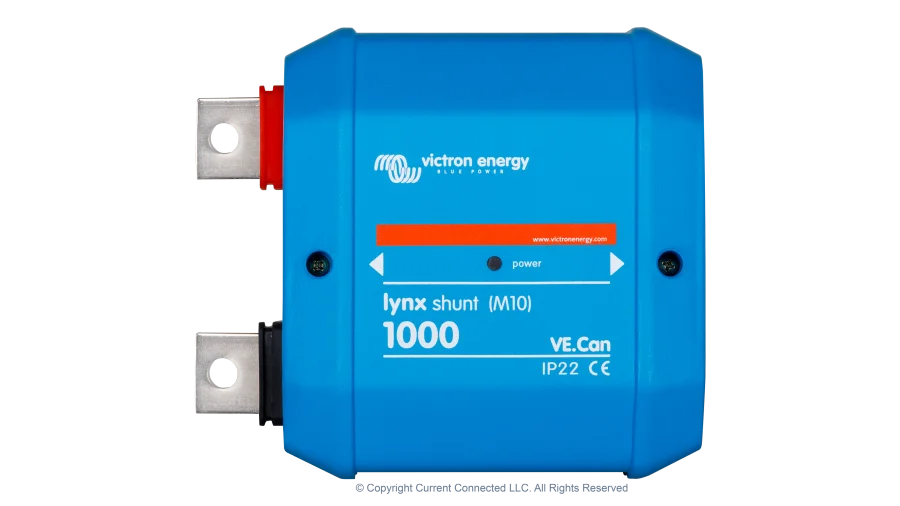
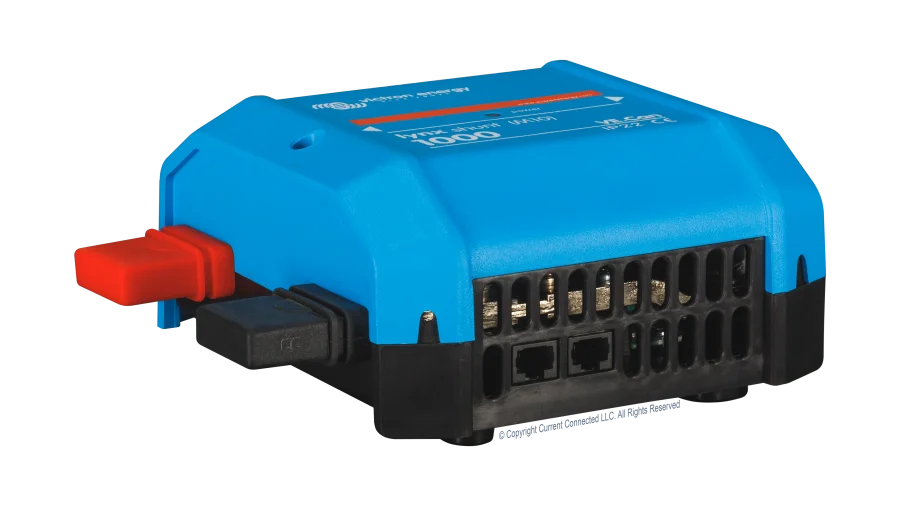
Batteries land on the left end of a Lynx stack, so the Class-T Power In goes first, with a Lynx Shunt VE.Can or Lynx Smart BMS bolted to its right. That order runs every amp in and out of the bank through the shunt, which keeps your state of charge accurate. The Smart BMS pairs with Victron Lithium Smart and Lithium NG batteries, and the Shunt handles everything else. Inverters, chargers and loads connect further right, on the system side.
Fuse Sizing and the 1000A Busbar Limit
With two 400A fuses, one module carries up to 800A, and Victron caps the whole stack at 1000A total. Each module fuses two strings, so a four-string bank takes two modules bolted together into one longer busbar.
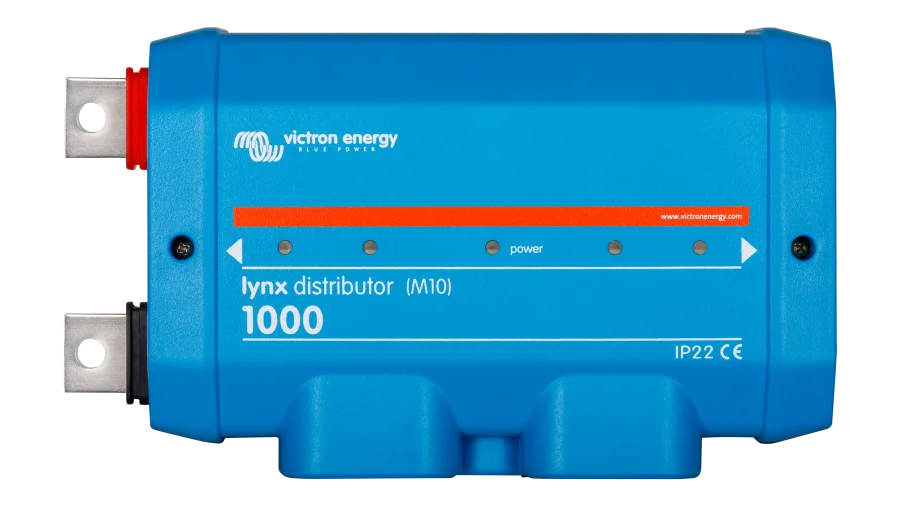
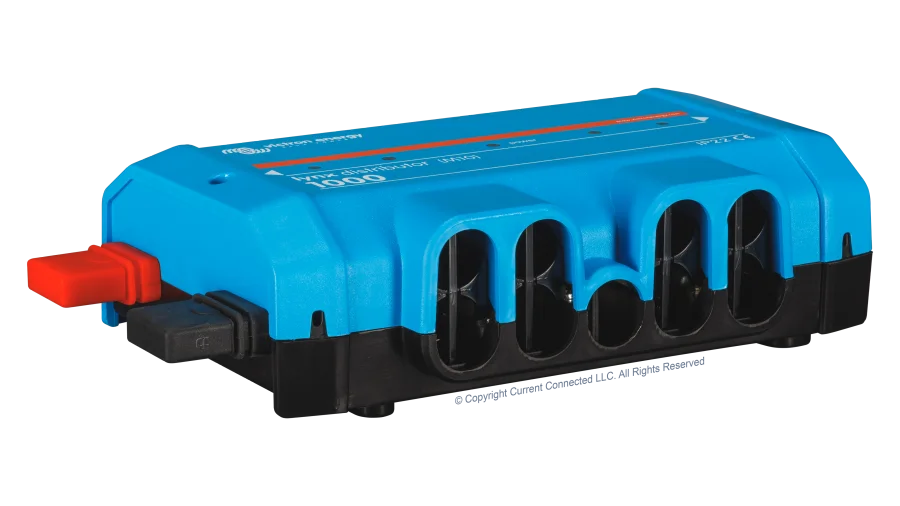
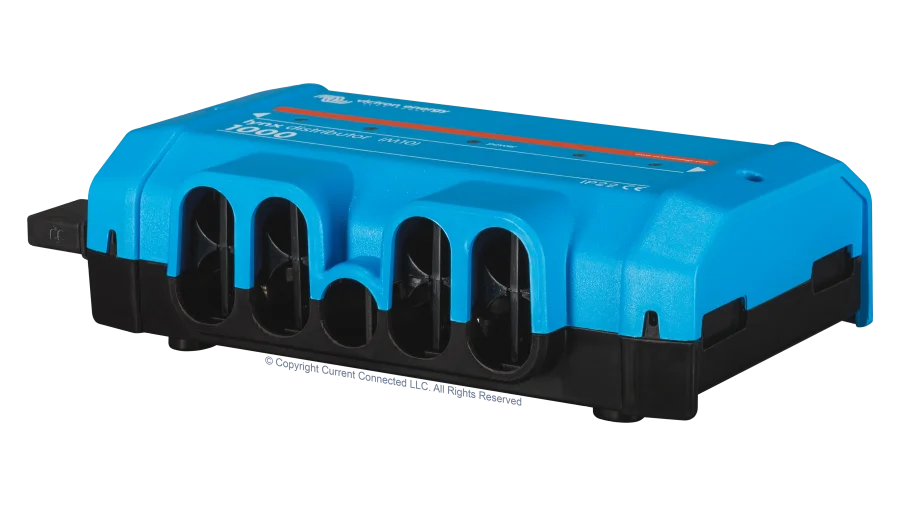
For fused outputs to your inverter, chargers and DC loads, a Lynx Distributor adds four MEGA fuse positions on the system side.
Match each fuse rating to the maximum voltage and current its circuit can see. Our team is happy to help with sizing.
Torque Specs, Cable Lugs and Equal Battery Cable Lengths
The cable lugs, busbar interconnects and fuse connections all torque to the same 24 ft-lb (33 Nm), so one wrench setting covers the whole install. Cables take M10 (3/8") lugs up to 4/0 AWG or 120 mm².
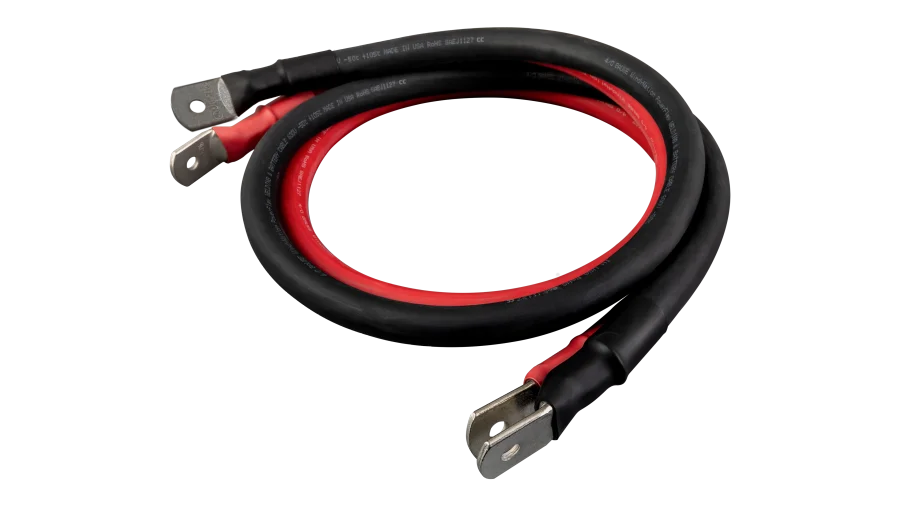
Run identical cable lengths from each battery so both strings see the same resistance and share the load evenly. We build custom battery cables to order at the exact length you set, from 6 AWG to 4/0 AWG, with 3/8" lugs ready for the M10 bolts.
Recommended Accessories
Frequently Asked Questions
No. Victron's M10 and M8 Lynx modules don't connect directly to each other, so the Class-T Power In joins M10 stacks only.
No. Fuse monitoring lives in the Lynx Distributor. The Class-T Power In has no monitoring of its own, so check its fuses during routine service, with the positive battery poles disconnected before the cover comes off.
Yes, any orientation works. Mount the stack upside down and the battery end sits on your right instead of your left.
The module has a ground connection for systems that need one. Victron calls for a single ground connection per system, made after the Lynx Smart BMS, Lynx Shunt VE.Can or battery monitor shunt.
Customer Reviews
No reviews yet. Be the first to review this product!