
Victron PowerAssist Explained: How It Keeps Your RV From Tripping Breakers
It's one of our founder's favorite features, and once you understand it, you'll see why. Victron's PowerAssist feature automatically supplements shore power with battery power so you can run more loads without tripping breakers.
If you've ever been plugged into 30-amp shore power and tripped the breaker because you ran the air fryer and the coffee maker at the same time, you already understand the problem Victron's PowerAssist solves.
Most inverters work in one mode at a time. They either pass through incoming AC power, or they pull from batteries. Not both. So when your loads exceed what shore power can deliver, the breaker trips and you're resetting things in the dark.
Victron's PowerAssist works differently. It monitors incoming power and load demand in real time, and when your loads exceed what the grid (or shore power, or generator) can provide, it automatically pulls the difference from your batteries. No breaker trips. No manually turning off appliances. It just works.
"Victron's PowerAssist is honestly one of my favorite features," says Dexter Monroe, Current Connected's founder. It's one of the primary reasons he chose to use Victron's 3kVA MultiPlus-II 2x120V and 2kVA MultiPlus inverter/charger units in his RVs.
But before we get into PowerAssist, let's cover its companion feature: PowerControl.
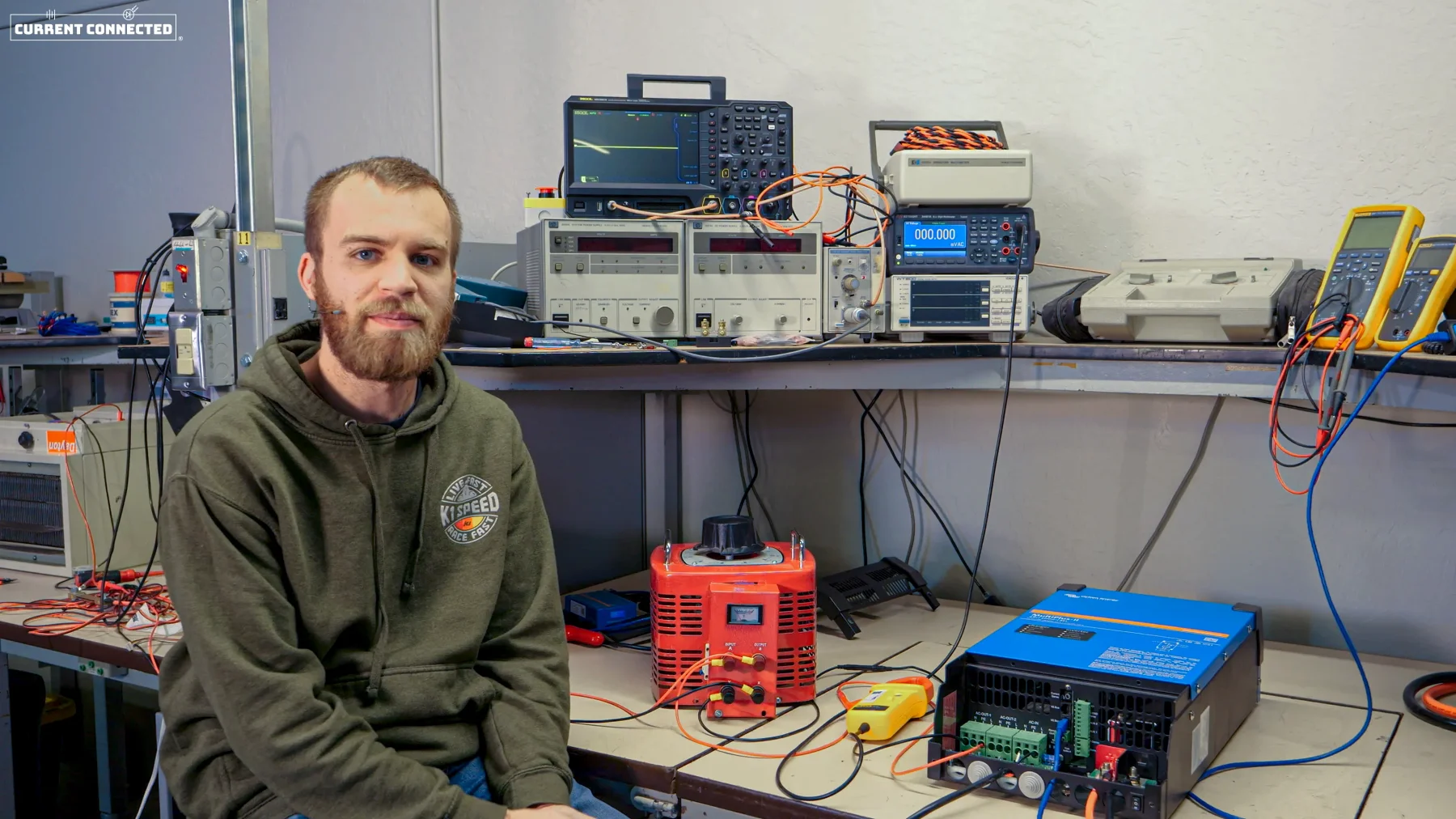
What is Victron's PowerControl

PowerControl lets you set a limit on the AC current coming into a Victron inverter/charger. This matters because available power changes depending on where you are.
RV parks typically provide 30A or 50A shore power. A generator might put out anywhere from 18 to 79A depending on the model. And if you're plugged into a buddy's garage outlet, you might need to limit draw to 10 or 15 amps to avoid tripping their breaker.
Without PowerControl, you'd have to buy an inverter sized for the smallest power source you might ever use. That means it would work everywhere, but in locations with more available power, you'd be leaving capacity on the table and wouldn't be able to run larger loads like A/C units or compressors.
PowerControl lets you set and adjust the current limit at any time. You draw as much as possible without exceeding the connection limit.
Ways to Set the Current Limit
There are several Victron devices that let you configure PowerControl (and PowerAssist) settings:
The Cerbo GX is the most powerful option. It provides complete monitoring and configuration, accessible via Bluetooth on a smart device or remotely through Victron's VRM portal when connected to the internet.
Other options include the Victron Digital Multi Control, the VE.Bus Smart Dongle, VE.Config software, and the VictronConnect app.
Once the current limit is set, the inverter/charger monitors incoming power, battery state, and load demand continuously. When incoming power exceeds what your loads need, the extra goes to battery charging. Pretty standard. What happens when the loads exceed incoming power is where things get interesting.
What Is Victron's PowerAssist?
Most inverters pass incoming AC power through to your loads and batteries. When AC power drops out, the inverter switches to battery power. It's one or the other.
Victron's PowerAssist can use both at the same time. When incoming AC power covers your loads, everything works normally and excess goes to charging. But when your loads exceed what's coming in, the inverter automatically pulls additional power from batteries to make up the difference. No interruption, no breaker trip.
The kVA rating on a Victron inverter is the amount of power it can provide from batteries, either fully off-grid or as a supplement to incoming AC. A 3kVA inverter can supply up to 3kVA from batteries on top of whatever shore power or generator input is available.
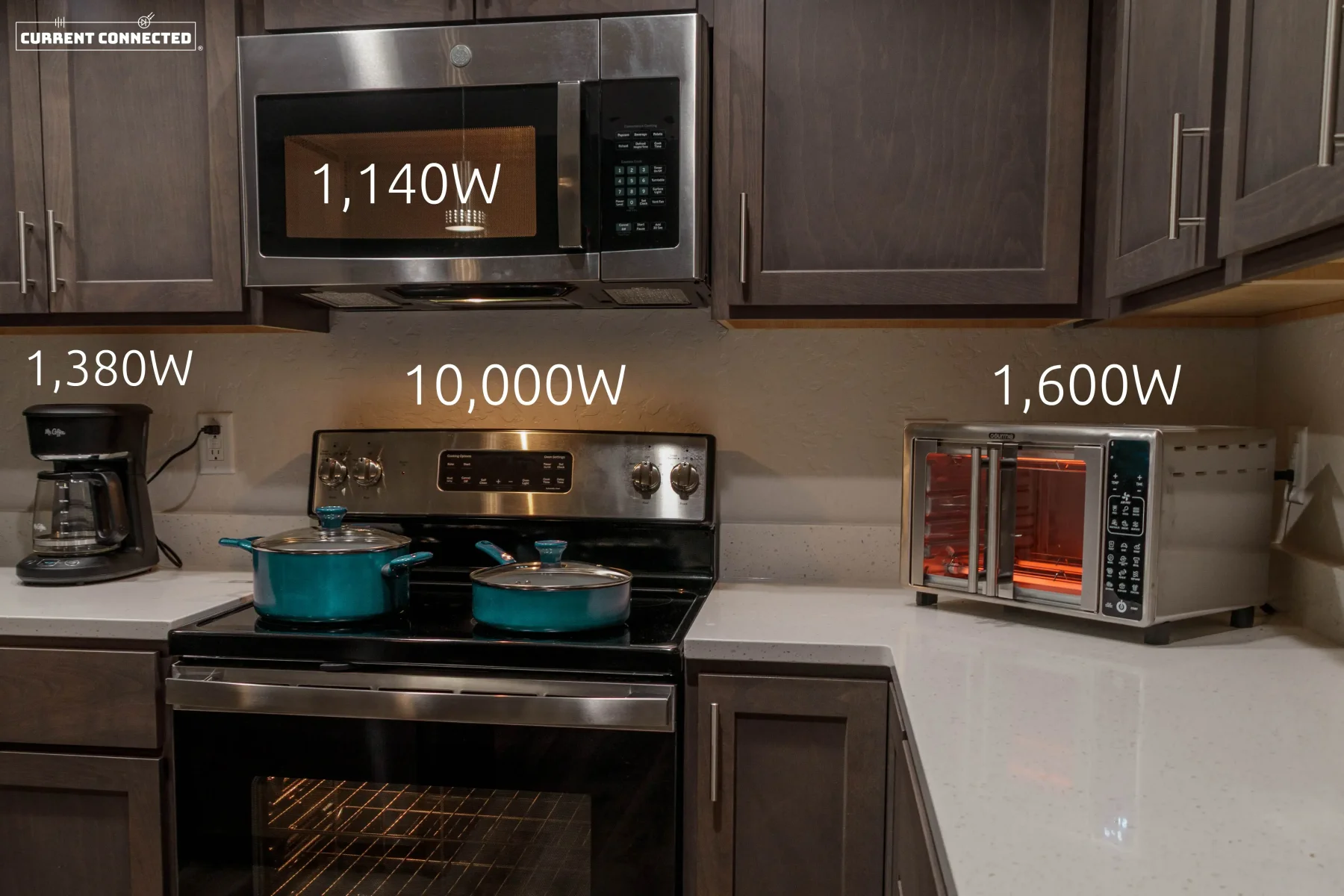
PowerAssist in Action: Dexter's RV
Let's walk through a real example.
Dexter connects his RV (equipped with a 3kVA MultiPlus-II 2x120V) to 30A shore power. That gives him 3.6kW of incoming power (30A x 120V = 3,600W).
Dinner time. He fires up the toaster oven (1.6kW), the air fryer (1.4kW), and the coffee maker (1.38kW). Total load: 4.38kW.
That's 0.78kW more than shore power can deliver. Under normal circumstances, the breaker trips and dinner is on hold.
With PowerAssist, the inverter sees the gap and pulls 0.78kW from the batteries automatically. Everything keeps running. Dexter decides to turn on the A/C (0.64kW) too. The inverter adjusts and now pulls 1.42kW from batteries. Still no breaker trip.
The Math: How Much Total Power Is Available?
The 3kVA MultiPlus-II 2x120V is rated for 2.4kW continuous output from batteries. Here's what that looks like when combined with shore power.
On 30A Shore Power
3.6kW from shore + 2.4kW from batteries = 6.0kW continuous. Surge capacity hits 9.1kW with up to 5.5kW from batteries for high-inrush loads like compressors and well pumps.
On 50A Shore Power
12.0kW from shore + 2.4kW from batteries = 14.4kW continuous. Surge capacity reaches 17.5kW with up to 5.5kW from batteries for short-duration startup loads.
That 9.1kW surge capacity on a 30A hookup is massive. Dexter can start a compressor or a well pump without tripping anything, even while other loads are running.
Why This Matters Beyond RVs
RV and Mobile
Run more appliances on limited shore power without tripping breakers or constantly managing loads. Cook dinner and run A/C at the same time on a 30A hookup.
Residential Backup
In a grid-tied home with battery backup, PowerAssist lets the inverter supplement grid power during peak demand or brownouts without a full switchover.
Off-Grid Systems
Running a generator that's smaller than your peak loads? PowerAssist bridges the gap with battery power so you can use a smaller, more fuel-efficient generator.
Shops and Workspaces
Start high-inrush equipment like compressors, welders, or shop tools on limited circuits. The surge capacity handles startup loads that would otherwise trip breakers.
See It in Action
We tested just how much power the Victron 48V MultiPlus II 3kVA 120 Inverter 35A Charger can supply from battery power before it overloads. Check out the video to see the results:
This is the BEST Feature on Victron Inverters - Power the LARGEST LOADS With Victron Power Assist
Ready to Stop Tripping Breakers?
Victron's PowerAssist and PowerControl features are built into every MultiPlus and MultiPlus-II inverter/charger. Browse our full Victron lineup or reach out if you need help picking the right unit for your setup.
Frequently Asked Questions
PowerAssist is built into Victron MultiPlus and MultiPlus-II inverters and is enabled by default. You do need to set your input current limit using one of the configuration tools (Cerbo GX, VictronConnect app, Digital Multi Control, etc.) so the inverter knows how much incoming power is available. Once that's set, PowerAssist handles everything else automatically.
It only pulls from batteries when your loads exceed incoming power, and only enough to cover the difference. When loads drop back below the incoming power limit, the inverter stops pulling from batteries and resumes charging. In most real-world use, the battery draw is intermittent and relatively small (running the microwave for a few minutes, for example) rather than sustained.
Yes. PowerAssist works with any AC input source, including generators. This is especially useful if you're running a smaller generator that can't handle all your loads at once. The inverter supplements generator power with battery power during peak demand and recharges the batteries when demand drops. This lets you use a smaller, quieter, more fuel-efficient generator than you'd otherwise need.
A transfer switch flips between two power sources (grid and generator, for example) but only uses one at a time. PowerAssist uses both incoming AC and battery power simultaneously. It's not switching between sources. It's combining them in real time based on load demand.
PowerAssist is available on the MultiPlus and MultiPlus-II product lines. Victron's Phoenix inverters (which are inverter-only, not inverter/chargers) do not have PowerAssist since they don't accept AC input. If you need PowerAssist, make sure you're looking at a MultiPlus model.