
Jerome Duchange13 November 2025 Verified Purchase
Best technical support
The reason i keep buying my gear with CC is because they have the best, most efficient and friendliest technical support.

SKU: SCC145120512
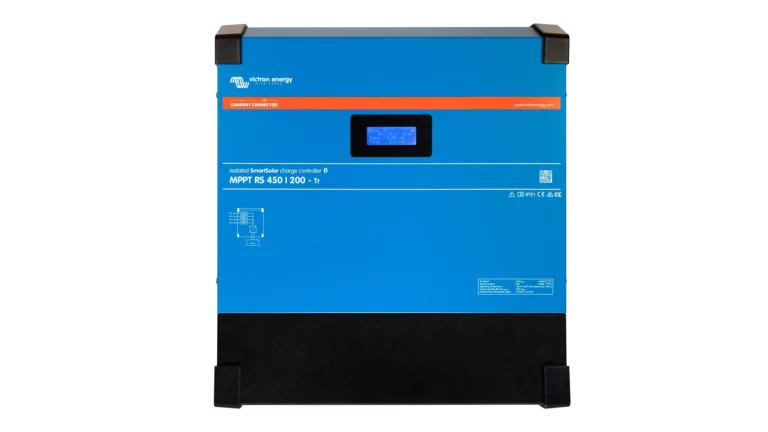
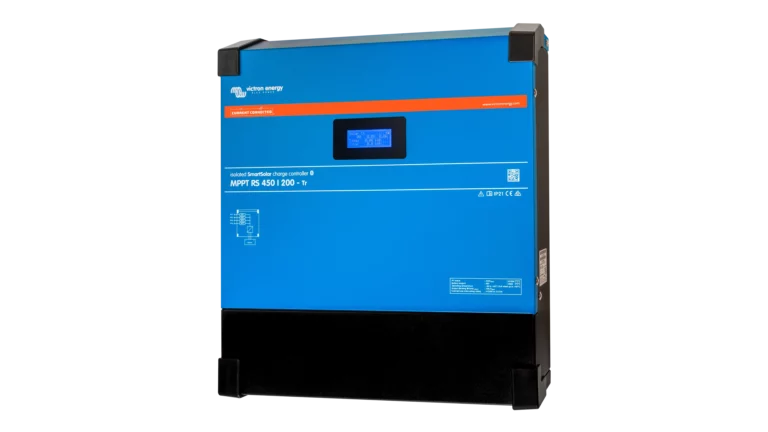
The 450/200 model delivers up to 200A (11,520W at 57.6V) through four independent MPPT trackers, each with its own MC4 input pair. Built for large arrays up to 16,000W across four separate strings.
Log in to check member price and detailed stock information.

Current Connected is YOUR Victron product specialist
The SmartSolar MPPT RS is Victron's top-tier standalone solar charge controller, designed for large 48V battery systems fed by high-voltage series-connected PV arrays. The 100A model delivers up to 5,760W of continuous charge power through two independent MPPT trackers. The 200A model doubles that to 11,520W with four trackers. Systems requiring more capacity can parallel up to 25 units via VE.Can, with synchronized charge staging across all controllers, for a theoretical maximum of 288kW.
Most competing MPPT charge controllers in this power class share a single MPPT input across all PV strings wired in parallel. Every string is forced to operate at the same voltage, which means one compromise operating point for the entire array.
The MPPT RS eliminates this entirely. Each tracker runs its own independent maximum power point algorithm, and on the 450/200, four trackers means four completely independent PV inputs at up to 4,000W each. This opens up array designs that a single-input controller can't touch.
The biggest advantage is extending your production window across the full day. Instead of pointing every panel south and watching output peak at noon then fall off a cliff by mid-afternoon, you can split arrays across east, south, and west orientations, each on its own tracker. The east-facing string catches the morning sun while the west-facing string is still in low light, and the roles reverse in the afternoon. The result is a flatter, wider power curve that starts producing earlier, stays stronger later, and delivers more total kWh per day than an equivalent single-orientation array. For off-grid systems where you're trying to keep batteries topped before sunset on a hot day, that extended afternoon production is often worth more than a higher noon peak.
Independent trackers also solve the partial shading problem. A shaded string on Tracker 1 has zero effect on the output of Tracker 2. Current Connected's Solar Panel Shading Trainer demonstrates this effect interactively if you want to see the math behind it.
The MPPT RS accepts PV arrays up to 450V open-circuit voltage, with an operating range of 65V to 450V. Running higher-voltage strings means less current on the PV side, which allows smaller wire gauges and longer home runs with less voltage drop. The startup threshold is 120V, so the array needs to reach that voltage before the controller begins charging.
Full galvanic isolation between the PV input and battery output adds a layer of safety for high-voltage PV systems. The controller also continuously monitors PV array insulation resistance and flags a fault if it drops below 100kΩ between PV conductors and ground. This catches degraded panel insulation, damaged conduit runs, or water intrusion before they become a safety hazard. If a ground fault is detected, the unit reports the error to a connected GX device for alarm notifications but continues charging.
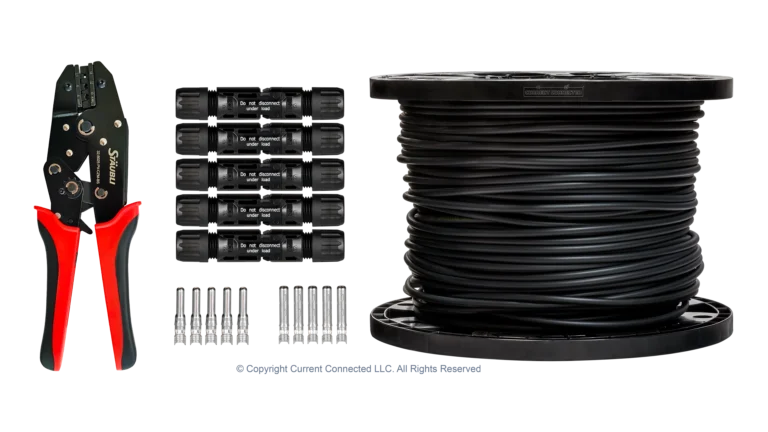
PV input is through MC4 connectors (one male/female pair per tracker). Battery terminals are M8 (5/16") studs: two studs (one positive, one negative) on the 100A model, four studs (two positive, two negative) on the 200A.
The auxiliary terminal block includes a programmable relay (rated 4A at 35V DC, 1A at 70V DC), two general-purpose analog/digital inputs, connections for remote temperature and voltage sensing, and a digital input compatible with rapid shutdown signaling and BMS allow-to-charge controls.
A built-in front panel display shows battery voltage, charge current, individual tracker voltages, total and per-tracker power, and error codes. Bluetooth provides wireless access to the VictronConnect app for configuration, real-time monitoring, and 30-day historical data per tracker.
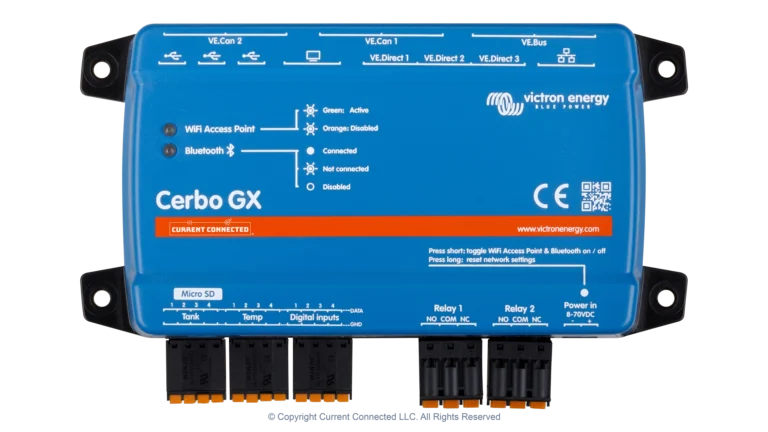
The VE.Can port enables daisy-chaining with other SmartSolar RS and VE.Can MPPT units using standard RJ45 cables. VE.Can also connects to a GX device (such as the Cerbo GX) for system-wide data logging, remote firmware updates, and VRM portal access over the internet.
The charge algorithm is fully programmable with eight preset profiles and manual tuning for absorption voltage, float voltage, equalization, and tail current. It works with any 48V battery chemistry (LiFePO4, lead-acid, gel, AGM) as long as the charge parameters are set correctly for the battery manufacturer's specifications. The programmable voltage range spans 36V to 60V.
Variable speed fan-assisted active cooling keeps the unit at full rated output up to 40°C (104°F) ambient. Above 40°C, output derates linearly. The fans are notably quiet for a controller in this power class, which matters for residential and indoor installations where the unit may be mounted in a living space or utility closet.
No. The MPPT RS is 48V only. The programmable battery voltage range is 36V to 60V. For 12V or 24V systems, use a Victron SmartSolar MPPT in the 75V, 100V, 150V, or 250V input series.
It depends on your battery float voltage. The hard limit is 450V VOC, but the controller enforces an 8x multiplier rule: PV VOC cannot exceed 8 times the configured float voltage. At the default 55.2V float, that means 441.6V. At a 52.8V float (common in some lithium setups), the limit drops to 422.4V. Exceeding this triggers an over-charge protection error and shutdown. Always calculate your effective limit based on your actual float setting before finalizing string design.
Yes. Each tracker operates independently with its own MPPT algorithm. You can run completely different panel models, string lengths, orientations, and tilt angles on separate trackers without them affecting each other. An east/west split across two trackers will produce more total daily energy than the same panel count all facing south on a shared input.
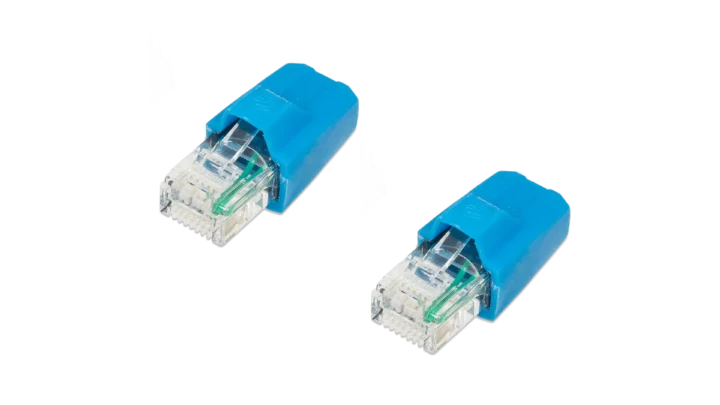
Daisy-chain them with RJ45 cables through the VE.Can ports. Up to 25 units can be paralleled this way. All units automatically synchronize their charge stages (bulk, absorption, float). Each end of the chain needs a VE.Can RJ45 terminator on the unused port.
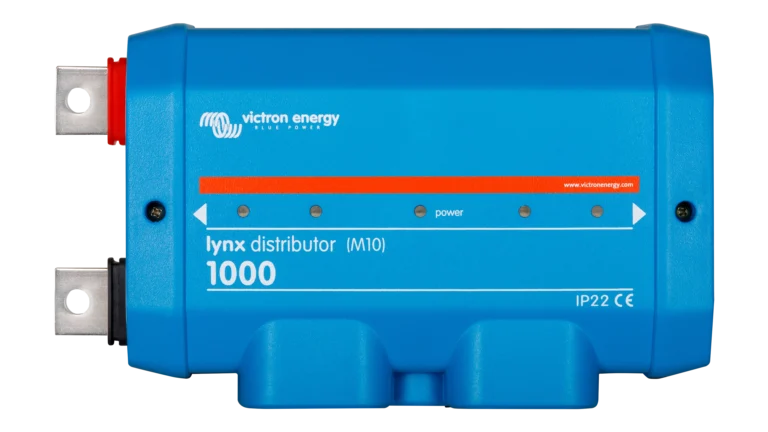
Yes. The battery output connects to Lynx Distributor busbars via appropriately fused circuits, and the VE.Can port integrates with the Lynx communication backbone for monitoring through a GX device.
The auxiliary terminal block includes a digital input that supports rapid shutdown signaling. When the signal is removed, the controller can cease PV output. Check your local AHJ requirements for whether this implementation meets their specific rapid shutdown standard.
The reason i keep buying my gear with CC is because they have the best, most efficient and friendliest technical support.
i have the 450V/200A, this is the best controller ive ever used, its fast quiet and efficent and will work until the last ounce of light avalable.
I just completed installation and start-up of the 20K 120/240 Kit system, three 25K S0K battery racks, and forty-two 400W Rich Solar panels. A well-designed system and knowledgeable staff made the installation and start-up a breeze. The well thought out complete package was beyond expectation, in every detail. Oversized cables hydraulically crimped with heat shrink and protective covers. No missing parts! The equipment was everything as described, top quality, very knowledgeable staff. I cannot say enough good things about the product and service. The equipment was package and shipped on time, in very heavy-duty crates, on pallets organized in a way that made the installation simple and straight forward. Everything worked the first time. I am now producing more electricity than I need! I am using all the equipment, A/C, refrigerators, freezers, and well pump, with plenty of power to recharge the battery bank every day. Worth every penny. I am now energy independent. I now use the public utility as my back-up source. Doubt I’ll ever need them. I have been in business for over 40 years, have dealt with hundreds of suppliers, and I can say I have never had a better experience. 100 star rating!