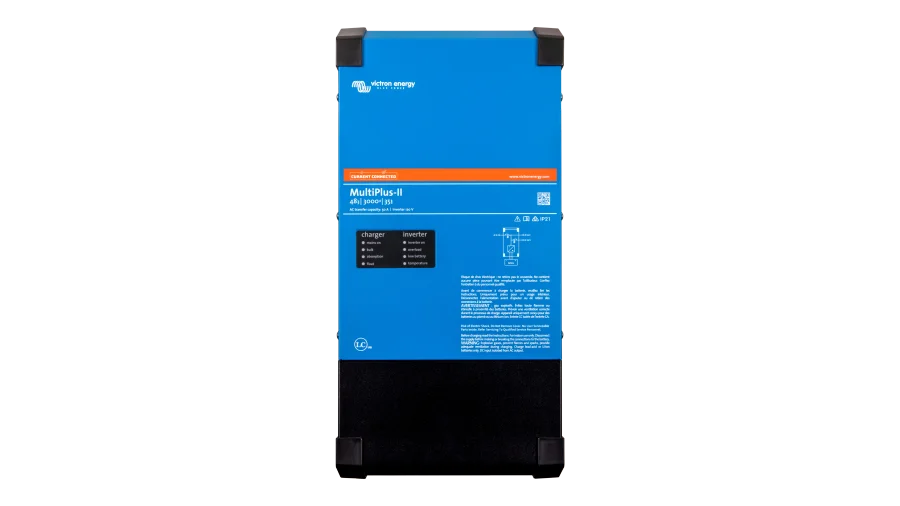
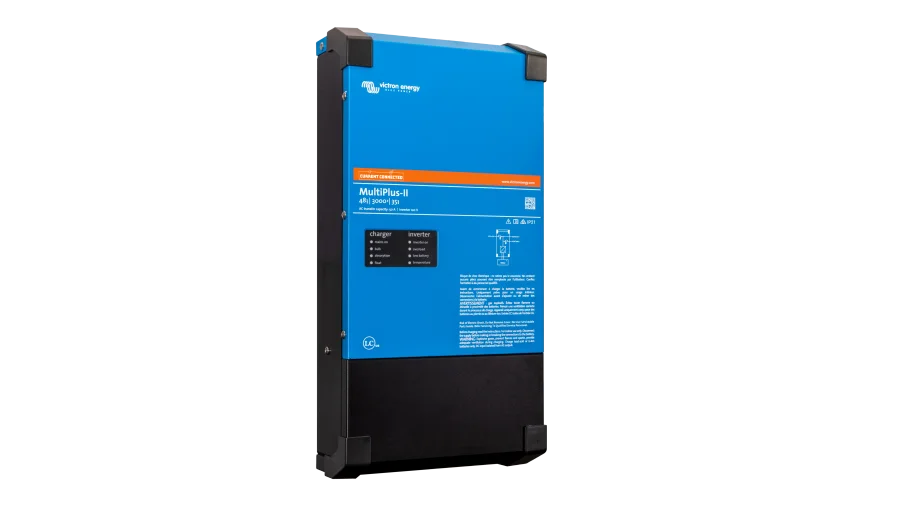
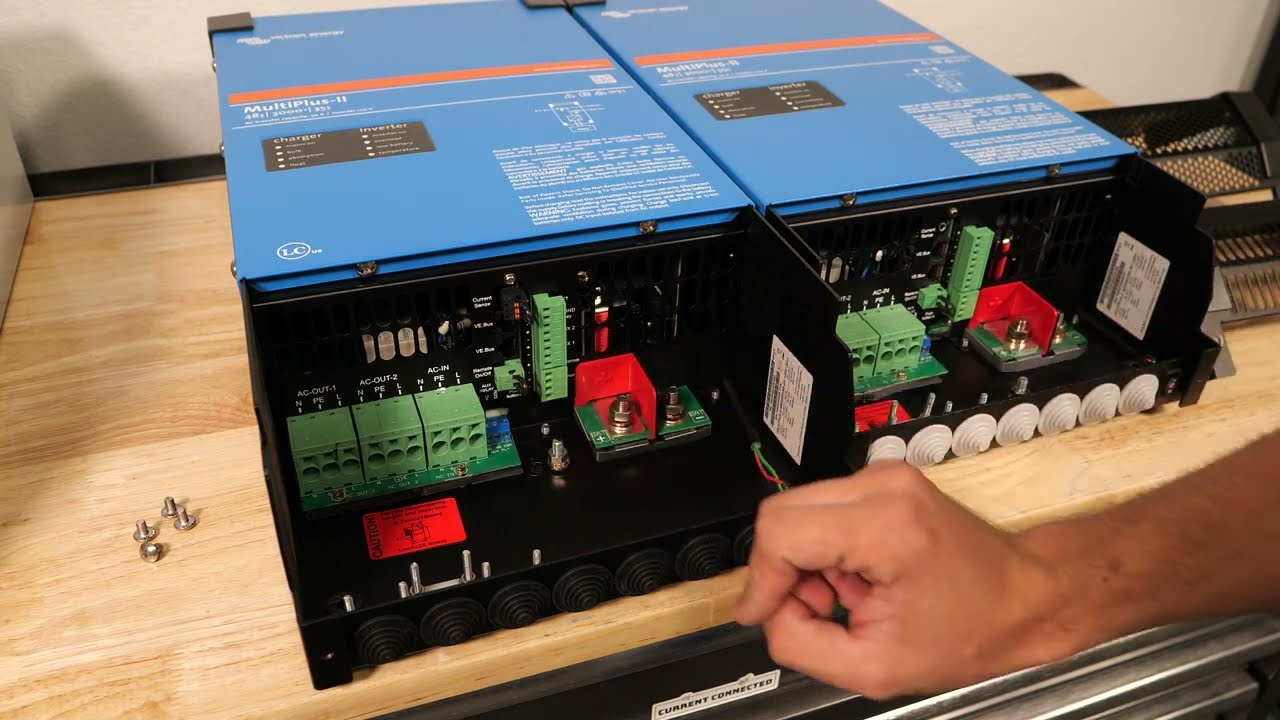
About the MultiPlus-II 48V 3kVA
The MultiPlus-II is a low-frequency transformer-based inverter/charger that produces true pure sine wave AC output. It powers sensitive electronics (computers, networking equipment, medical devices) and high-surge loads (well pumps, compressors, power tools, welders) equally well. The low-frequency design handles surge loads that would shut down lighter high-frequency inverters, sustaining 5500W of peak output for motor starting and similar demands.
At 11W idle draw, the MultiPlus-II is efficient enough for systems that sit at standby most of the day. AES (Automatic Economy Switch) mode drops idle to 7W, and search mode brings it down to 2W by pulsing the output and only fully activating when it detects a load.
UL 1741 Certified for Residential Permitting
This is the UL 1741 certified version of the MultiPlus-II, which matters for any US residential installation that involves a building permit or utility interconnection. The UL 1741 listing from a nationally recognized testing laboratory is what most inspectors and AHJs expect to see on an inverter in a permitted installation. Having it on the nameplate removes one of the most common friction points in the approval process. Note that this unit carries UL 1741 (not UL 1741SA or SB), so utility interconnection requirements may vary by jurisdiction. Check with your local AHJ and utility before finalizing a grid-tied system design.
Two AC Outputs for Load Management
The MultiPlus-II has two separate AC outputs. Output 1 is the uninterruptible output: it stays live whether the system is running from grid, generator, or battery. When grid or generator power drops, the inverter picks up the load in under 20 milliseconds, fast enough that computers, servers, and networking equipment continue running without interruption.
Output 2 is live only when AC input power is present. When the system switches to battery, Output 2 shuts off. This is the right place for high-draw loads you do not want draining the battery, like a water heater, clothes dryer, or space heater. The inverter accounts for Output 2 loads when managing PowerAssist and PowerControl, so they are part of the overall load calculation while grid power is available.
PowerAssist and PowerControl
PowerControl sets a maximum AC input current limit to prevent overloading a generator or limited utility circuit. The MultiPlus-II monitors total AC draw and automatically reduces battery charge current to keep the input under the set limit.
PowerAssist goes further. When loads connected to the system exceed what the grid or generator can provide, the inverter supplements with battery power in real time, adding up to 2400W on top of the AC input. When demand drops, the surplus goes back to battery charging. This lets you run a system on a smaller generator or a limited utility feed without tripping breakers during peak demand.
120/240V Split Phase with Two Units
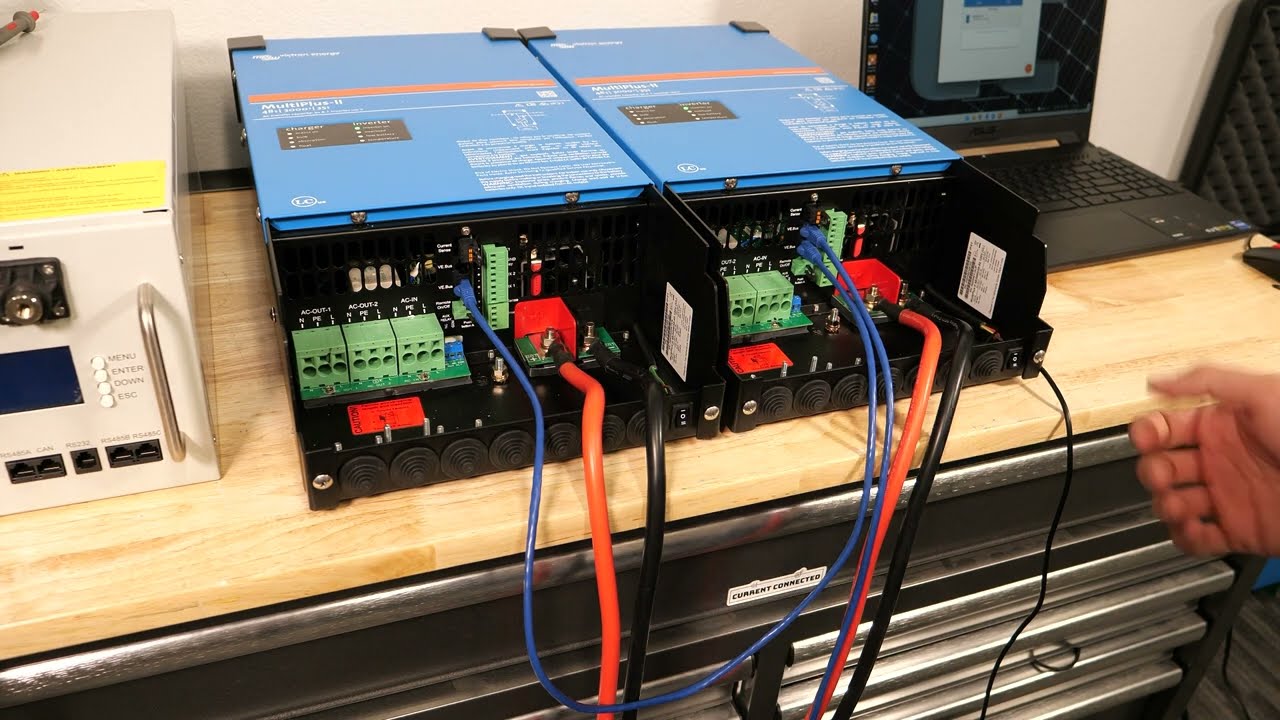
A single MultiPlus-II produces 120V output. Two units of the same model can be configured as a split phase pair, producing 120/240V for residential panel distribution. This is the standard configuration for US whole-home backup and ESS installations. The upgrade path is straightforward: start with one unit for 120V critical loads, add a second unit for full 120/240V coverage. Multi-inverter systems purchased through Current Connected ship pre-configured, so the units arrive ready to install.
ESS and Grid-Tied Self-Consumption
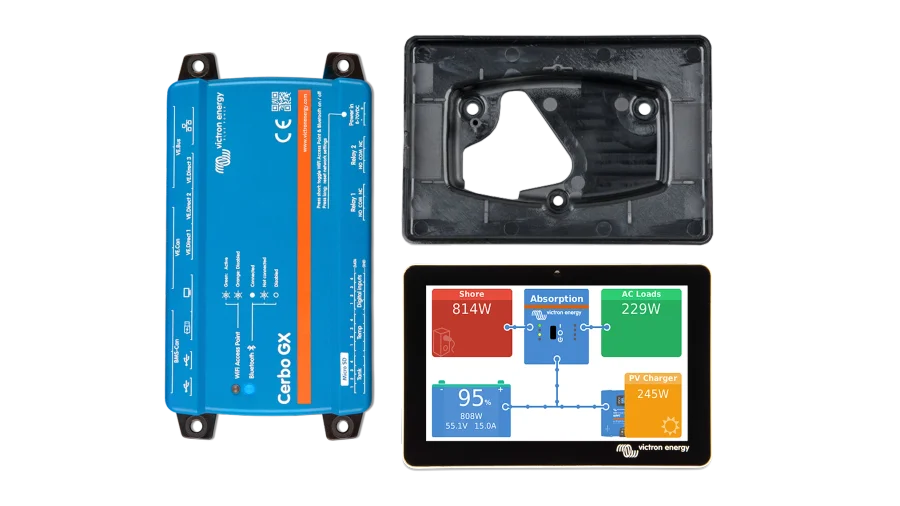
With a Cerbo GX and an external current sensor or energy meter installed at the main panel, the MultiPlus-II runs Victron's ESS (Energy Storage System) mode. ESS manages grid interaction automatically: it stores solar energy in the battery, powers loads from the battery first, and only draws from the grid when the battery is depleted. The system can be configured for zero export (required by some utilities) or for grid feed-in where allowed. In the event of a grid failure, ESS transitions to off-grid backup automatically.
Parallel Operation for Higher Capacity
Up to six MultiPlus-II units can operate in parallel per phase. Six 48V 3kVA units produce 14,400W continuous with 210A of combined charge current. Parallel operation is configured through a direct VE.Bus daisy chain between units.
Battery Charger
The built-in 35A charger uses an adaptive 4-stage algorithm (bulk, absorption, float, storage) with configurable voltages for lead-acid and lithium battery banks. When connected to a Cerbo GX with DVCC enabled, the charger responds to BMS current limits automatically, coordinating with solar charge controllers and other charging sources as part of a managed system.