Tigo RSS Transmitter for Tigo RSD Modules, Single and Dual Core Options, Transmitter for Shutting Down Solar Production
SKU: Please select an option...
Product Summary
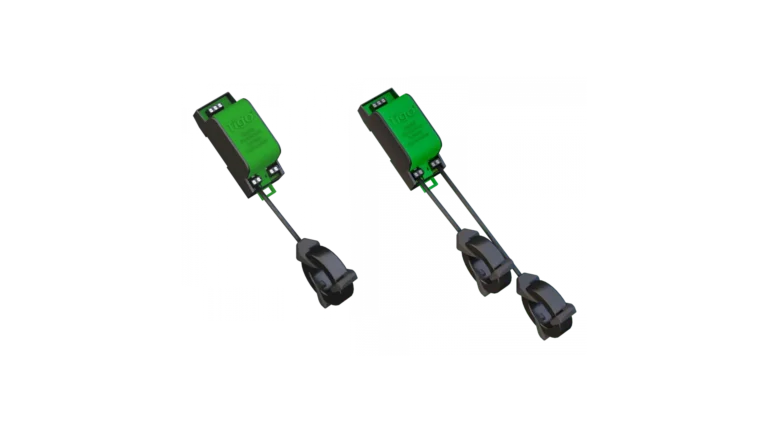
Rapid shutdown transmitter that sends the PLC keep-alive signal to Tigo TS4-A-F and TS4-A-2F modules. Each core clamps around up to 10 PV string conductors within 1,000ft, with Pure Signal technology for synchronizing up to 10 transmitters across multi-array installations.
Specifications:
- Pairs with the Tigo TS4-A-F and Tigo TS4-A-2F
- Syncs up to 10 RSS Transmitters
- DIN rail mount
- Meets NEC 690.12 2017, 2020, and 2023 requirements
- Dimensions (H×W×D): 3.58×1.5×1.63in
- Weight of transmitter only: 0.013lb
- Weight of each core: 0.35lb
- Comes with one or two cores (select option below)
Log in to check member price and detailed stock information.
Please select all options above to add to cart.


Current Connected is YOUR Tigo product specialist
About the Tigo RSS Transmitter
Tigo's RSS Transmitter, a rapid shutdown device, is a companion product to the Tigo TS4-A-F and TS4-A-2F, and it provides the "keep-alive" signal for solar production. Should the signal disappear, the modules automatically shut down power at the solar panels. This is important for fire safety. The Transmitter has built-in Pure Signal technology to align multiple RSS Transmitters to communicate together over multiple solar arrays.
Core Count and String Coverage
Each set of series-connected panels creates a single string, and Tigo has no limit to how many panels can be on a single string. One core, the sensor that sends the shutdown signal, handles up to 10 strings (either all positive wires or all negative wires) and must be installed within 1,000ft of the TS4 module. Distances greater than 1,000ft require a second core as the PLC (powerline communication) signal gets weaker over longer distances.
The RSS Transmitter offers both one and two core variations. Cores cannot be purchased separately, so it's important to consider both current and future solar needs before purchase.
Multi-Transmitter Synchronization
In larger systems, link up to 10 transmitters for a synchronized "keep-alive" signal across multiple arrays. This is perfect for systems with more than 10 arrays going to the same inverter or with arrays going to different inverters.
Compatibility Note
TS4-A-F and TS4-A-2F modules can work with a handful of RSS signals utilizing PLC, but Tigo strongly recommends using Tigo branded or approved RSS transmitters to ensure the modules will shut down when needed and maintain "keep-alive" signals during normal operation.
Recommended Accessories


Frequently Asked Questions
One core covers up to 10 strings within 1,000ft of the farthest TS4 module. If your array is spread across a larger distance, or if you're running conductors through long conduit runs that push beyond 1,000ft, the dual core option ensures the PLC signal reaches every module. Since cores can't be purchased separately after the fact, it's worth going dual if your installation is anywhere close to the distance limit.
Yes. The RSS Transmitter requires external power to generate the keep-alive signal. The transmitter itself does not include a power supply or enclosure. If you need a complete ready-to-install package with power supply and outdoor-rated enclosure, look at the RSS Transmitter Kit.
The TS4-A-F modules will respond to PLC-based RSS signals from other sources, but Tigo strongly recommends their own transmitters. Third-party signals may not maintain reliable keep-alive communication under all conditions, which means the modules could shut down unexpectedly during normal operation.
The TS4 modules default to shutdown when they stop receiving the keep-alive signal. If the transmitter loses power, all connected modules will shut down within seconds. This is by design for fire safety, but it means the transmitter's power source needs to be reliable and on a circuit that stays live whenever you want the array producing.
The core clamps around the PV string conductor (either positive or negative, not both). It mounts wherever you can access the string wiring, typically near the combiner box, transition box, or inverter input. The transmitter itself is DIN rail mounted, usually inside an enclosure near the cores.
Customer Reviews
No reviews yet. Be the first to review this product!