BigBattery NEXUS 48V 15kWh LiFePO4 Battery, 300Ah, Self-Heating, Fire Suppression, Solar and Home Backup Storage
SKU: F-NXUS-48150-G1
Log in to check member price and detailed stock information.
| Need more than what's available? Tell us what you need and we can source it for you. |
Product Summary
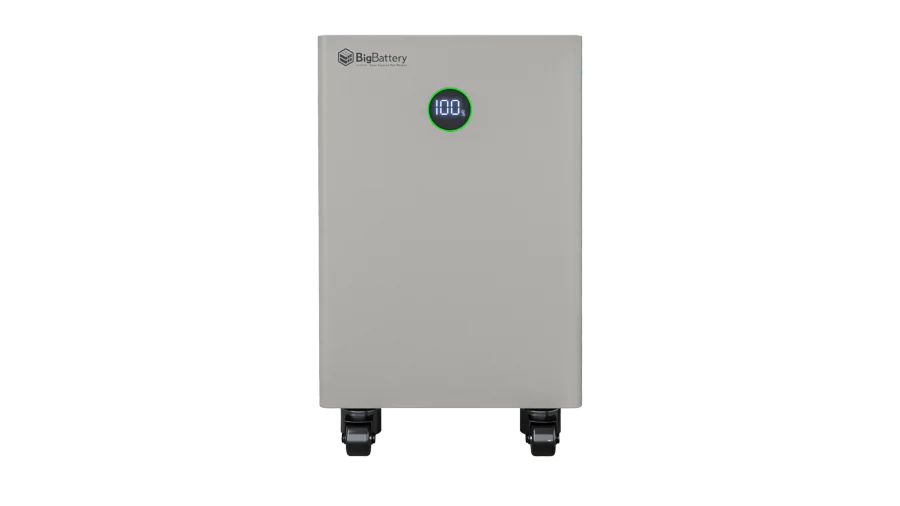
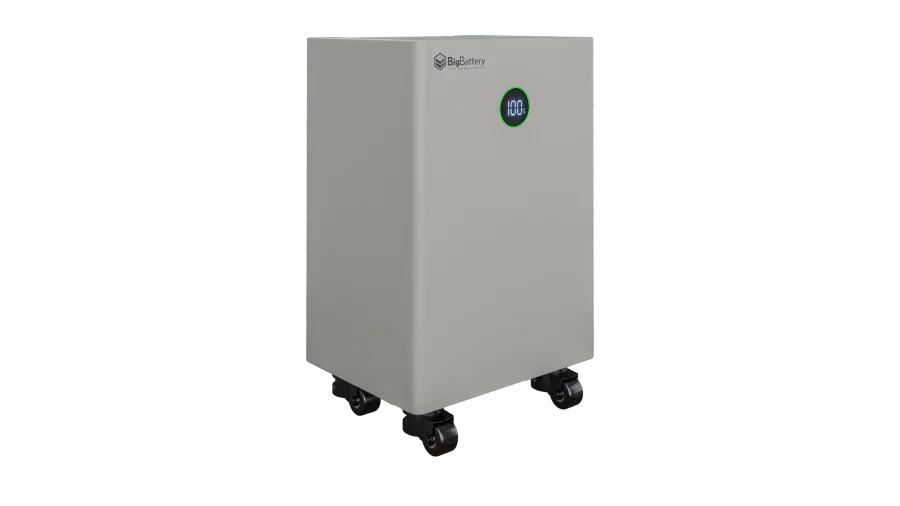
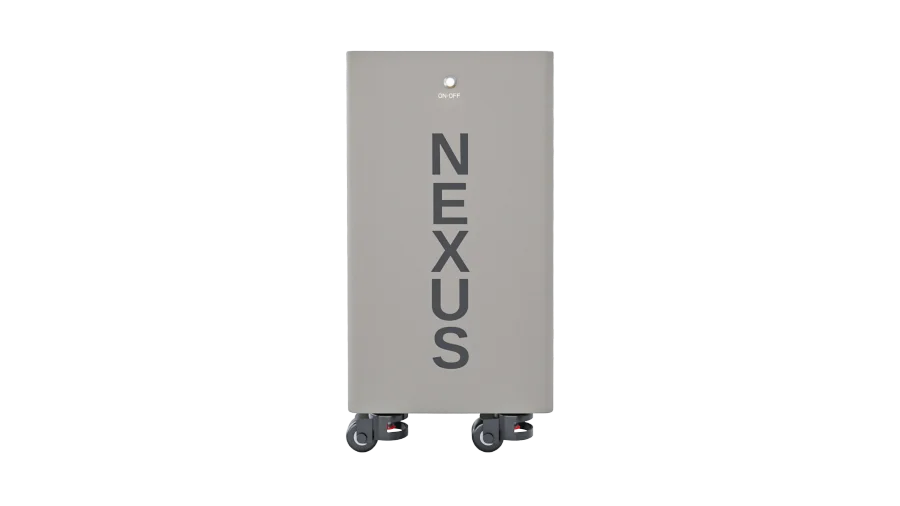
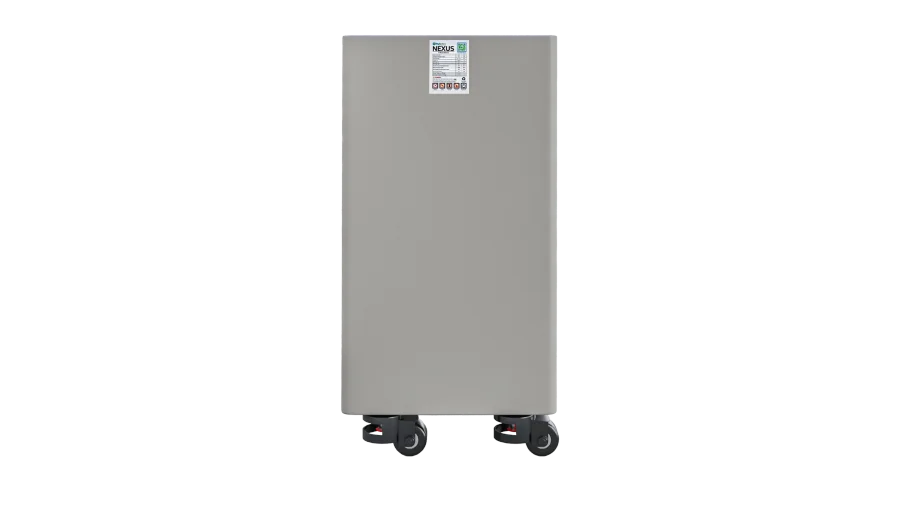
The BigBattery NEXUS is a 48V LiFePO4 battery that puts 15kWh in one floor-standing cabinet, enough to carry an off-grid cabin through the night or keep a home's essential circuits running through an outage. It warms itself before charging in the cold, carries its own aerosol fire suppression, and talks closed-loop with EG4 and Victron inverters, with room to grow to 15 units in parallel.
Specifications:
- 51.2V nominal for 48V systems, 15kWh (300Ah) of LiFePO4 storage
- 140A continuous charge and discharge, 270A peak discharge for 1 second
- Rated for more than 4,000 cycles at 80% depth of discharge
- Internal heater; charges from 32°F to 113°F and discharges from -4°F to 113°F
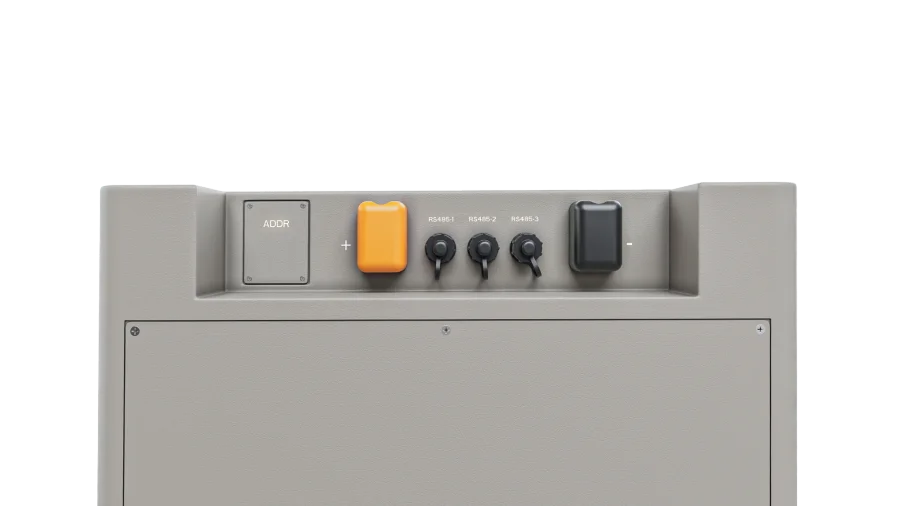
- Closed-loop CAN and RS485 communication for EG4, Victron and BigBattery APEX inverters
- Up to 15 units in parallel (225kWh); parallel only, no series connection
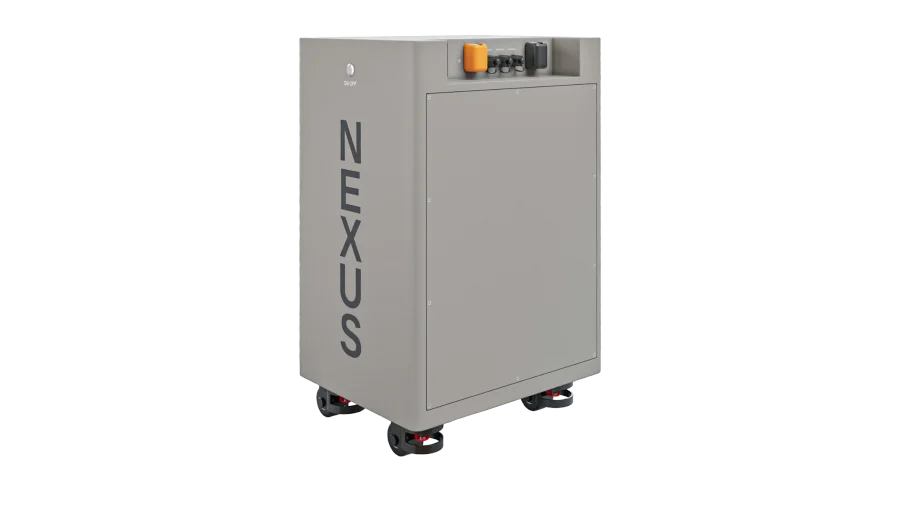
- IP54 floor-standing cabinet with built-in aerosol fire suppression
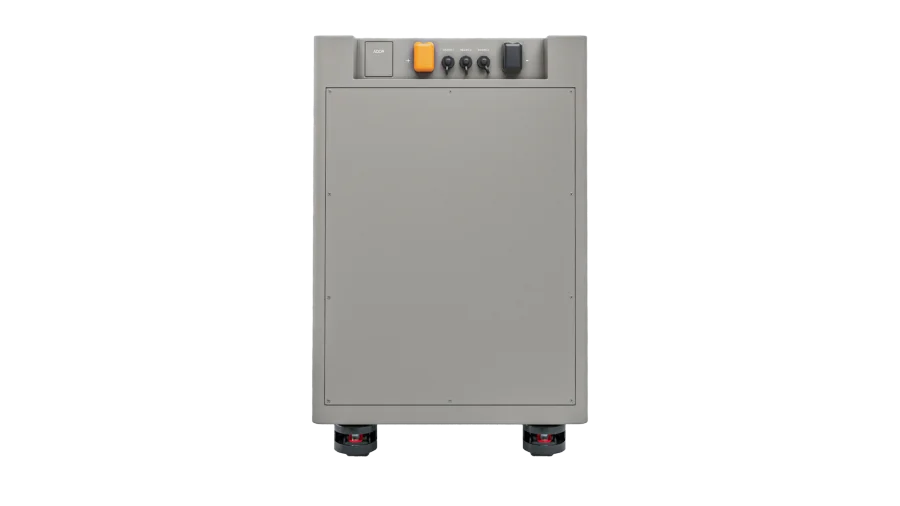
- 30.8×19.7×15.7in (782×500×400mm), about 315 lb (143 kg), power and communication cables included


Current Connected is YOUR BigBattery product specialist
About the BigBattery NEXUS 48V 15kWh Battery
One cabinet, one pair of terminals, 15kWh of LiFePO4 storage. The BigBattery NEXUS arrives with its heater, BMS and fire suppression already inside, so the install comes down to placing the cabinet and landing the power cables and communication lead on your inverter.
It's a large battery for solar power on a footprint of about 20 by 16 inches, sized for a garage, shed or utility room. When the system grows, add more NEXUS units in parallel, up to 15 on one bank for 225kWh.
Self-Heating 48V LiFePO4 Battery for Cold Garages and Cabins
The NEXUS charges in the cold without any help from you. When the cells sit below 32°F (0°C) and the surrounding air is between 32°F and -4°F (-20°C), the internal heater warms them to 41°F (5°C), and then the BMS lets charge current in. Discharge keeps running down to -4°F, so your loads stay on while the heater works.
The IP54 cabinet holds up to dust and splashing water. For the longest life, BigBattery puts the best discharge range at 59°F to 95°F, so an insulated shed or a conditioned utility room gets the most out of the cells.
Closed-Loop CAN and RS485 With EG4, Victron and Sol-Ark Inverters
With closed-loop communication, your inverter reads state of charge, voltage limits and charge current straight from the NEXUS BMS instead of estimating from voltage. The RS485-2/CAN port supports EG4, Victron and Sol-Ark inverters, and BigBattery's own APEX inverters connect on any of the three RJ45 ports. In a parallel bank, the primary battery talks to the inverter and the followers report through it.
Pairing the NEXUS With an APEX Inverter
One NEXUS supplies 140A continuous, about 7kW at its 51.2V nominal voltage, plus 270A for one second to cover motor starts from a well pump, air compressor or welder. To run an inverter rated 10kW at full output, plan on two NEXUS units in parallel.
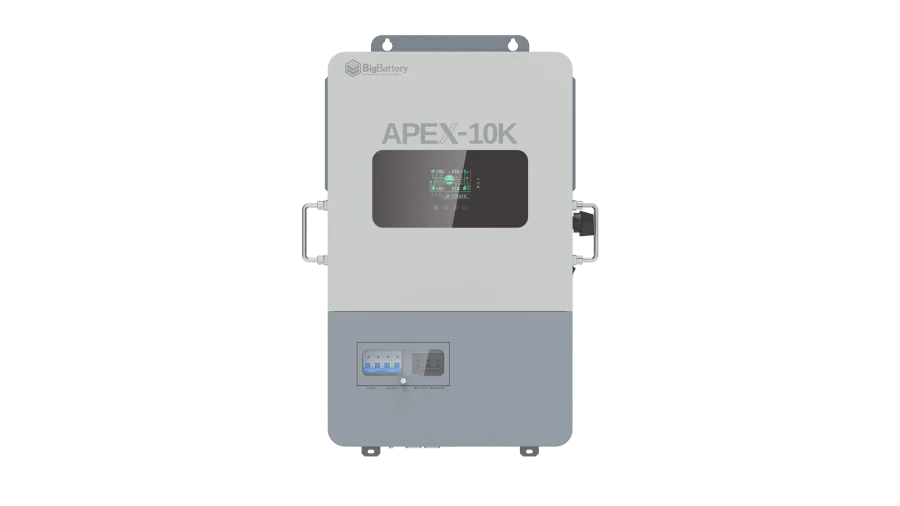
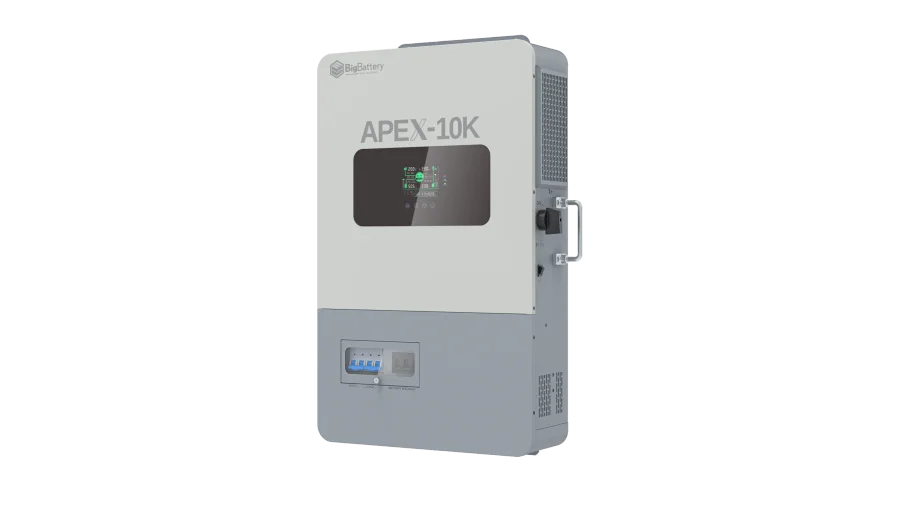
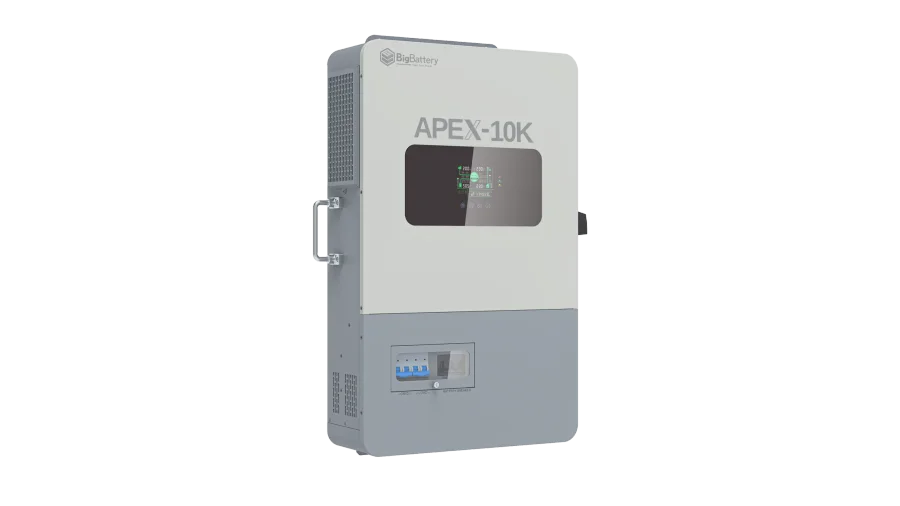
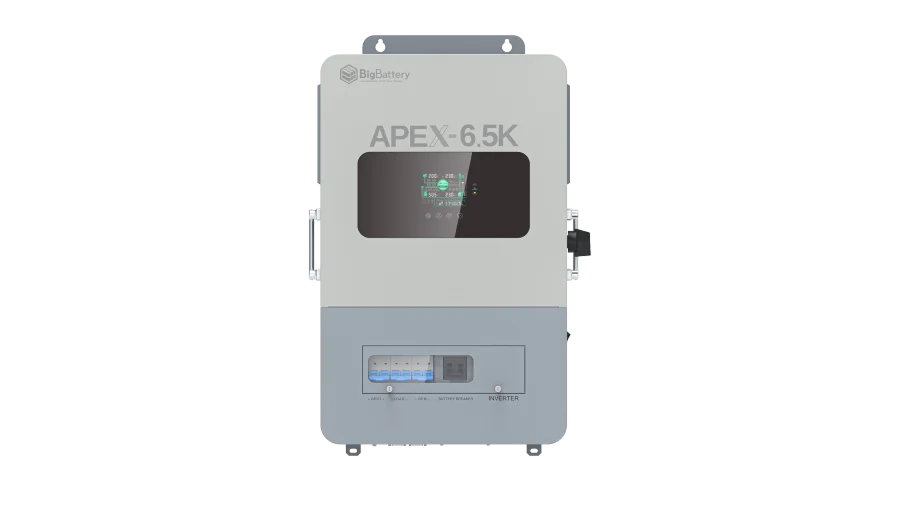
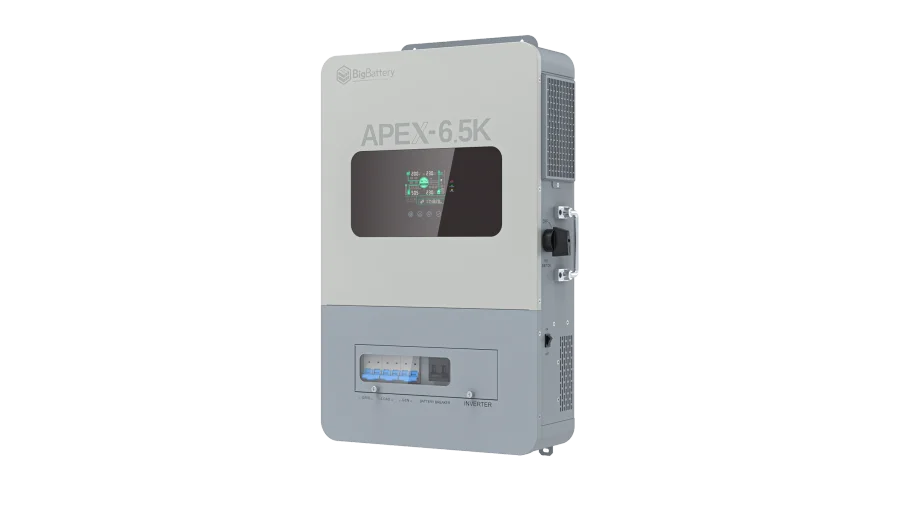
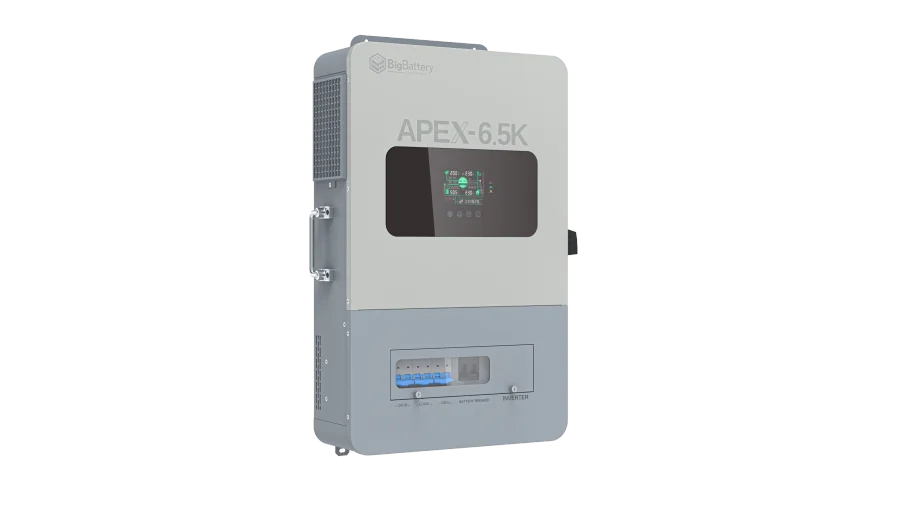
The BigBattery APEX-10K is a natural match for a two-battery bank, and it talks closed-loop with the NEXUS over any of its three communication ports.
Our team is happy to help with sizing.
LiFePO4 Battery With Built-In Fire Suppression and BMS Protection
Every NEXUS carries an aerosol fire suppression device inside the cabinet as a backstop to the cell chemistry and the BMS. The BMS shuts the battery down on over-discharge at the cell and pack level, overcurrent, short circuit, and high or low temperature, and it watches its own MOSFETs for heat. When it trips, the LED panel shows a fault code, so you know what happened before you plug in a laptop.
Installing the NEXUS: Placement, Wiring and Fusing
At about 315 lb, the NEXUS is a two-person lift using its handles. BigBattery calls for an upright install on a floor rated for at least 150 kg/m² (about 31 lb/ft²), 20in (50cm) of open space around the cabinet for heat, flammable materials kept 2 ft away, and a Class ABC or BC fire extinguisher on site.
Torque the P+ and P- terminals to 142 in-lb (16 Nm). In a parallel bank, connect each battery's positive and negative to the next with double ring terminals, run the bank to the inverter from the primary battery, and set addresses on the four DIP switches: address 1 for the primary and 2 through 15 for the followers.
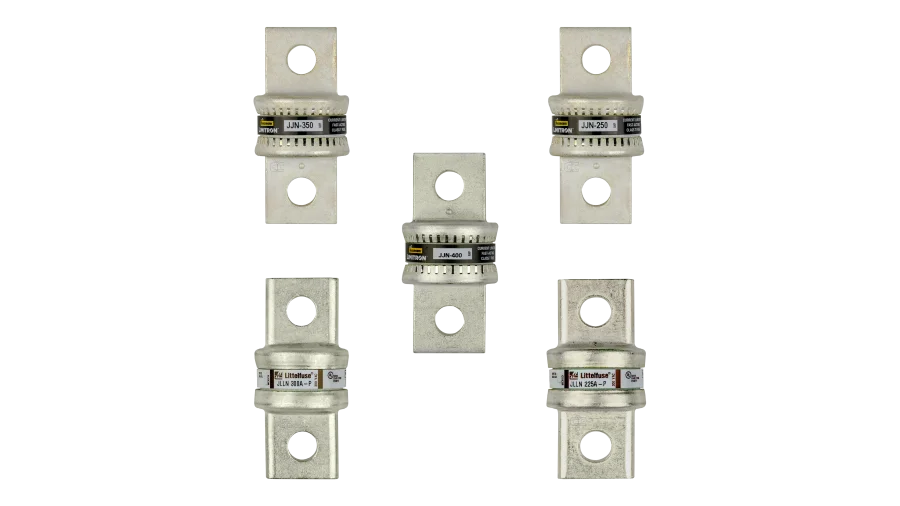
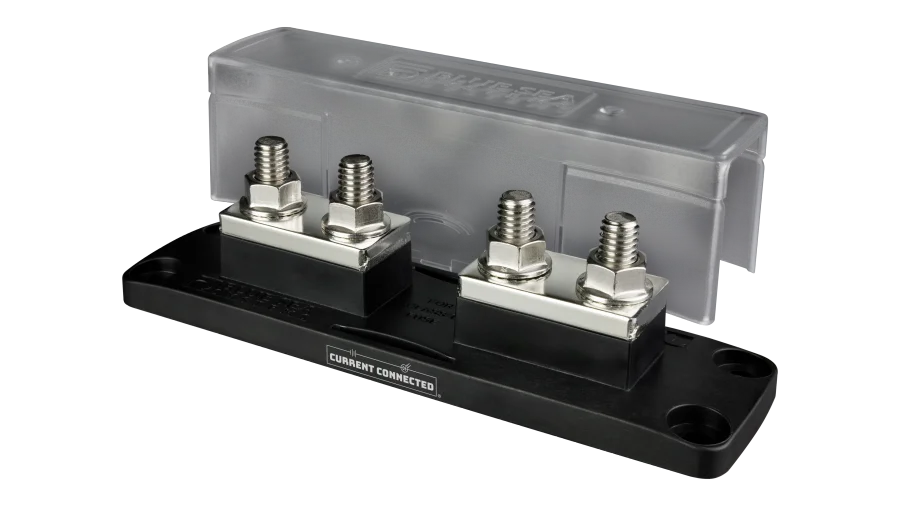
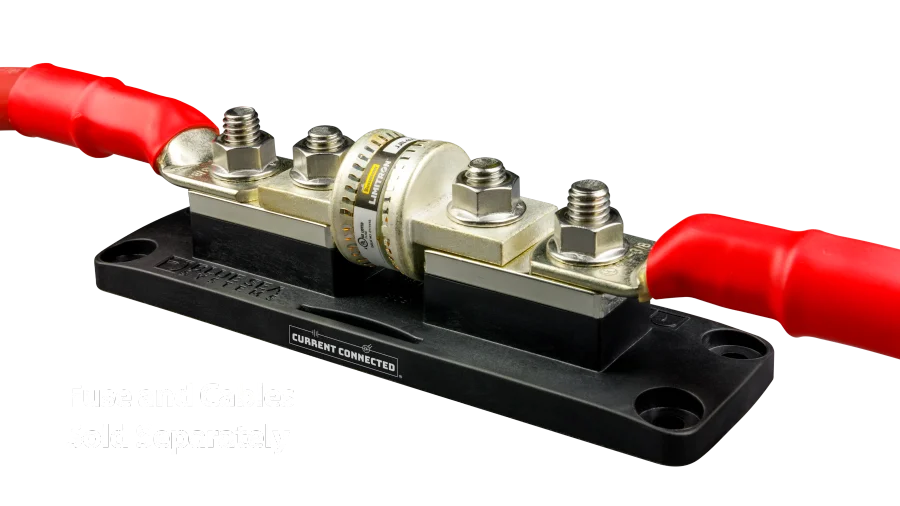
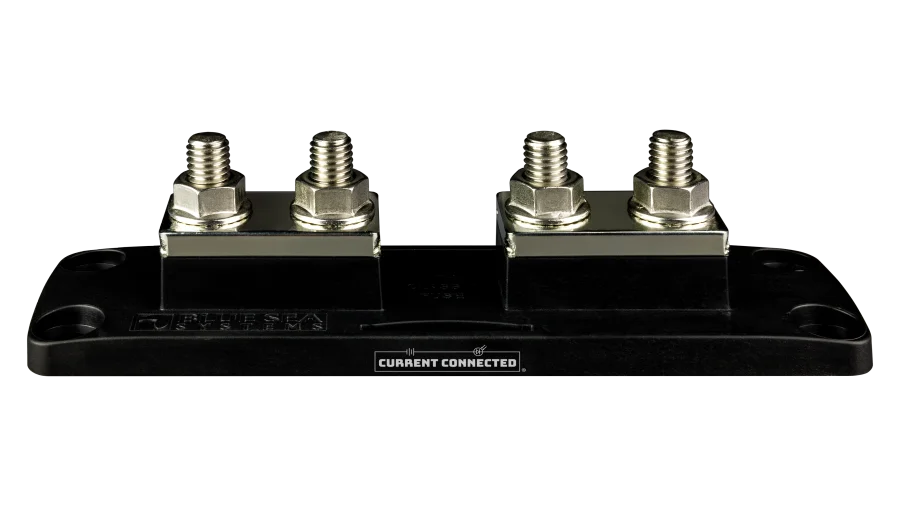
Main battery protection belongs on a Class T fuse sized to your inverter cable, and our Class T fuses from 225A to 400A suit the heavier runs a multi-battery bank needs.
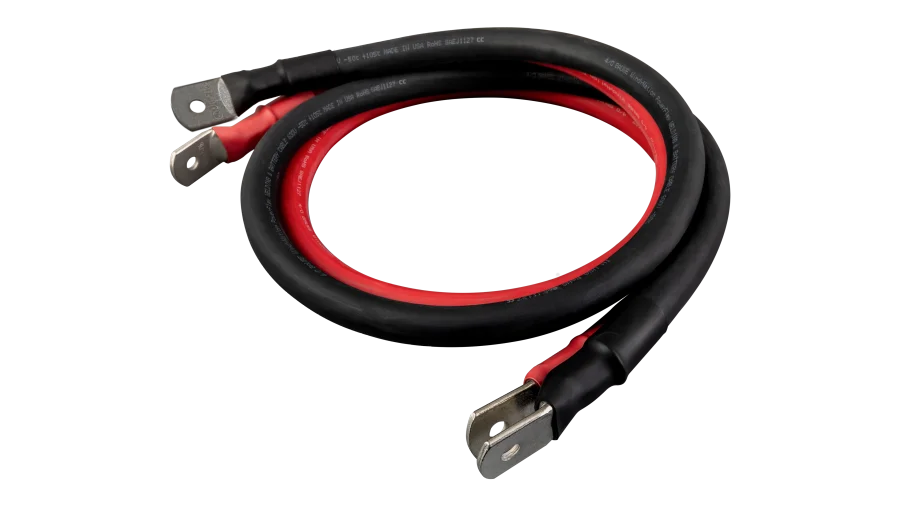
For a battery-to-inverter run longer than the included cables, our custom battery cables are made to order in 6 AWG to 4/0 AWG at the exact length you need.
Recommended Accessories
Frequently Asked Questions
Choose a lithium or custom battery profile with constant-voltage charging. BigBattery recommends 56.8V for bulk and absorption, no float or equalize stage, and a 50.8V low-voltage cutoff. Keep charge and discharge current at or below 140A per battery, and stay under the 57.9V maximum charge voltage.
BigBattery lists UN38.3 certification for the NEXUS, the transport safety test for lithium batteries. It doesn't list a UL 1973 battery listing or a UL 9540 system listing, so the NEXUS fits off-grid systems and installs where your AHJ (Authority Having Jurisdiction) doesn't call for UL 9540 equipment. If the system needs a permit or a utility interconnection, confirm with your AHJ before you buy.
You can parallel it with other NEXUS units, and BigBattery also lists the NEXUS as parallel-compatible with its KONG and GRIZ batteries purchased from 2019 to 2024. Other brands aren't on that list, so plan any expansion around NEXUS, KONG or GRIZ units.
BigBattery's manual cites NEC Article 706 in treating battery grounding as optional below 60Vdc, and the NEXUS ships without a grounding terminal or cable. The inverter always gets grounded. If your AHJ wants the battery cabinet bonded, confirm the method with your inspector.
BigBattery's BMS monitoring software runs on a laptop or PC and connects to the RS485-1 port through a USB-to-RS485 adapter, which isn't in the box. It shows each cell's voltage and temperature, charge and discharge current, state of charge, protection status and fault history. In a parallel bank, connect to the primary battery at address 1, which polls the followers. Day to day, a closed-loop inverter shows state of charge on its own display or app.
Divide 15kWh by your average load and allow about 10% for inverter losses. A cabin averaging 500W runs roughly 27 hours on a full charge, and essential home circuits averaging 1.5kW run about 9 hours. For daily cycling, the 4,000-cycle rating at 80% depth of discharge works out to about 12kWh a day per battery.
Customer Reviews
No reviews yet. Be the first to review this product!