
kmkrreeves27 November 2025 Verified Purchase
Great units
I have 2 set up for split phase. Charging and inverting work flawlessly. The UPS function is amazing. Really enjoy these units.

SKU: PMP482505120
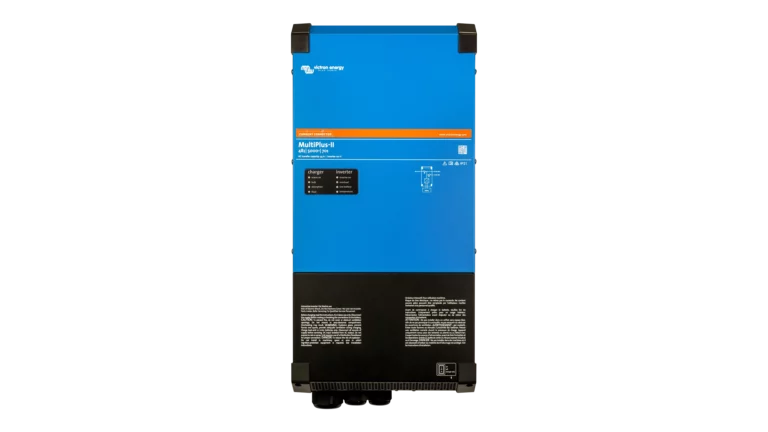
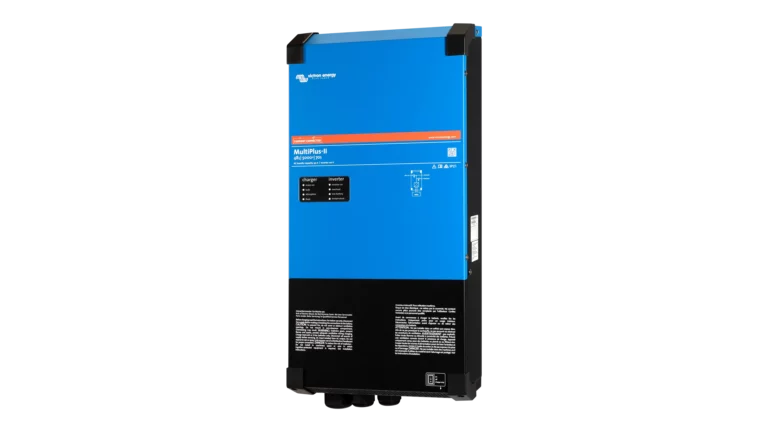
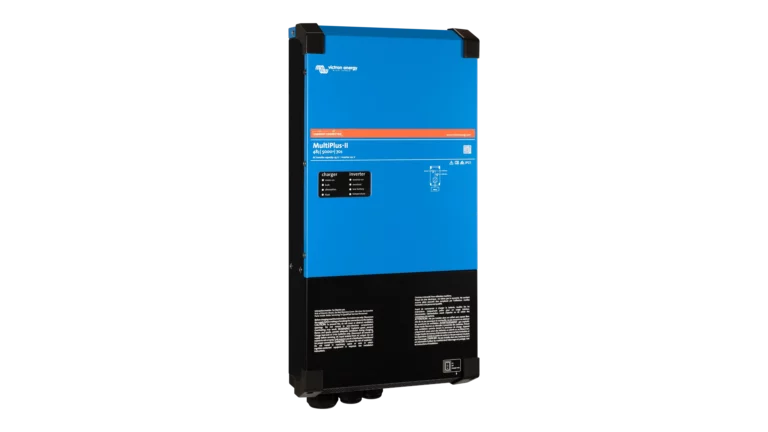
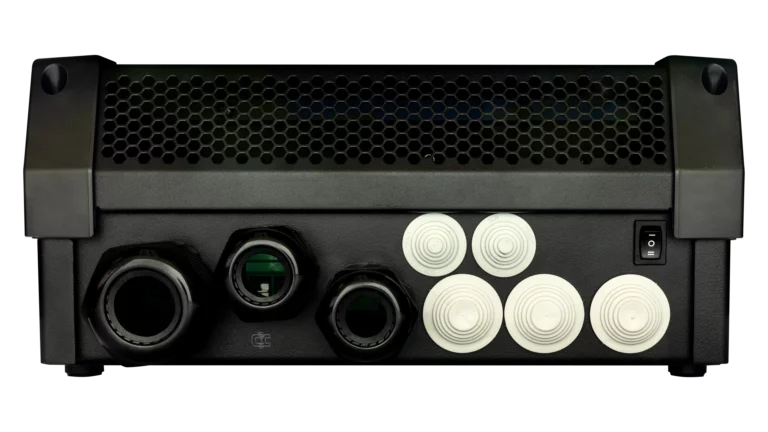
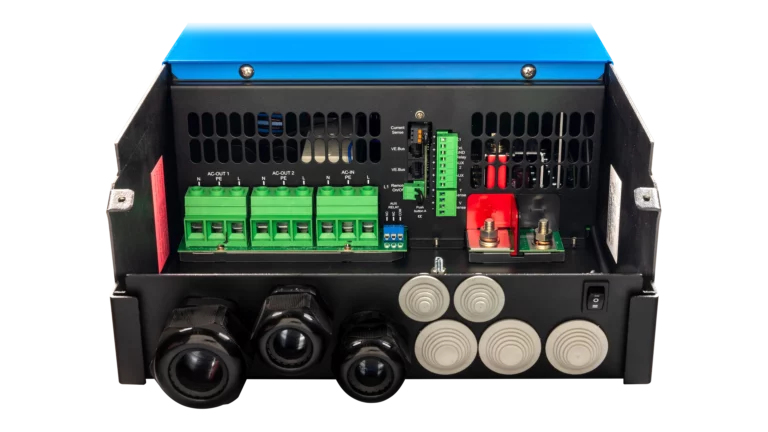
Low-frequency 48V inverter-charger rated for 4,000W continuous and 9,000W surge with a built-in 70A battery charger and 15W idle consumption. UL 1741 certified for grid-interactive and off-grid installations, with dual AC outputs, PowerAssist grid supplementation, and sub-20ms automatic transfer.
Log in to check member price and detailed stock information.

Current Connected is YOUR Victron product specialist
The MultiPlus-II is a low-frequency inverter-charger built around an iron-core transformer, which is what gives it the 9,000W surge capacity from a 4,000W continuous rating. That 2.25:1 surge ratio means welders, compressors, well pumps, and motor-driven appliances start smoothly without tripping breakers or causing voltage sags. The pure sine wave output is equally clean for the other end of the spectrum: sensitive electronics, audio equipment, medical devices, and networking gear all run exactly as they would on utility power.
The built-in 70A battery charger handles bulk charging at scale, and idle consumption sits at just 15W, dropping to 3W in search mode. For a low-frequency inverter at this power level, 15W idle is exceptionally low and makes a measurable difference in overnight standby losses on off-grid systems.
This unit is UL 1741 certified, which means straightforward permitting for battery-based power systems in most US jurisdictions.
A single MultiPlus-II delivers 120V at 4,000W continuous. That covers most essential circuits and works well for dedicated subpanels, outbuildings, or systems where 240V isn't required. When you need full residential 120/240V split-phase (for HVAC, well pumps, electric ranges, dryers), a second unit of the same model pairs over VE.Bus cabling to deliver 8,000W continuous across both legs. This means you can start with one unit today and add the second when your system grows.
For even more capacity, up to six units can parallel on a single phase, and three-phase configurations are supported for commercial applications. Six units on 48V deliver 24,000W continuous with 420A of combined charging capacity.
PowerControl lets you set a maximum AC input current to match your source. If you're running a generator or feeding from a limited utility circuit (a 30A breaker in a subpanel, for example), the MultiPlus-II limits its total draw to whatever you configure and uses the remaining capacity for battery charging. It accounts for other loads on the circuit too, so the total stays within your set limit.
PowerAssist takes this further. When load demand exceeds what the AC source can deliver, the inverter supplements the difference with battery power, adding up to 4kW on top of the incoming AC. A 30A circuit effectively becomes a 30A-plus-battery source that handles temporary spikes well beyond what the wiring alone could support. When demand drops back down, the excess AC power automatically diverts to battery charging. The system continuously balances input, output, and battery state without manual intervention.
With the optional external 100A current sensor, PowerControl and PowerAssist extend to cover whole-panel monitoring for residential applications.
The first AC output is battery-backed with automatic transfer. When grid or generator power drops out, the MultiPlus-II switches to inverter mode in under 20 milliseconds. That's fast enough that computers, networking equipment, and refrigerators reliably continue running without resetting. Critical loads belong on this output.
The second AC output is live only when external AC power is present on the input. When the grid or generator goes down, AC Out 2 shuts off. This makes it the right connection point for loads you don't want draining your battery bank: a water heater, clothes dryer, or any high-draw appliance that would burn through stored energy too quickly. These loads still benefit from PowerControl current management while AC is available, but they won't touch your batteries during an outage.
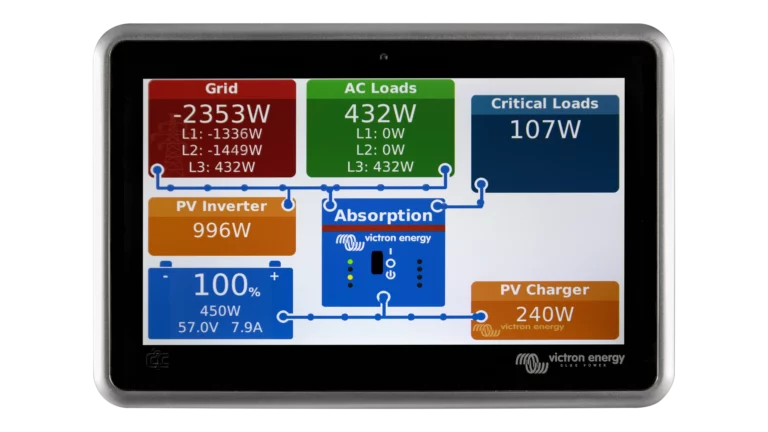
The MultiPlus-II isn't just an inverter. It's the core of a system that grows with you. Add a SmartSolar MPPT charge controller for solar. Add a Cerbo GX or Ekrano GX for a touchscreen display and full remote monitoring through Victron's VRM portal, which is free with every system, forever, with zero subscription fees. Add a Lynx Distributor for fused DC distribution with integrated monitoring. Every component communicates over a shared data backbone, and the entire system is visible and configurable from anywhere with an internet connection.
Firmware updates are free and ongoing. Victron actively develops new features and pushes them to existing hardware. The MultiPlus-II you install today gets better over time rather than going stale.
Initial setup requires a computer with the MK3-USB interface and VE.Configure software. This is where you set charge parameters, PowerAssist thresholds, AC input limits, relay behavior, and assistant programming. Once configured, the VictronConnect app and VRM portal handle day-to-day monitoring and remote adjustments.
For a ready-to-build solution, check out the Residential 10kVA 120/240V Off-Grid Power System Kit featuring two MultiPlus-II units in split-phase configuration with a complete Lynx distribution system.
One unit provides 4,000W continuous at 120V, which covers most essential circuits. For full 120/240V residential service, pair two units in split-phase configuration for 8,000W across both legs. For further expansions, or larger homes with more demanding loads, a second set of two units can be stacked for a total of 16,000W continuous output and 36,000W surge capacity.
Set your generator's rated output as the AC input current limit. The MultiPlus-II charges batteries with whatever capacity remains after serving loads, and PowerAssist supplements the generator with battery power during surge demands. The 45-65Hz input frequency range handles the frequency drift common in portable generators.
Under 20 milliseconds. Fast enough that computers, routers, and refrigerators continue operating without resetting or rebooting. In Current Connected's testing of the Victron inverters, the transfer is nearly imperceptible on an oscillioscope.
Yes. The MultiPlus-II works with DC-coupled solar (a charge controller like the SmartSolar MPPT RS charging the battery bank directly) or AC-coupled solar (a grid-tie microinverter or string inverter feeding into AC Out 1). Both approaches integrate through the GX device for monitoring.
It's the safety listing most US jurisdictions require for permitted battery-based inverter installations. With UL 1741 on the nameplate, your inspector can sign off directly, and most homeowner and commercial insurance policies recognize the listing for permanently installed power systems. Victron inverters previously lacked this certification, which presented unique challenges in finalizing the commissioning process.
It works in off-grid, grid-tied battery backup, and hybrid configurations. In a grid-connected ESS setup with the optional external current sensor, the system can optimize self-consumption and manage grid interaction based on your utility's requirements. The same hardware covers all three scenarios through software configuration. Be sure to check with your AHJ (Authority Having Jurisdiction) prior to setting the unit up for grid backfeed.
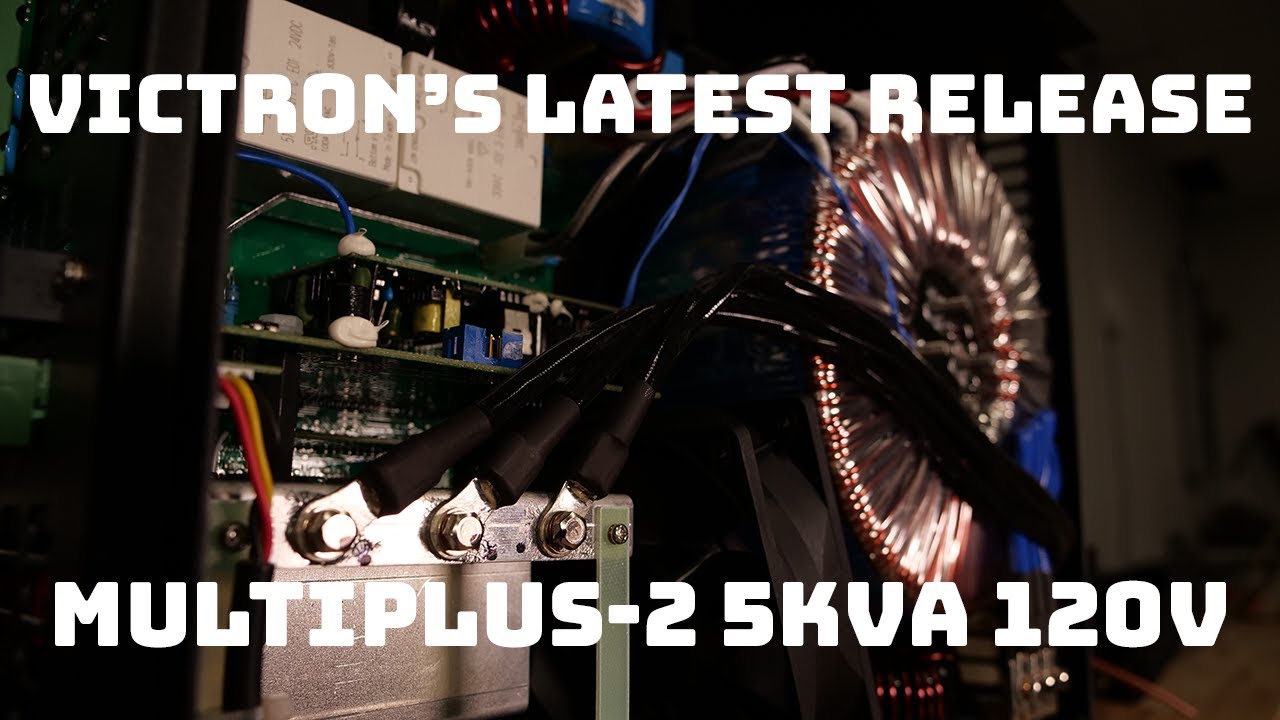
Victron 5kVA 48V MultiPlus-II - Breakthrough Technology?
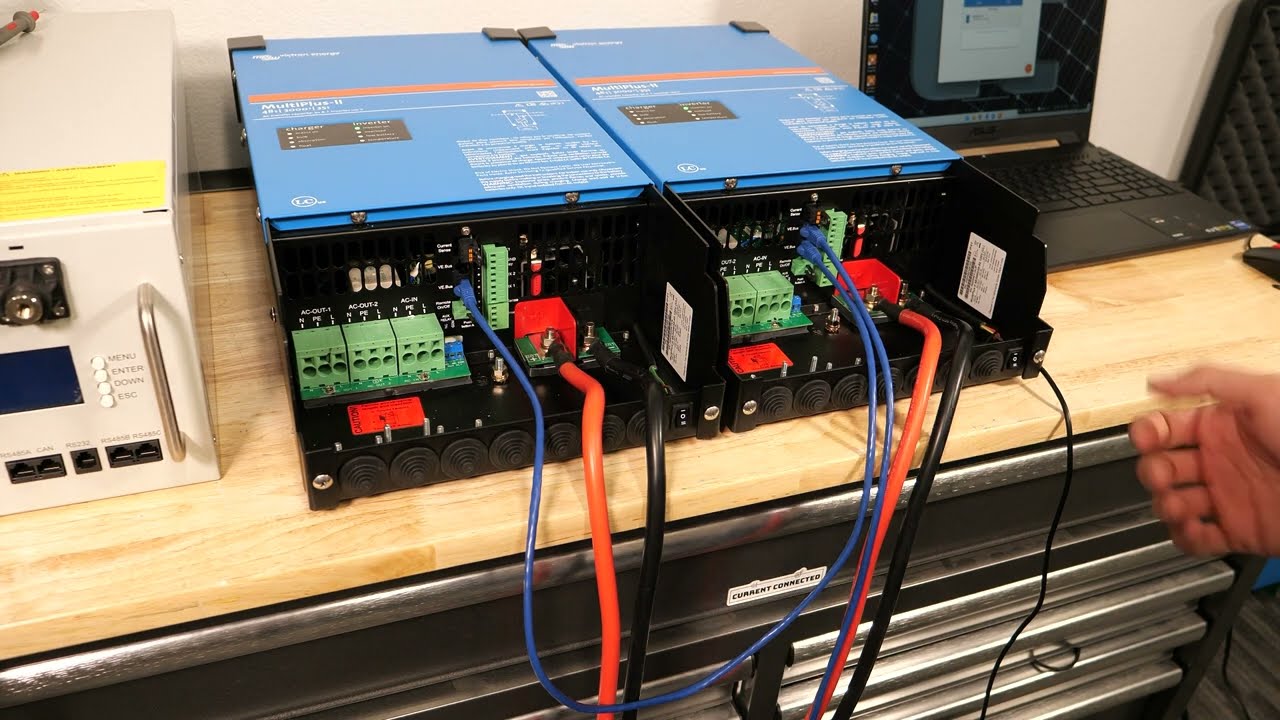
Victron Split Phase Configuration Guide
I have 2 set up for split phase. Charging and inverting work flawlessly. The UPS function is amazing. Really enjoy these units.
Everything works perfect, except load assist. Running under 2,000 watts it pulls 2,000 watts from grid to run things and charge the batteries. Anything over 2k lowers the grid draw and drains the batteries.
Thank you for the feedback! This can be changed in programming by adjusting the input current limit. Our team is happy to assist if you would like to call / email us!