
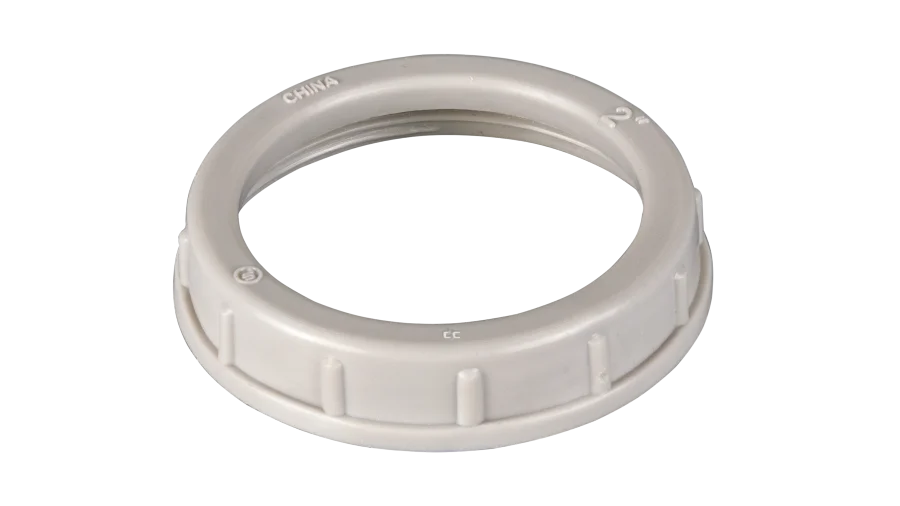
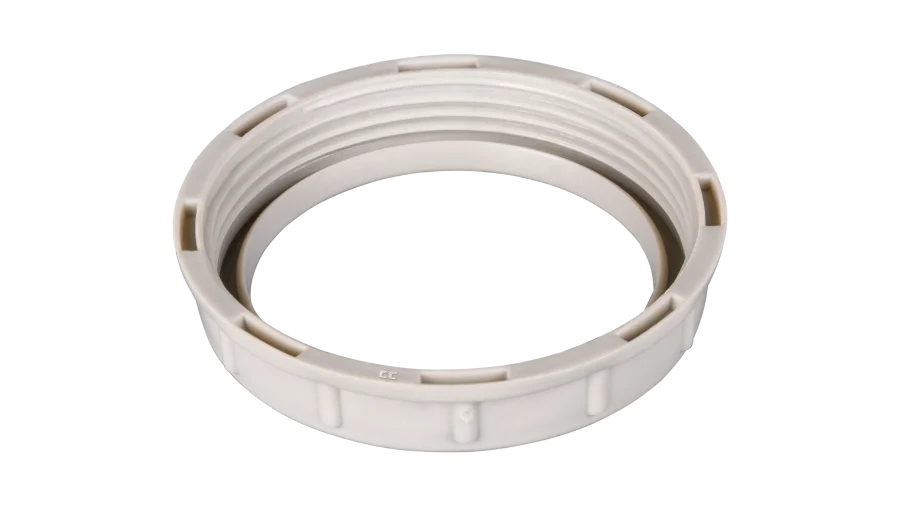
Plastic Insulated Bushing, 1/2" to 2", Threaded for Rigid and IMC Conduit, 105°C
SKU: Please select an option...
Log in to check member price and detailed stock information.
Please select all options above to add to cart.
Product Summary
Thread a plastic insulated bushing onto the end of your conduit and every wire you pull rides over a smooth, rounded edge, so the insulation arrives in the box intact. It's the electrical insulating bushing NEC 300.4(G) calls for wherever 4 AWG and larger conductors, like battery and inverter cables, enter a box or enclosure.
Specifications:
-
Six trade sizes, 1/2" through 2", sold in packs (count shown with each size)
-
Threads onto RMC (Rigid Metal Conduit) and IMC (Intermediate Metal Conduit) ends
-
Rated 105°C, above the 90°C rating of THHN, THWN-2 and XHHW-2 wire
-
Smooth, rounded insulating throat protects conductor insulation during the pull and in service
-
Goes on after the locknut, which secures the conduit while the bushing protects the wire
-
UL Listed, with a corrosion-resistant thermoplastic body
About the Plastic Insulated Bushing
A plastic insulating bushing threads onto the end of rigid or IMC conduit inside the box and gives every conductor a smooth, rounded edge to pull across. Your battery cable or bundle of PV wire slides in clean, and the insulation stays protected long after the cover goes on.
Six trade sizes, 1/2" through 2", cover the conduit on a typical solar or battery install, from a 1/2" run of PV wire to the 2" pipe carrying battery cables to the inverter. Match the bushing to your conduit's trade size: a 2" bushing for 2" rigid or IMC.
When Code Requires an Insulating Bushing: 4 AWG and Larger
NEC 300.4(G) requires a fitting with a smooth, rounded insulating surface wherever 4 AWG or larger conductors leave a raceway and enter a box, cabinet or enclosure. That covers most battery and inverter cable runs. If you're running new cable, our custom battery and inverter cables are made to your exact length in 6 AWG to 4/0 AWG.
Rigid and IMC go a step further. NEC 344.46 and 342.46 call for a bushing at every box entry, whatever the wire size, unless the box or fitting is designed to protect the wire on its own.
300.4(G) also sets a temperature floor: the bushing's rating must meet or exceed the insulation rating of the conductors inside it. At 105°C, these bushings match the EPDM insulation on our custom battery cables and clear THHN, THWN-2 and XHHW-2 with room to spare. Our team is happy to help with sizing.
Installing a Plastic Bushing with Locknuts
A bushing made entirely of plastic can't secure the conduit to the box (300.4(G) says so directly), so locknuts handle that job. Run a locknut onto the conduit outside the box, pass the end through the knockout, tighten a second locknut against the inside wall, then thread the bushing on last, snug against the locknut. Put the bushing on before you pull, so the wire only ever touches the rounded edge.
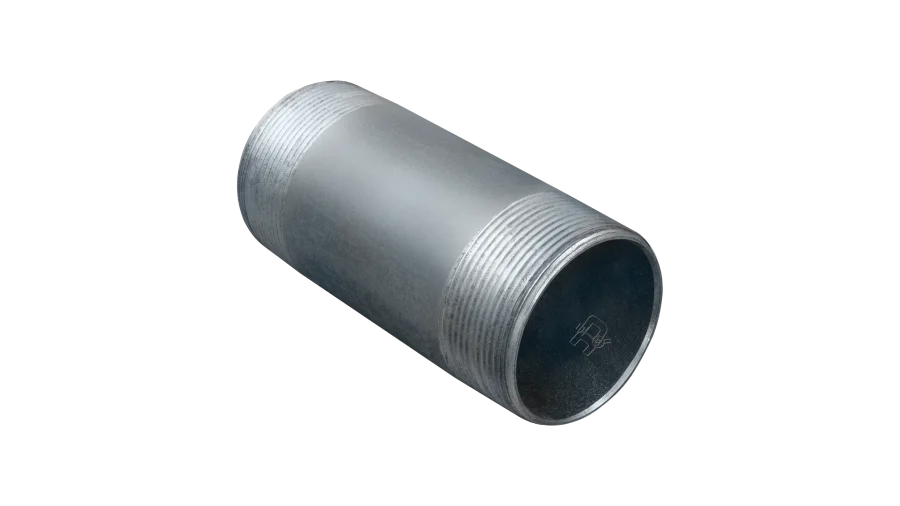
Connecting two enclosures with a short nipple? Each end lands in a box, so each end gets a bushing. Our 2" galvanized RMC nipples come in several lengths for close-coupled boxes.
Recommended Accessories
Frequently Asked Questions
Not on the tubing itself, since EMT has no threads. It does thread onto the male end of a threaded EMT connector inside the box, which gives a connector without an insulated throat the same smooth, rounded edge.
When the conduit needs a bonding jumper at the box. Two common cases are service raceways that enter through concentric or eccentric knockouts, which need bonding around the knockout under NEC 250.92(B), and circuits over 250 volts to ground under 250.97. An insulated metallic grounding bushing has the same insulated throat plus a lug for the jumper. A plastic bushing only protects the wire and never counts toward bonding.
Customer Reviews
No reviews yet. Be the first to review this product!