How Many Watts Do My Appliances Use?
Use our interactive wattage tool to calculate your energy usage and size your solar or battery backup system with confidence.
Whether you're sizing a solar system, planning a battery bank, or just trying to figure out why your electricity bill keeps climbing, it all starts with the same question: how much power are you actually using?
Most people have no idea how much energy their individual appliances draw. They just see a total on their utility bill every month. But when you're designing an energy system, that total isn't enough. You need to know which appliances are doing the heavy lifting, how many hours a day they run, and what it all adds up to.
The tool below gives you average power consumption and estimated monthly cost for 26 common household appliances. Use it as a starting point, and if you need more precision for your specific equipment, keep scrolling for three methods to calculate your exact usage.

Appliance Power Consumption
Compare household appliance energy usage and costs
- EV Charger (Level 2)
- 7.7 kW
- Electric Water Heater
- 4.5 kW
- Central A/C
- 3.5 kW
- Dryer
- 3 kW
- Range
- 3 kW
- Oven
- 2 kW
- Hair Dryer
- 1.8 kW
- Blender
- 1.5 kW
- Clothes Iron
- 1.5 kW
- Coffee Maker
- 1.5 kW
- Pool Pump
- 1.5 kW
- Space Heater
- 1.5 kW
- Toaster Oven
- 1.5 kW
- Air Fryer
- 1.4 kW
- Washing Machine
- 1.3 kW
- Dishwasher
- 1.2 kW
- Microwave
- 1.2 kW
- Toaster
- 1.2 kW
- Vacuum
- 0.8 kW
- Window A/C
- 0.64 kW
- Dehumidifier
- 0.6 kW
- Garbage Disposal
- 0.5 kW
- Gaming Console
- 0.2 kW
- Refrigerator
- 0.15 kW
- TV
- 0.1 kW
- Ceiling Fan
- 0.075 kW
- Laptop Charger
- 0.065 kW
Power draw: 7700W (7.7 kW)
Avg. daily use: 4 hours
Daily energy: 30.80 kWh
Est. monthly cost: $147.84
Power draw: 4500W (4.5 kW)
Avg. daily use: 3 hours
Daily energy: 13.50 kWh
Est. monthly cost: $64.80
Power draw: 3500W (3.5 kW)
Avg. daily use: 8 hours
Daily energy: 28.00 kWh
Est. monthly cost: $134.40
Power draw: 3000W (3 kW)
Avg. daily use: 1 hours
Daily energy: 3.00 kWh
Est. monthly cost: $14.40
Power draw: 3000W (3 kW)
Avg. daily use: 1 hours
Daily energy: 3.00 kWh
Est. monthly cost: $14.40
Power draw: 2000W (2 kW)
Avg. daily use: 1 hours
Daily energy: 2.00 kWh
Est. monthly cost: $9.60
Power draw: 1800W (1.8 kW)
Avg. daily use: 0.2 hours
Daily energy: 0.36 kWh
Est. monthly cost: $1.73
Power draw: 1500W (1.5 kW)
Avg. daily use: 0.1 hours
Daily energy: 0.15 kWh
Est. monthly cost: $0.72
Power draw: 1500W (1.5 kW)
Avg. daily use: 0.3 hours
Daily energy: 0.45 kWh
Est. monthly cost: $2.16
Power draw: 1500W (1.5 kW)
Avg. daily use: 0.3 hours
Daily energy: 0.45 kWh
Est. monthly cost: $2.16
Power draw: 1500W (1.5 kW)
Avg. daily use: 8 hours
Daily energy: 12.00 kWh
Est. monthly cost: $57.60
Power draw: 1500W (1.5 kW)
Avg. daily use: 8 hours
Daily energy: 12.00 kWh
Est. monthly cost: $57.60
Power draw: 1500W (1.5 kW)
Avg. daily use: 0.3 hours
Daily energy: 0.45 kWh
Est. monthly cost: $2.16
Power draw: 1400W (1.4 kW)
Avg. daily use: 0.5 hours
Daily energy: 0.70 kWh
Est. monthly cost: $3.36
Power draw: 1300W (1.3 kW)
Avg. daily use: 1 hours
Daily energy: 1.30 kWh
Est. monthly cost: $6.24
Power draw: 1200W (1.2 kW)
Avg. daily use: 1.5 hours
Daily energy: 1.80 kWh
Est. monthly cost: $8.64
Power draw: 1200W (1.2 kW)
Avg. daily use: 0.3 hours
Daily energy: 0.36 kWh
Est. monthly cost: $1.73
Power draw: 1200W (1.2 kW)
Avg. daily use: 0.1 hours
Daily energy: 0.12 kWh
Est. monthly cost: $0.58
Power draw: 800W (0.8 kW)
Avg. daily use: 0.3 hours
Daily energy: 0.24 kWh
Est. monthly cost: $1.15
Power draw: 640W (0.64 kW)
Avg. daily use: 8 hours
Daily energy: 5.12 kWh
Est. monthly cost: $24.58
Power draw: 600W (0.6 kW)
Avg. daily use: 12 hours
Daily energy: 7.20 kWh
Est. monthly cost: $34.56
Power draw: 500W (0.5 kW)
Avg. daily use: 0.05 hours
Daily energy: 0.03 kWh
Est. monthly cost: $0.12
Power draw: 200W (0.2 kW)
Avg. daily use: 2 hours
Daily energy: 0.40 kWh
Est. monthly cost: $1.92
Power draw: 150W (0.15 kW)
Avg. daily use: 24 hours
Daily energy: 3.60 kWh
Est. monthly cost: $17.28
Power draw: 100W (0.1 kW)
Avg. daily use: 4 hours
Daily energy: 0.40 kWh
Est. monthly cost: $1.92
Power draw: 75W (0.075 kW)
Avg. daily use: 12 hours
Daily energy: 0.90 kWh
Est. monthly cost: $4.32
Power draw: 65W (0.065 kW)
Avg. daily use: 8 hours
Daily energy: 0.52 kWh
Est. monthly cost: $2.50
Power values are typical averages; actual consumption varies by model and usage. Check items to customize kW and hours for your household. Cost calculated at $0.16/kWh.
Need More Precision? Calculate Your Actual Usage
The estimates above are based on typical averages, but your actual appliances may draw more or less depending on the brand, model, age, and how you use them. If you're sizing a solar system, battery bank, or generator and want numbers you can trust, it's worth checking the actual ratings on your specific equipment.
There are three ways to find the power consumption of any appliance, depending on what information is available to you. All three methods get you to the same place: the number of kilowatt-hours (kWh) your appliance uses per day.
Method 1: From the Wattage Rating
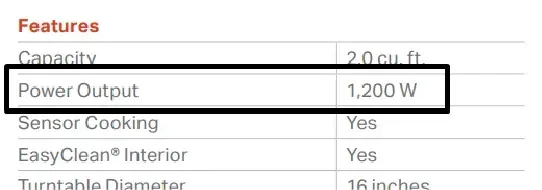
This is the simplest method. Most appliances list their power draw in watts (W) or kilowatts (kW) on a label, spec sheet, or in the user manual. Look for it on the back or bottom of the appliance, on a metal plate near the power cord, or in the specifications section of the manual.
Once you have the wattage, convert it to kilowatts by dividing by 1,000. Then multiply by the number of hours you use the appliance each day.
The formula:
Watts / 1,000 = kW
kW x hours per day = kWh per day
Example: A microwave rated at 1,200W that runs for about 10 minutes per day.
1,200 / 1,000 = 1.2 kW
1.2 kW x (10 minutes / 60) = 0.2 kWh per day
That's a small number on its own, but it adds up when you calculate every appliance in your home.
Method 2: From Amps and Volts
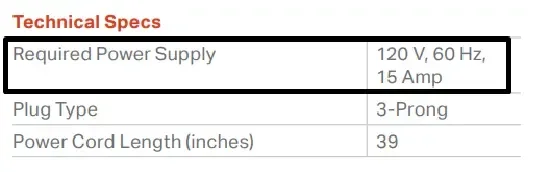
Some appliances list amps (A) and volts (V) instead of watts. You can calculate the wattage from these two numbers.
The formula:
Amps x Volts = Watts
Then use Method 1 to convert to kWh per day.
Example: A microwave rated at 15A and 120V, used for 10 minutes per day.
15A x 120V = 1,800W
1,800 / 1,000 = 1.8 kW
1.8 kW x (10 / 60) = 0.3 kWh per day
You'll notice the wattage from the amps/volts calculation (1,800W) is higher than the wattage listed on the spec sheet in Method 1 (1,200W). That's normal. The amps and volts rating represents the maximum the appliance can draw from the outlet, while the wattage rating often reflects the actual operating power. When both are available, the wattage rating is generally more accurate for estimating daily usage.
Method 3: From an Energy Guide
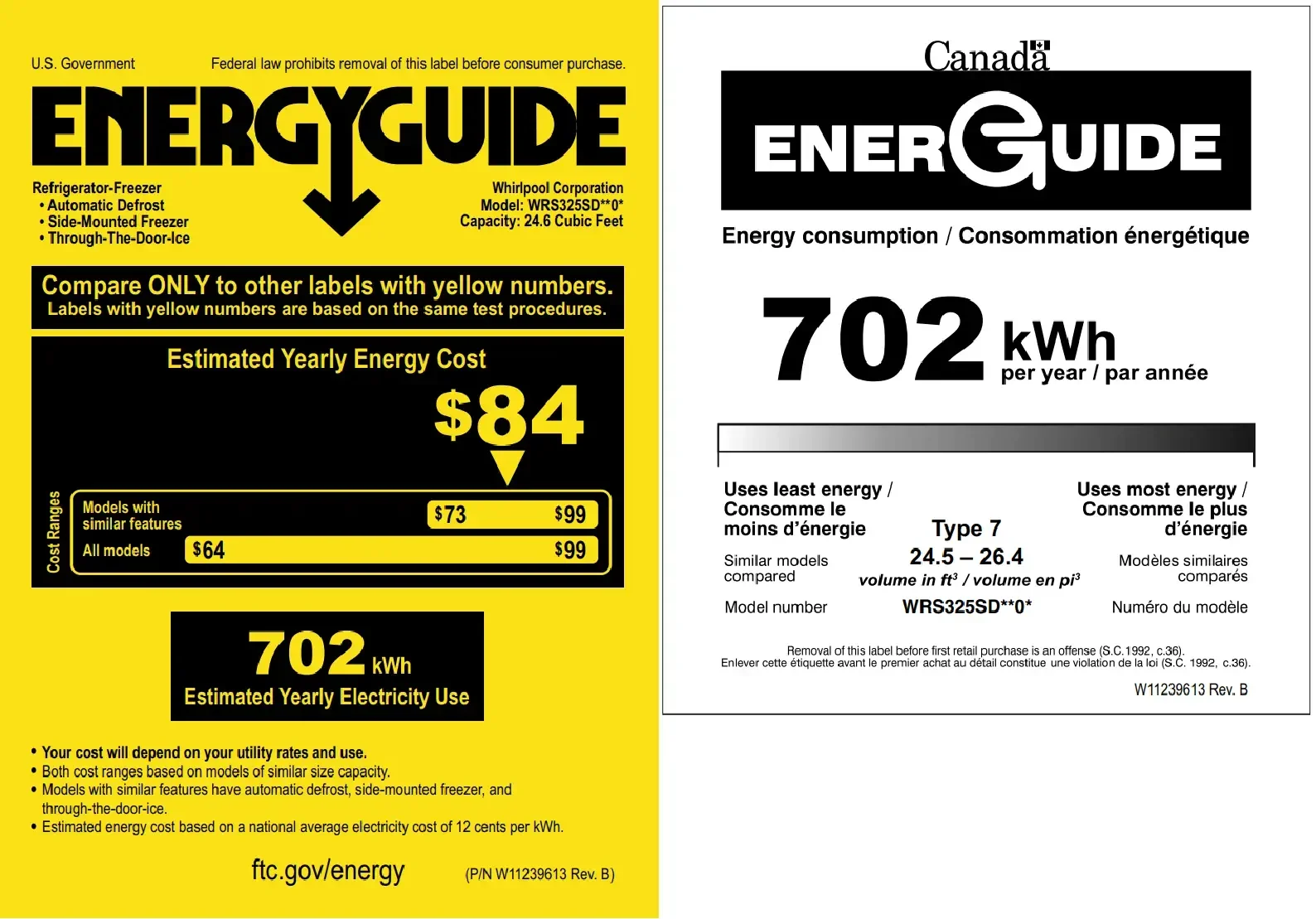
Some appliances come with a yellow Energy Guide sticker that estimates annual operating cost or annual energy consumption in kWh. This is common on refrigerators, air conditioners, water heaters, and other large appliances.
Getting from annual numbers to daily kWh takes a couple of steps, and the approach depends on whether the appliance runs all day or only part of the day.
For appliances that run 24/7 (like a refrigerator):
Simply divide the annual kWh by 365.
Example: A refrigerator rated at 400 kWh per year.
400 / 365 = 1.1 kWh per day
For appliances that run part of the day or part of the year (like an A/C unit):
You need to figure out the hourly draw first, then multiply by how many hours per day you plan to run it.
Working From a Dollar Amount
Some Energy Guides list an estimated yearly operating cost instead of kWh. You can convert the dollar amount to kWh if you know the assumed electricity rate (usually printed on the guide in small text).
The formula:
Yearly cost / cost per kWh = annual kWh
Example: An A/C unit with an estimated yearly cost of $44, based on $0.13 per kWh, assuming 8 hours per day for 3 months.
$44 / $0.13 = 338.5 kWh annually
Now find the total hours it ran during the year:
8 hours x 30 days x 3 months = 720 hours
Divide the annual kWh by total hours to find the hourly draw:
338.5 kWh / 720 hours = 0.47 kW
That means this A/C unit draws roughly 0.5 kW for every hour it runs. If you plan to run it 8 hours a day in your system, budget 4 kWh per day for that unit.
Putting It All Together
Once you've calculated the daily kWh for each of your appliances, add them all up. That total is your estimated daily energy consumption, and it's the number you need when sizing a battery bank, choosing an inverter, or determining how much solar production your system requires.
A few things to keep in mind as you calculate:
Not everything runs all day. A microwave might only run 10 minutes, but a refrigerator runs 24 hours. Make sure your daily usage estimates reflect how you actually use each appliance, not just the peak draw.
Startup surges matter for inverter sizing. Some appliances (especially those with motors, like compressors, well pumps, and A/C units) draw several times their rated wattage for a few seconds when they start. Your inverter needs to handle those surges. The daily kWh calculation won't capture this, but it's critical when choosing an inverter.
Seasonal variation is real. Your summer usage with A/C running may be double your spring usage. If you're designing an off-grid system, size for your heaviest season, not your average.
Pro Tip
Estimates and spec sheet math will get you close, but nothing beats real data. The next section covers two tools that can measure your actual usage and take all the guesswork out of system sizing.
Skip the Math: Measure Your Actual Usage
Whole-Home Monitoring
See your entire home's consumption broken down by circuit, in real time.
The Emporia Vue 3 energy monitor installs in your electrical panel and tracks usage across every circuit in your home. It reports real-time data to a mobile app, so you can see exactly which circuits are drawing power and how much energy each one uses over time.
This is one of the best tools for understanding your actual energy profile before you invest in a solar or battery system. Instead of estimating usage from spec sheets, you get weeks or months of real data showing your true consumption patterns, including seasonal variation and peak demand windows. And once your system is installed, the Vue keeps working as a performance monitor so you can see how your solar production and battery storage stack up against your real loads.
Individual Appliance Monitoring
Measure exactly how much energy a single appliance uses over hours or days.
For checking individual appliances, a plug-in power meter (often called a Kill-A-Watt meter) is simple and cheap. Plug it into the wall, plug your appliance into it, and let it run for a day or two. It will tell you exactly how many kWh that appliance used over the measurement period.
This is especially useful for appliances with variable usage patterns, like a refrigerator that cycles on and off throughout the day or a space heater controlled by a thermostat. The spec sheet might say 150W, but the actual daily consumption depends on how often the compressor or heating element kicks on. A plug-in meter captures the real number.
Between a whole-home monitor and a plug-in meter, you can eliminate all the guesswork and size your system with confidence.
Ready to Size Your System?
Now that you know your daily energy needs, you have the most important number for designing a solar, battery, or backup power system. Our team can help you turn that number into a component list.