
How Many Solar Panels Do I Need for My Alternative Energy System?
Size solar panels for your home with in-depth explanations and custom calculations.
One of the first things people ask when they think about an alternative energy solution is, “How many solar panels do I need?”
The answer depends on your personal energy consumption, peak sunlight hours, system design, weather, and panel specifications. This article breaks down each of these components. By the end, you’ll know how many solar panels you need, and you can use that information to investigate solar power kits and consider the other components of your home solar power system.
Each section in this article explains an important number for calculating how many solar panels you need for your alternative energy system. We’ll use Current Connected's Hayden, ID office as an example to determine these numbers, but your numbers will be unique. At the end of this article, we’ll use these numbers for our final calculation.
How Home Energy Consumption Influences Solar Panel Needs
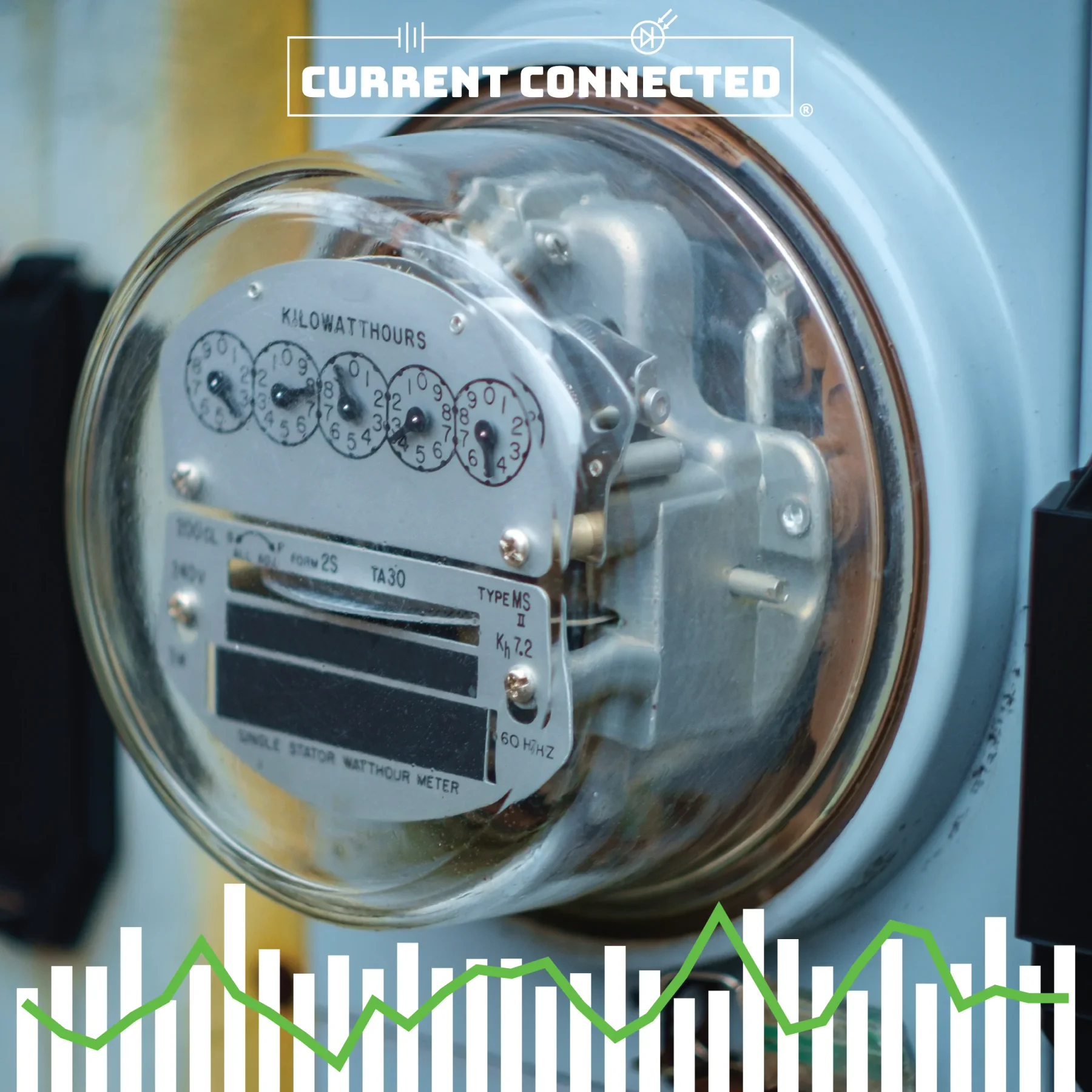
Every home consumes a different amount of energy, so it’s important to understand your personal energy consumption before buying solar panels. You can calculate this number by inspecting the power consumption of every appliance, device, and lightbulb, or you can review your previous electrical bills. The articles linked below provide detailed information for both of these options.
How Many Watts Do My Appliances Use?
How to Calculate Energy Usage from a Monthly Utility Bill
When calculating this number, remember to consider how your power usage changes during different times of the year. Warm climates may use significantly more power when running an air conditioner, and cool climates may use significantly more power when running a heater. Depending on your needs, you may choose to build your system based on the lowest number of kWh used in one day, the highest number of kWh used in one day, or an average daily number of kWh used over the entire year.
This is ideal for off-grid installations without an additional power source like a generator or a grid connection. Building a system based on the highest possible power consumption ensures your system will cover your electrical needs.
A system designed for maximum power usage will often generate more power than needed. This can be good or bad. In an off-grid installation without enough battery backup to collect it, this excess electricity goes unused. In a grid-connected installation with grid-sell-back capabilities, you can sell this extra power to the utility company for additional income.
This option is larger and more expensive, but it will typically meet your daily power needs.
This is a great option for people connected to the grid. In this case, people generally want to offset some of their utility bill or take advantage of peak shaving. If you choose this option, you can expect to use 100% of your produced electricity every day. This reduces your electrical bill even if you don’t use batteries to store energy.
In systems with different rates for different times of electrical usage, a grid connection also allows you to take advantage of the cheaper power. You can use solar panels to charge a battery bank during the cheaper hours, and you can run devices in your home from the battery bank during the more expensive hours.
This option is cheaper and smaller, and if you choose this option, you should make sure you have additional power sources such as a generator or a grid connection.
This option gives you a middle ground of both size and price. You can expect to power all your electrical needs for about half of the year, and the other half you will need supplemental power.
For the sake of this article, we’ll assume the average daily power consumption is 30kWh. Many people list this as the average daily power consumption for American homes, though we often design alternative energy systems for 40-70kWh.
How Panel Tilt Affects Solar Power Production
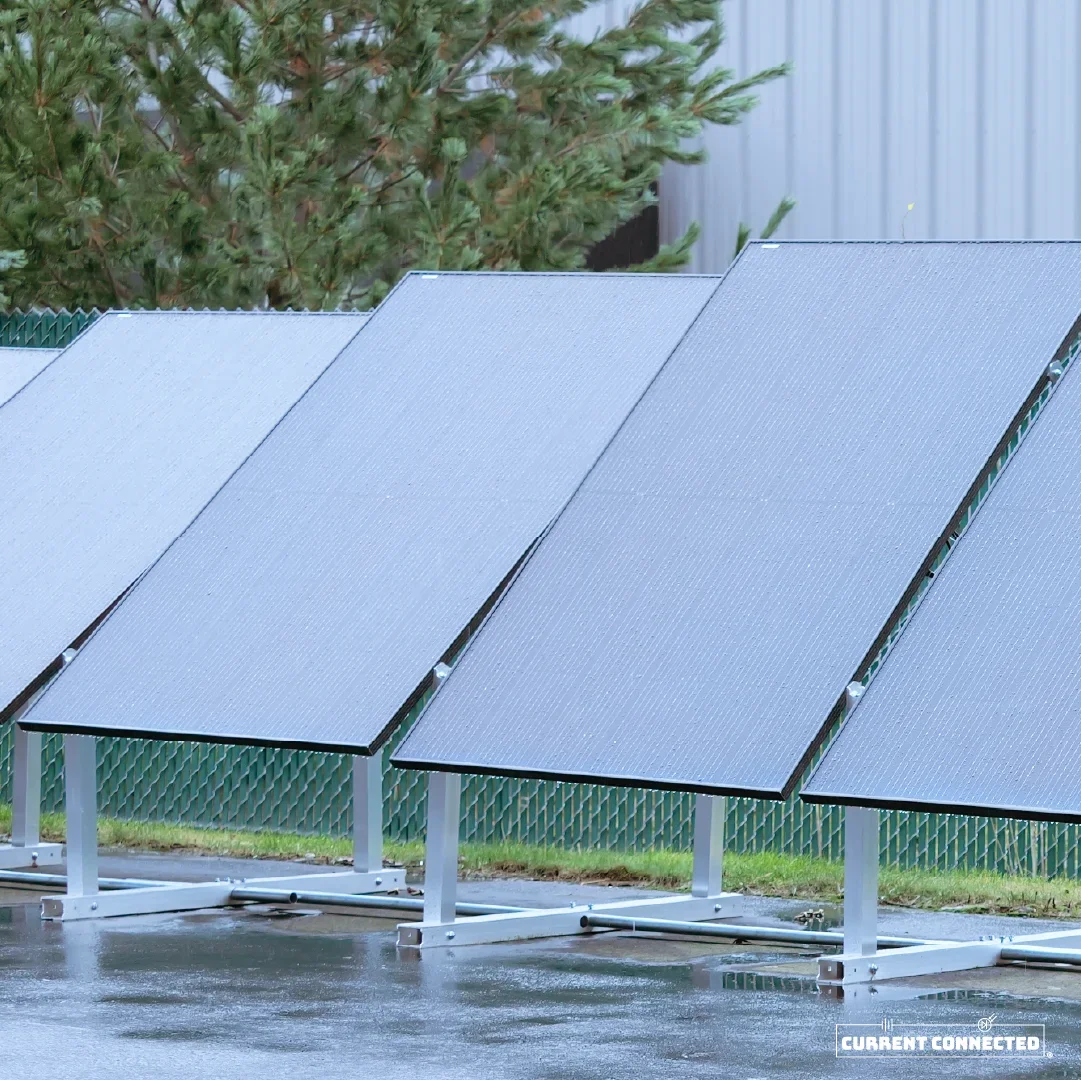
Solar panels produce electricity when the sun is shining directly on them. In locations near the equator, where the sun angle and number of daylight hours stay fairly consistent throughout the year, solar panels can lay almost flat to absorb the direct sunlight year round. In locations farther north or south, it’s best to angle the solar panels to receive the most direct sunlight. As you move farther from the equator, the optimal angle increases.
Some solar panel mounts hold the panels at a fixed angle, some make it possible to adjust the angle seasonally as needed, and it’s possible to add a motor to your solar panels to keep them aligned with the direct sunlight throughout the day.
The calculator below shows the optimal angle for fixed solar panel mounts and the optimal angle per month and season. If possible, it’s best to position your panels at the optimal position, but panels can usually still produce electricity, even at a 0° angle.
Here in Hayden, ID, our optimal year-round solar panel angle is about 35°.
Peak Sun Hours and their Effect on Solar Production
As noted above, solar panels require more direct sunlight to produce electricity. When the sun is highest in the sky, typically around noon, panels will absorb the most energy. Solar panels also must receive a certain amount of sunlight before they start producing electricity. This means panels are often inactive early in the mornings or later in the evenings. Ultimately, they’ll produce optimal solar power during that defined window in the middle of the day.
In the contiguous United States, this window averages 5 hours throughout the year. This window expands to 6-8 hours during summer months and shrinks to 2-3 hours during winter months.
Use the link below to find the average number of solar production hours at your address.
For our Hayden, ID location, with a solar panel tilt of 35°, we get an average of 4.41 peak sun hours each day. For each month, this window changes as follows (rounded to the nearest whole number):
- January: 2
- February: 3
- March: 4
- April: 5
- May: 6
- June: 6
- July: 7
- August: 7
- September: 6
- October: 4
- November: 2
- December: 2
When you’re designing your system, you can build it based on the least, most, or average number of hours. We’ll investigate each of these options after this note about shade obstruction.
Peak sun hours can change if you live in a valley, on a mountain, or surrounded by tall buildings or trees. If you live in a shaded area, you can observe the area you’d like to install your solar panels and note how many hours that area remains sunny around solar noon (when the sun is highest). Use the tool below to see the exact solar noon during any day of the year. During winter, track the unshaded hours 1.5 hours before and after solar noon (3 hours total). During summer, track the unshaded hours 4 hours before and after solar noon (8 hours total).
Solar panels don’t sit directly on the ground, so we recommend constructing a temporary structure roughly the height and size of your prospective solar panels to get the most accurate observations.
Solar Noon (and other cool information)
Pay special attention to even small amounts of shade. Even thin bits of shade caused by tree branches or power lines can drastically reduce the power production of every panel the shade crosses.
We’ve designed a shade training tool to help you understand the effect of shade on a solar array. Check out the link below to experiment with this concept. This simulator operates according to the basic concepts of solar panel shading, but it is not meant to provide exact details for specific installations.
Should I build my system based on the longest peak sun hours, shortest peak sun hours, or average peak sun hours?
There are pros and cons to each option, and ultimately the choice is up to you. What you choose may depend on your budget, your installation space, and your access to additional power sources, but we’ll break down each option to help you choose.
If you build a system based on the longest number of solar production hours, your system will need fewer panels. This leads to multiple advantages:
- Fewer panels reduce costs for both solar panels and solar charge controllers.
- Panels continually produce to their full capacity, meaning less wasted power potential.
- Fewer panels need a smaller space.
If you choose this option, remember you will need an additional power source during most of the year.
If you design a system around the shortest number of solar production hours, your system will have more panels. This leads to the following advantages:
- Your system will almost always produce 100% of your needed power. This is true even during cloudy days.
- You can set up your system to sell power to the electrical grid and see significant income during the summer months.
- Solar production almost always fills the battery bank.
Additional panels also have disadvantages:
- More panels cost more, and you’ll need to buy additional or larger charge controllers.
- You can’t always use as much power as the panels can produce. If you are not able to sell power to the grid or store it in batteries, this power is essentially wasted.
- More panels need more installation space.
A system built around the average number of peak sun hours has both the advantages and the limitations of the other two options.
- This system is a middle ground option for cost.
- This system needs an average amount of space.
- You don’t need as much supplemental power.
Disadvantages
- There is some wasted energy but not as much as the largest option.
- Winter months and low sun days still require supplemental power.
For this article, we will use the average sun hours for Hayden, ID. This will give us more than enough power generation for the summer months but we’ll require some additional power during the winter months. Being connected to the grid, this will be no problem for us, and we can always add a generator if needed.
How to Adjust Solar Panel Number for Inclement Weather
Quick Tip:
Add a few extra panels if you get a lot of rain.
Inclement weather will reduce solar production. If you live in a place with constant rainfall or cloud coverage, your panels will not produce as much electricity as places with constant sun. However, it’s important to note that panels can still produce 10-20% of their normal output on a rainy day.
If you live in a very rainy location, it’s a good idea to add a few extra panels to your solar array. It’s also best to have plenty of battery backup in these locations. Batteries can store power for several days, allowing you to power your home from the battery bank during long stretches of cloudy weather. Once the sun comes out, the solar panels can both recharge the batteries and power your loads.
Snow can also alter solar production. Solar panels covered in snow may produce almost zero solar power, so it’s important to keep them clear during winter weather. Bifacial panels simplify this process as they can produce electricity from the sunlight reflected off the snow. While snow slides off most solar panels, the energy produced by bifacial panels helps warm them, melting the snow and clearing the panels faster.
Hayden, ID gets an average amount of cloudy weather, so for this article, we will not add any extra panels to our solar array, but we will make sure to have enough battery backup to cover several days of inclement weather.

How to Determine a Solar Panel’s Estimated Output
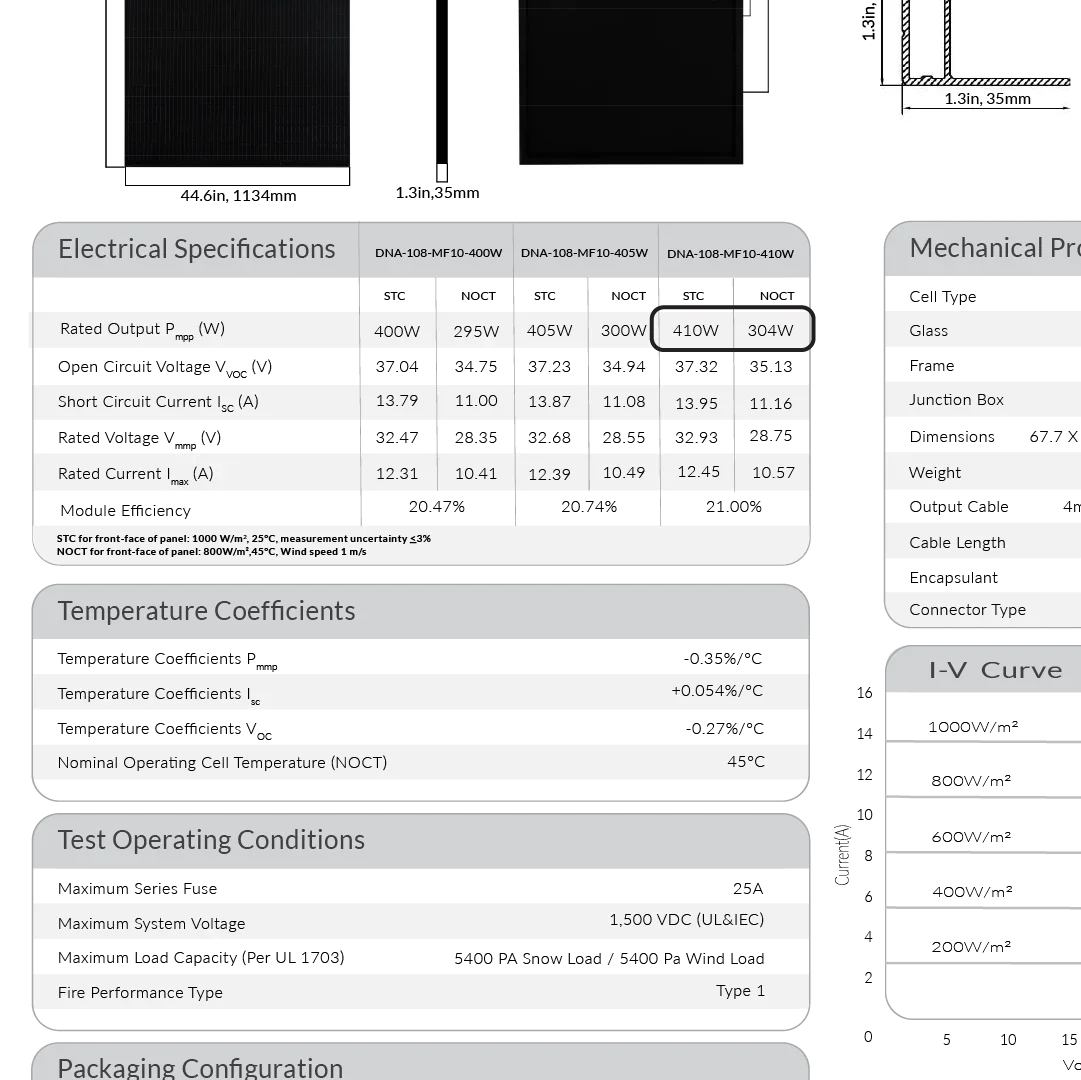
Solar panel manufacturers determine panel power output based on STC (Standard Testing Conditions). These conditions occur in a lab with a very specific environment, and under these conditions, the panel produces as much power as possible. This does not reflect real life conditions, but NOCT (Normal Operating Cell Temperature) provides a more accurate number. If your spec sheet does not provide an NOCT rating, you can expect your solar panel will produce about 80% of the STC specification.
Panel wattages range from less than 10W to over 700W depending on the panel size and type. For this article, we’ll use the Aptos DNA Series 410W Monocrystalline solar panels. The spec sheet for these panels states a rated output of 410W under STC and 304W under NOCT.
How to Calculate the Number of Solar Panels You Need
So, how many solar panels do you need for your alternative energy system?
After calculating the total energy consumption, the panel tilt angle, and the peak sun hours for our Hayden, ID location, we can look at our solar panel rating and determine how many solar panels we need. We found the following information in the previous sections:
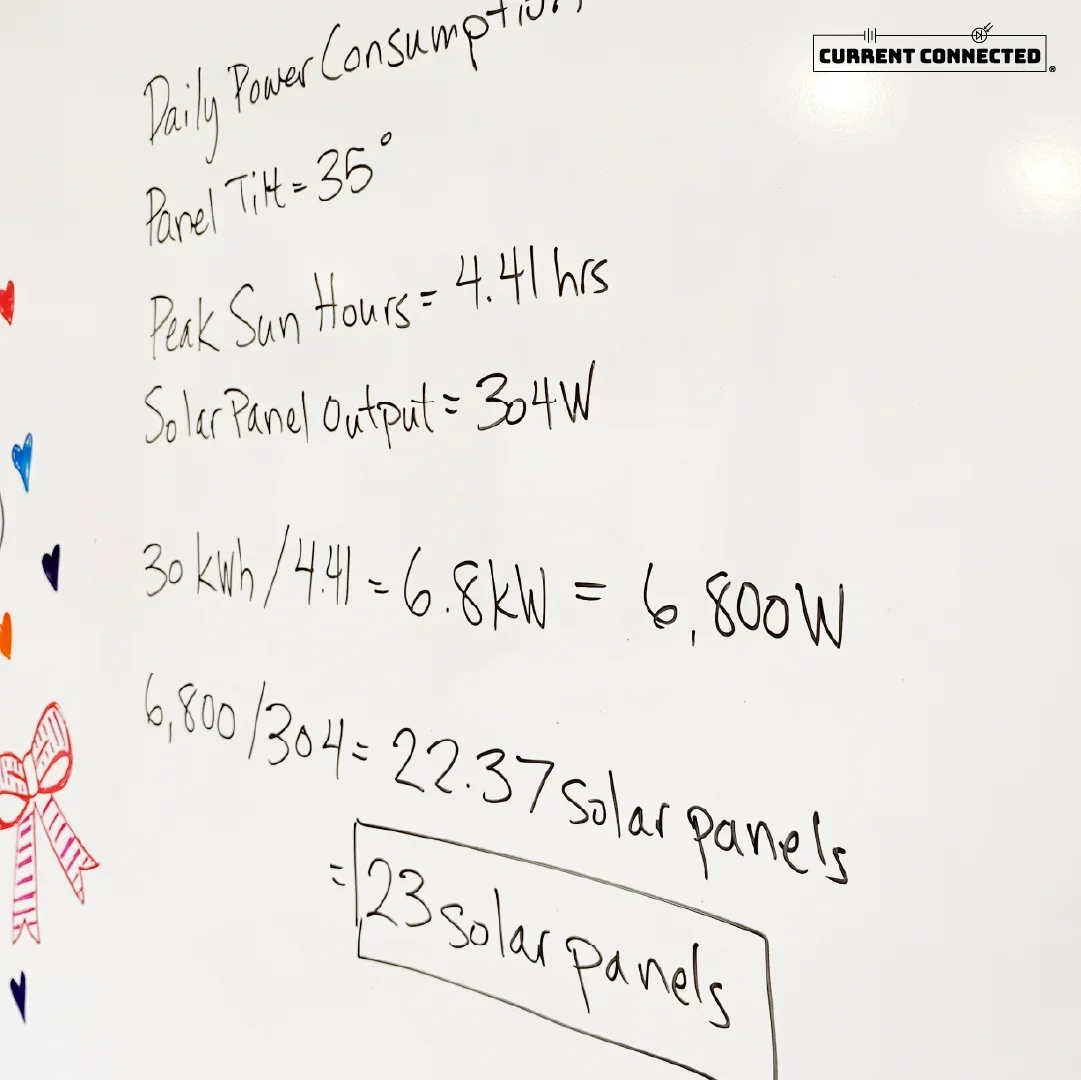
- Daily Power Consumption: 30kWh
- Panel Tilt (used to calculate peak sun hours): 35°
- Peak Sun Hours: 4.41 hours
- Solar Panel Output: 304W
First, let’s find how much power we need to produce in one peak sun hour.
Daily power consumption / sun hours = needed power in one hour
When we plug in the numbers for our Hayden, ID location, we have the following.
30kWh / 4.41h = 6.8kW or 6,800W
Next, we’ll use hourly power needs and the solar power rating to find the number of solar panels.
Hourly W needed / solar panel rating = # of solar panels
6,800W / 304W = 22.37 solar panels needed for our Hayden, ID location.
If this equation gives you a partial solar panel, it’s good to add that one additional panel to your installation. For our Hayden, ID location, we need 23 solar panels.
At this point, you can decide if you want to add a couple extra panels as a buffer for cloudy weather or for days with fewer peak sun hours.
Next Steps
The solar panels needed for your renewable energy installation is just part of the question, “What size solar system do I need for my house?”
The answer to this question includes sizing a solar charge controller, collecting a battery bank, and choosing an inverter.
Stay tuned for more details on these topics! In the meantime, contact us for more information or for help building your electrical system. Our friendly and knowledgeable support staff are always ready to assist you.