
How much electricity you use is an important factor when designing your home solar power system for an off-grid location or for a grid-tied residence. Off-grid systems need enough power to run the home all day, while grid-tied systems can supplement their power needs with the electrical grid.
It may seem basic, but how much power your home uses each day depends on the exact electronics you power and how long they’re on. This varies by household.
One household may run only a refrigerator and some lights, while another household may use table saws, run the washing machine, and operate a compressor all at the same time. This second household needs significantly more stored energy than the first one, and it needs inverters large enough to handle multiple high consumption appliances at once.
So, how much power should your home solar power system generate and store?
There are two ways to calculate this, an easy way and a hard way.
First, you can consider each individual appliance, device, and lightbulb and determine exactly how long you run each one. This process can be tedious and complicated, but it’s useful when powering only critical loads during an emergency and when sizing your solar inverter. For more information on this process, see our other article.
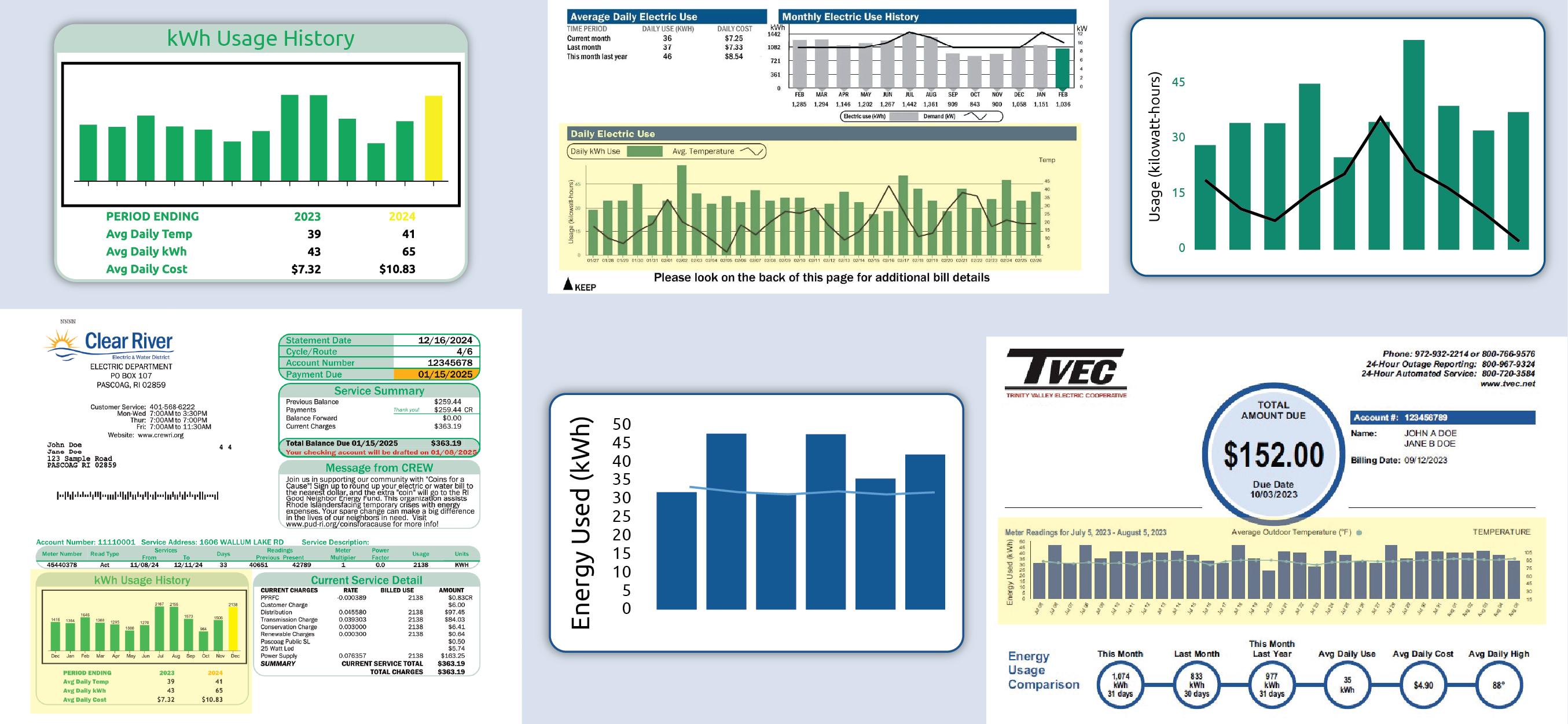
You could alternatively inspect your monthly utility bill. This shows the total kWh (kilowatt hours) used during the billing cycle. Some electrical companies break this down into average daily use, and others show precise daily use.
These numbers can help you design a system with large enough solar inverters and solar batteries to provide this power every day. Exact system design depends on many factors, including whether it’s a solar system for home backup or an off-grid solar system for complete power generation.
Fully off-grid homes cannot sell excess power, so the system essentially wastes any extra power produced by the solar panels but not absorbed by the battery bank or used to immediately power the home. Off-grid homes may choose to produce only enough power for an average day, or they may choose to produce excess power. You may decide to produce extra power for the days needing more electricity or for cloudy days that produce less power.
Home solar power systems connected to the city’s power grid have more flexibility. Since the right inverter makes it possible to both use power from and sell power to the electrical grid, they don’t have to produce all their required power independently. Instead, they could produce just enough power to run critical loads in an emergency, or they could provide more power than they need each day and sell the excess to the utility company.
If your electrical bill only shows total kWh, keep reading to calculate your average power consumption per day.
How to Calculate Daily Energy Usage From Your Utility Bill
The electrical utility bill shows how much power the home used during one billing period (usually one month). With this information, it’s simple to calculate the average daily power usage. Check your bill for the total kWh used and the number of days in the billing cycle.
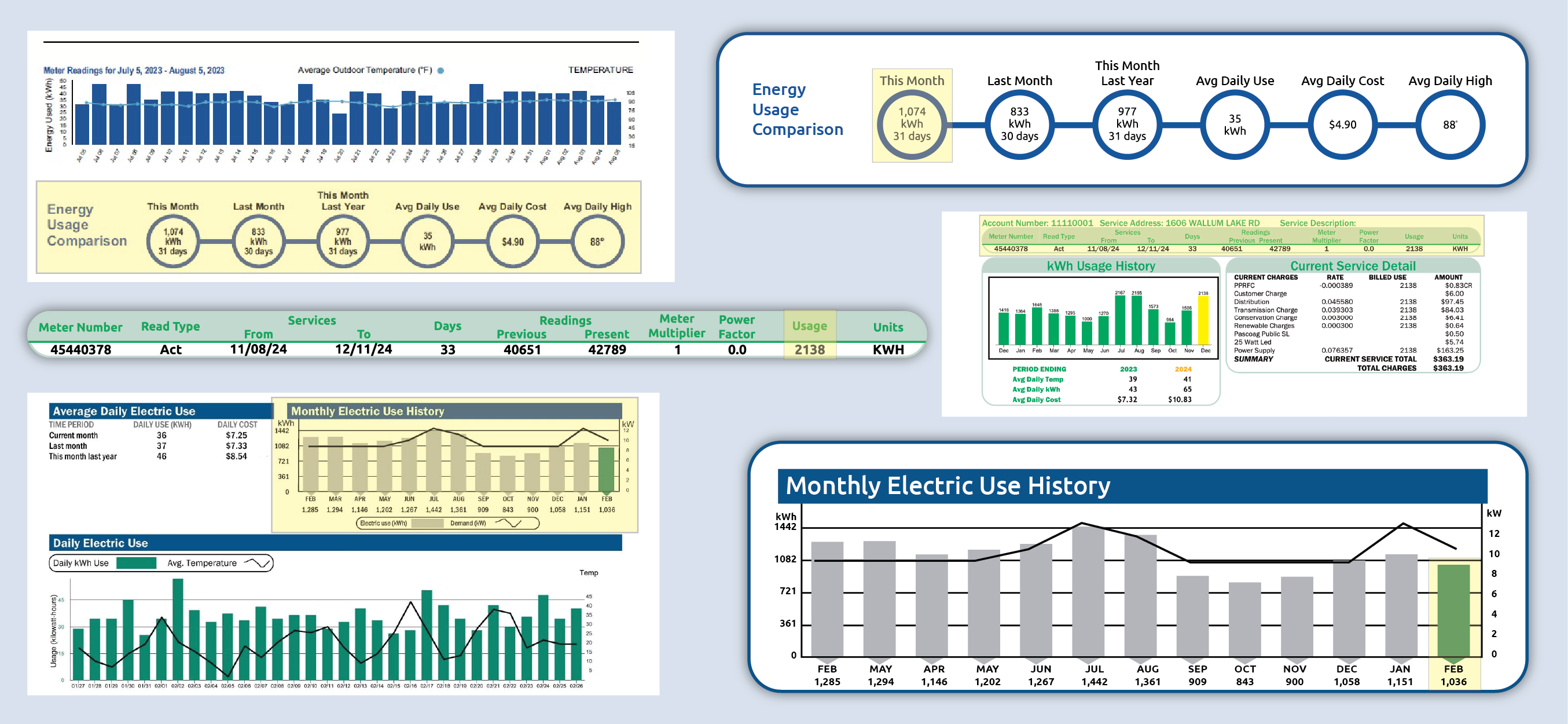
Divide the total kWh by the number of days to find the average power used in one day.
Total kWh (Kilowatt Hours) Used / Days in Billing Period
If the site uses 1,000kWh during a billing period of 31 days, you have the following equation:
1,000kWh / 31 days = 32.26kWh each day
How Does My Power Usage Change During the Year?
Homes may use more power when using heaters or air conditioners. It’s good to consider these higher numbers when you build your home solar power system, especially if your system is off-grid. An off-grid system could potentially run out of power, but a grid-tied system can supplement with grid power if needed.
If you can access a year’s worth of utility bills, you can see how your power changes throughout the year and use that information as you decide on the size of your renewable energy system.
The daily averages calculated from your yearly maximum can determine how much power the system must produce and how much energy your batteries must store to maintain your typical power consumption.
Specific outputs and storage capacity can change based on other factors, and we’re here to support you. Call us for advice on your specific system, and we’ll help you determine what is right for you.